Island Spear Co.

Gear guides Best Pole Spear for Beginners

Best Pole Spear for Beginners: An Honest Buyer's Guide

The cheapest honest way into spearfishing. How a pole spear differs from a speargun and a Hawaiian sling, and which to buy first.

6 picks across 3 tiersReviewed July 7, 2026

A pole spear is the oldest, simplest, and cheapest honest way into spearfishing. It's a shaft with a rubber loop at the back and a tip at the front: you stretch the band by hand, hold the tension, stalk within arm's reach of a fish, and release. There's no trigger, no mechanism, and often nothing to break — for well under a hundred dollars you can be hunting, and you'll learn the single most important skill in the sport: getting close.

This guide explains how a pole spear differs from a speargun and a Hawaiian sling, how to pick a length, material, and tip, and which well-regarded models to look at. As with every Island Spear Co guide: we launched in 2026 and have not physically tested this gear; picks are curated from published specs, brand reputation, and community consensus, with no paid placement.

Know what you're buying

Pole spear vs speargun vs Hawaiian sling

Pole spear

A one-piece (or breakdown) shaft with a loop of rubber tubing at the butt end. You slip the loop over your thumb or hand, walk your grip up the shaft to stretch and load the band, and hold that tension yourself until you release. The spear stays in your hand's control the whole time. Short range — essentially your arm plus the shaft — but dead simple, cheap, and unbeatable for learning to stalk.

Hawaiian sling

Often confused with a pole spear, but different: a Hawaiian sling is a separate handle with a band (like an underwater slingshot or bow) that a loose shaft passes through. You draw the shaft back against the band and release, and the spear leaves the sling entirely to fly free. More range than a pole spear, but you have to retrieve a separate shaft after each shot, and it's a step more complex to aim.

Speargun

A speargun uses a mechanical trigger to hold a loaded spear until you choose to fire, with far more range and power than a pole spear. It's the natural next step, but it costs more and adds mechanism to maintain. If you're weighing the jump, see our best speargun for beginners guide — many spearos start on a pole spear and move to a gun once they can reliably close the distance.
Why start here

Why a pole spear is the best first weapon

  • Cheapest real entry: a capable pole spear costs a fraction of a speargun, so you risk little to find out if the sport is for you.
  • It teaches the core skill: with only arm's-length range, a pole spear forces you to master stalking, breath-hold, and patience — the fundamentals that make you deadly with any weapon later.
  • Simple and durable: no trigger, no sealed internals, nothing to service. Rinse it and go.
  • Often more broadly legal: some waters restrict or ban spearguns while still allowing pole spears (and vice versa) — so a pole spear can be the only legal option in certain spots. Always confirm the rules for your exact location first.

Length and material

Size and build for your reach and water

Length

Most pole spears run 5 to 9 feet; 6 to 7 feet is the common all-round starting range. Longer reaches farther and hits harder but is unwieldy in tight reef and harder to load fully if you're smaller or newer. Shorter is quicker and easier to manage in structure. Match it to your strength and the water you dive — a 6-foot spear in the hands of someone who can load it fully beats a 9-foot spear they can't.

Material

Fiberglass is the standard beginner material — cheap, tough, and forgiving, with a bit of flex. Aluminum is stiffer and light. Carbon fiber is the premium option: very stiff, light, and energy-efficient, but pricier and more prone to cracking if abused on rock. Many pole spears also come as three-piece breakdown/travel models that thread together — hugely convenient for storage and flying with your gear, and a feature worth having.

The business end

Tips: paralyzer, single barb, slip-tip

  • Paralyzer (3-prong / trident): the beginner default. Three short prongs spread the point of contact, making it far easier to hit and hold small-to-medium reef fish. Forgiving of imperfect aim — start here.
  • Single barb / flopper: one point with a hinged barb that flips out to hold the fish. More penetration for larger or tougher fish, but demands better aim than a paralyzer.
  • Slip-tip: a detachable tip that toggles inside a big fish and stays connected by cable — for serious larger quarry, well beyond a first pole spear's usual job.

For a beginner chasing reef and pan fish, a three-prong paralyzer tip is almost always the right call — it turns a near-miss into a hit and holds the fish. Most tips thread on, so you can add a single barb later as you improve and target bigger fish.

The recommendations

Well-regarded pole spears by budget

These are real, widely respected models chosen for the reasons noted on each card — brand reputation, parts availability, and how often each comes up in beginner discussions. We haven’t tested them; treat each link as a starting point for your own research, and check current price and the exact length that fits your water.

Entry — get in the water

~$40–70

Affordable fiberglass breakdown pole spears with paralyzer tips — everything you need to start.

Aluminum · 3-piece travel~$45

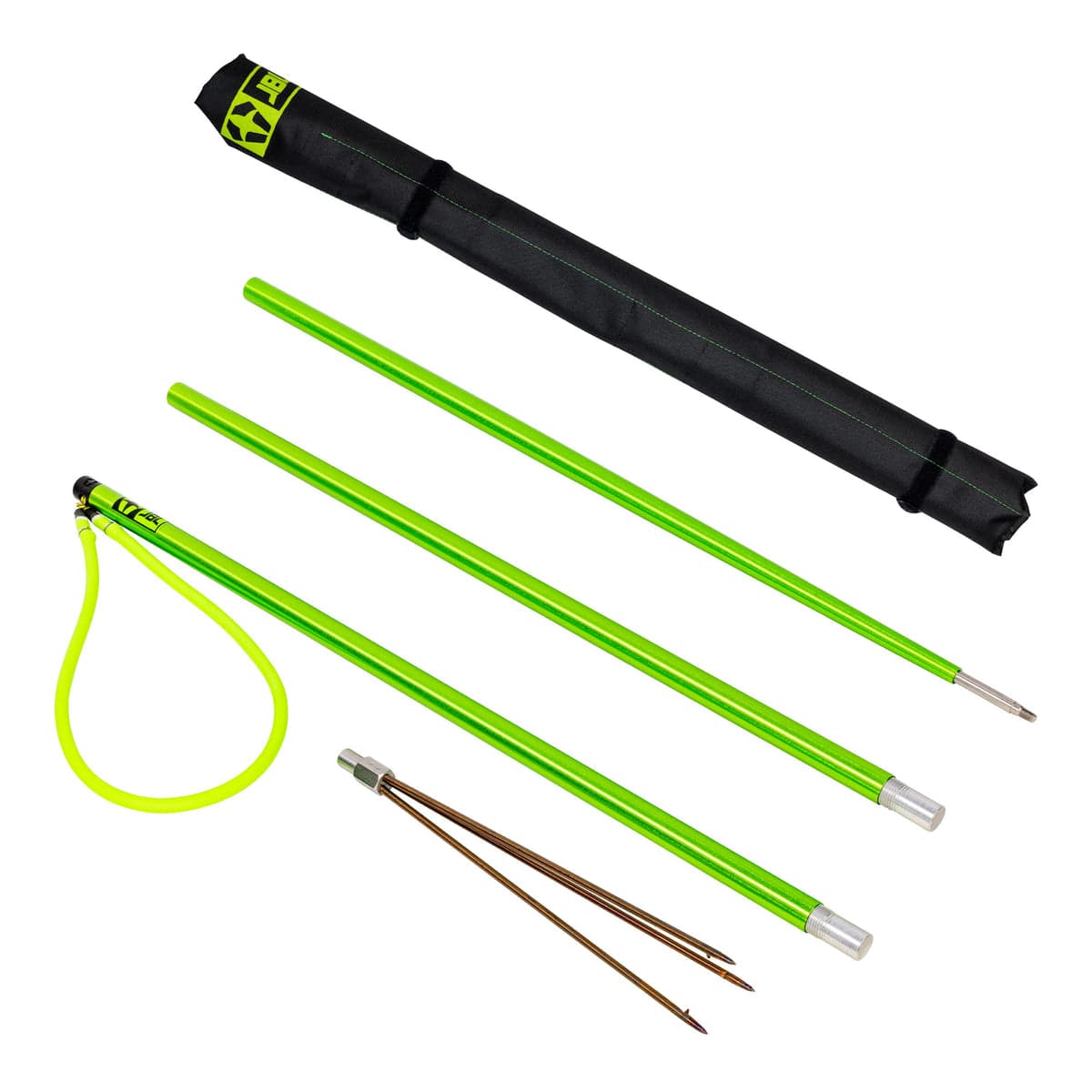
MAKO 3-in-1 Aluminum Travel Pole Spear

The cheap entry the spearfishing community actually points beginners to: a breakdown aluminum travel spear that ships complete with pole, tip, and band for around $45, from MAKO — a direct-to-diver brand r/spearfishing recommends repeatedly for value. One honest caveat from community reports: quality control on MAKO's cheapest tips can be hit-or-miss (rust complaints exist), so rinse and dry it religiously. Still the best get-wet-and-find-out money in the sport.

Purpose-built — spearfishing brands

~$200–580

Serious breakdown pole spears from dedicated spearfishing makers — real money, but built to hunt for years.

Aluminum-carbon hybrid · breakdown

Gatku Eight'er Hybrid Polespear

Ask the r/spearfishing community for a pole spear brand and the one-word answer, year after year, is "Gatku." The Eight'er is the 8-foot hybrid — anodized aluminum back two-thirds, carbon front — in a modular, threaded system you can travel with and reconfigure. No other pole spear in this guide has anywhere near this depth of repeated, unprompted community endorsement. If you're committed to hunting with a pole, this is the pick.

Composite · breakdown~$415–575

Headhunter Nomad Polespear

Headhunter is a well-regarded pole spear specialist, and the Nomad is its flagship: proprietary composite tubing with hardened fittings, aimed at larger fish, in traditional and roller versions. (Headhunter's 'Guerrilla' is a Hawaiian sling — a different weapon — so the Nomad is the pole spear to look at.) Honest availability note: Headhunter sells direct through its own site, so Amazon search results for it can be thin or off-brand — a buy-once choice for a diver who knows they're committed.

Carbon — deliberate upgrade

~$350–580

Stiff, light carbon pole spears for committed divers who want maximum performance and will care for them.

Carbon · high performance~$350–450
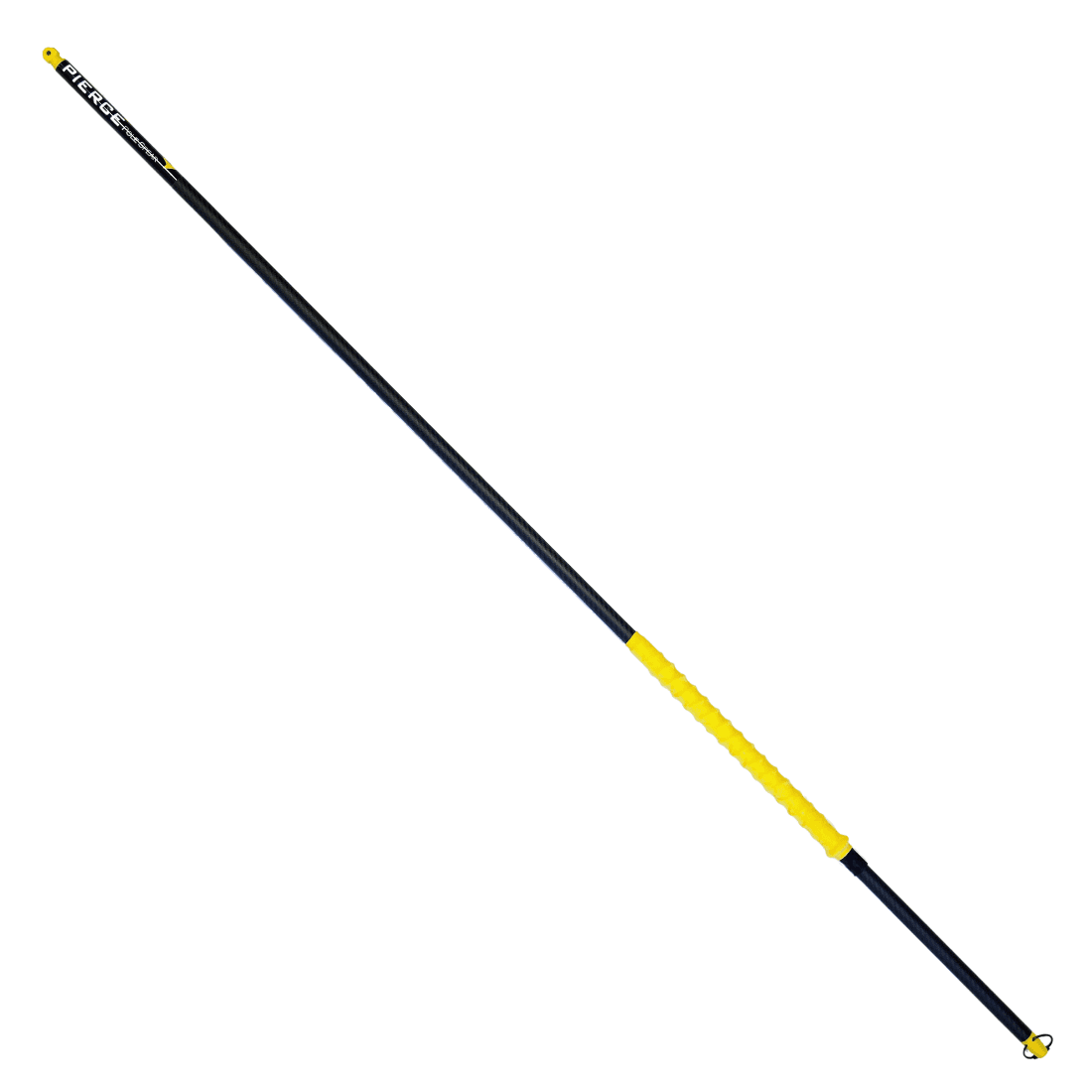
Koah Pierce Carbon Fiber Pole Spear
Image: Koah (manufacturer product page, opens in a new tab)

Koah Pierce Carbon Fiber Pole Spear

Koah is known for premium carbon-fiber pole spears with an excellent reputation for stiffness, light weight, and energy transfer, and the Pierce is its solid-carbon model. This is a performance purchase, not a starter — stiff carbon shoots hard but wants care around rock. A worthy upgrade once you've learned to close the distance and want the best out of each shot.

Carbon-fiberglass hybrid · premium brand~$400–580
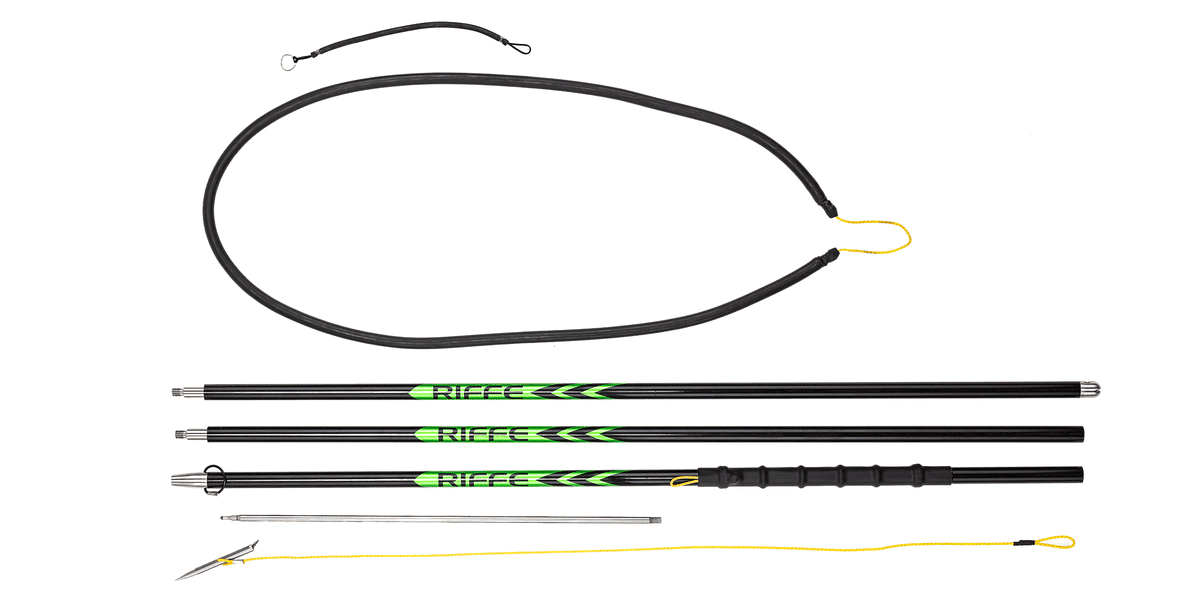
Riffe Mamba Composite Pole Spear
Image: Riffe (manufacturer product page, opens in a new tab)

Riffe Mamba Composite Pole Spear

Riffe is one of the most trusted names in US spearfishing, and the Mamba is its current pole spear: a breakdown shaft of aerospace-grade carbon fiber and fiberglass hybrid laminate, offered in 6-, 8-, and 9-foot kits. The hybrid layup keeps most of carbon's snap while shrugging off more abuse than pure carbon. A buy-once spear from a brand with deep community credibility and good parts support.

Some links are affiliate links — Island Spear Co may earn a commission at no extra cost to you. We only point you to gear with a real reputation among divers — and we tell you plainly we haven’t bench-tested it.

Before you buy

Check your local rules first

This is where legality really bites

Weapon legality is not academic with pole spears: some waters allow pole spears where spearguns are banned, others do the reverse, and freshwater rules differ again — plus seasons, size and bag limits, and closed areas all apply. Before you buy, read your state's spearfishing regulations so the weapon you choose is actually legal where you dive.

Learn from these

Common beginner mistakes

Buying too long a spear to load fully

A 9-foot spear you can't stretch to full tension shoots weaker than a 6-foot spear you can. Match length to your reach and strength; a fully loaded shorter spear out-hunts a floppy long one, especially in tight reef.

Using the wrong tip for the fish

A single barb on tiny reef fish means lots of misses; a three-prong paralyzer on a big fish won't penetrate or hold. Start with a paralyzer for small-to-medium fish and add a single barb later as your aim and quarry grow.

Expecting speargun range

A pole spear's reach is roughly your arm plus the shaft. Trying to shoot fish that are speargun-distance away just spooks them. The pole spear's whole lesson is getting genuinely close — lean into it rather than fighting it.

Skipping the legality check

Because pole spears and spearguns are treated differently from place to place — and freshwater rules differ again — the weapon that's legal at one spot may be banned at the next. Confirm your state's spearfishing regulations for your exact location before you spend a cent.

Careless handling of a loaded spear

A loaded pole spear is under real tension with a sharp tip. A slip can drive it into your own hand or a buddy. Load only in the water, keep the tip pointed away from people at all times, and never hand off or surface with a loaded spear.

Quick answers

Frequently asked questions

Is a pole spear or a speargun better for a beginner?
A pole spear is the cheaper, simpler starting point and it teaches the core skill of getting close, so many spearos begin there. A speargun offers far more range and power but costs more and adds a mechanism to maintain. A common path is to learn to stalk with a pole spear, then move up to a speargun once you can reliably close the distance — and, importantly, whichever is legal where you dive.
Is a Hawaiian sling the same as a pole spear?
No. A pole spear is a shaft with a band loop at the back that you load by hand and keep in your grip through the shot. A Hawaiian sling is a separate handle-and-band device (like an underwater slingshot) that a loose shaft passes through and flies free from when released. The sling gives more range but you retrieve a separate shaft after each shot.
What length pole spear should a beginner get?
Six to seven feet is the common all-round starting range. Longer spears reach and hit harder but are unwieldy in tight reef and harder to load fully, especially for smaller or newer divers; shorter spears are quicker and easier to manage. Choose a length you can stretch to full band tension — a fully loaded shorter spear beats a long one you can't load.
Which tip should a beginner use — paralyzer or single?
Start with a three-prong paralyzer tip. The spread of prongs makes it much easier to hit and hold small-to-medium reef fish and forgives imperfect aim. A single-barb (flopper) tip penetrates better for larger, tougher fish but demands better accuracy. Most tips thread on, so you can switch as your aim and target fish grow.

If you want the cheapest honest way to find out whether spearfishing is for you, buy a fiberglass breakdown pole spear with a paralyzer tip, learn to stalk within arm's reach, and have fun. The skills you build there carry into every speargun you'll ever own.

When you're ready to reach farther, read the best speargun for beginners guide, and round out your kit with fins, a mask, and the full beginner spearfishing gear list. Above all, confirm your state's spearfishing regulations first — with pole spears, legality genuinely varies.