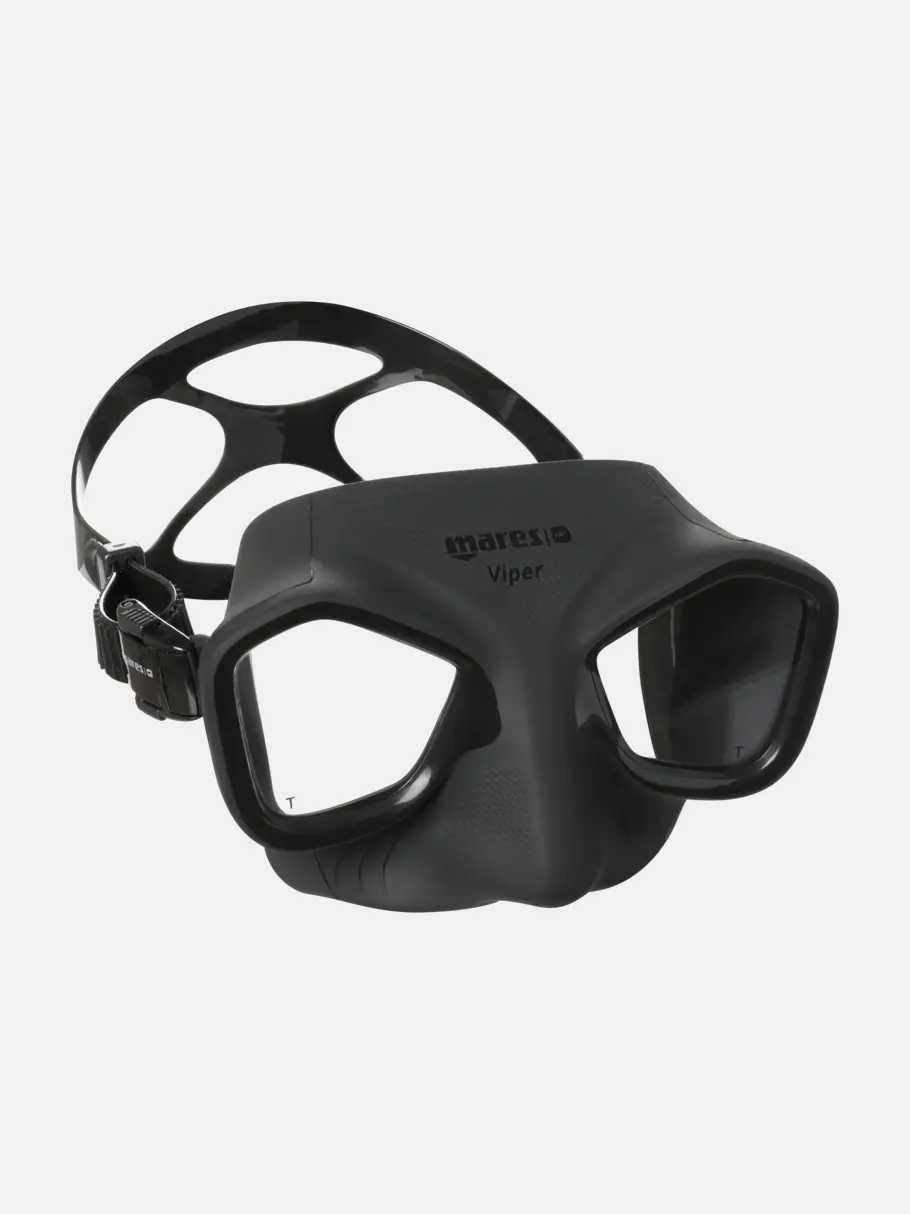
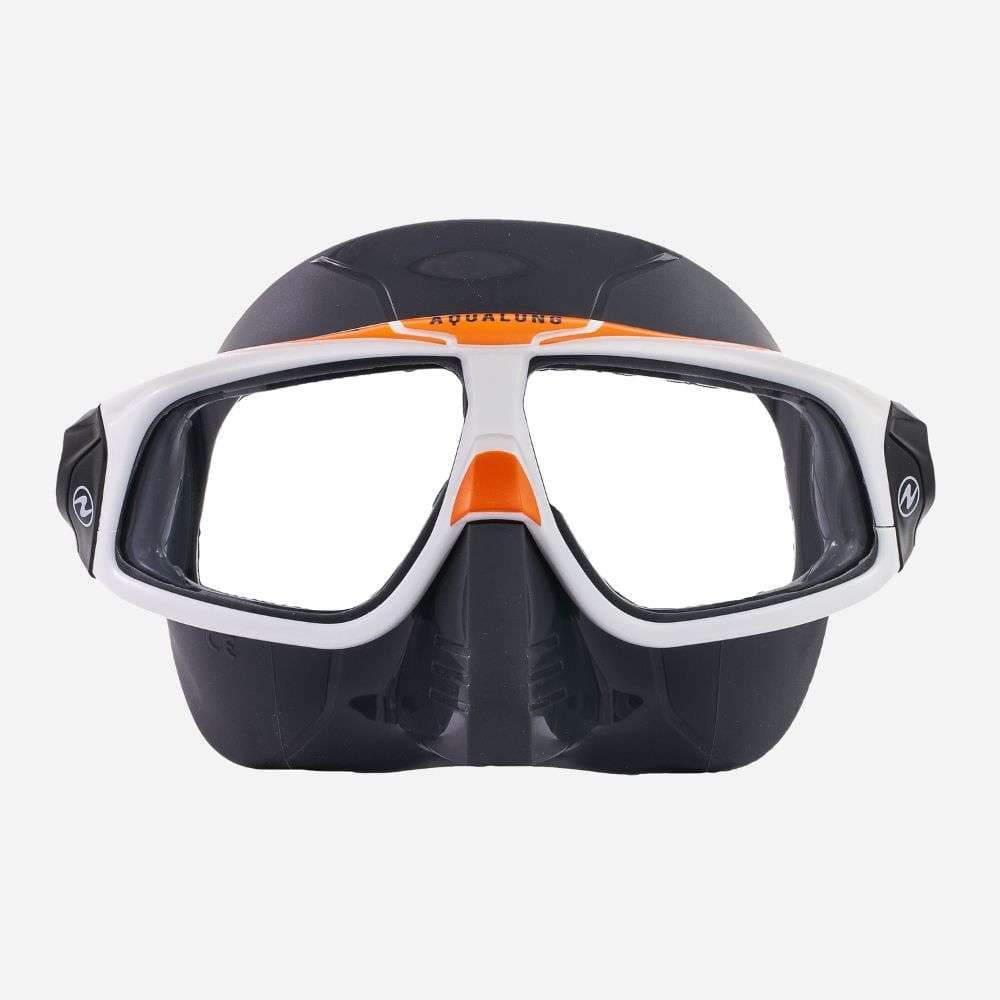
- What is a low-volume mask and why does it matter for spearfishing?
- A low-volume mask holds less air inside it. That matters because you have to equalize the mask on the way down by exhaling air from your nose into it — air that comes from the single breath you're holding. Less volume means less breath spent, less mask squeeze on your face, a wider field of view, and faster clearing, which is why freedivers and spearos favor low-volume masks over high-volume scuba masks.
- How do I know if a freediving mask fits me?
- Hold the mask against your face without using the strap, look down slightly, and gently inhale through your nose. A well-fitting mask sticks to your face on its own and holds a seal for a moment. If it falls off or leaks air around the nose or cheeks, that shape doesn't fit you — no strap tension will fix it, so try a different mask.
- Do I have to equalize my mask when freediving?
- Yes. As you descend, pressure squeezes the air in the mask against your face, so you exhale a small amount of air through your nose into the mask to relieve it. A low-volume mask makes this easier because there's less space to fill, costing you less of your breath and reducing mask squeeze on deeper dives.
- Framed or frameless — does it matter?
- Not as much as fit and volume. Frameless masks often have lower volume and sit closer to the eyes for a wide view, which spearos like; framed masks can be a bit more robust and sometimes allow lens swaps. Either can be excellent — pick based on the seal on your face and the internal volume, not the frame style.