Island Spear Co.

Gear guides Best Speargun for Beginners

The Best Speargun for Beginners: An Honest Buyer's Guide

How to actually choose your first speargun — length, power, rail, reel, and budget — plus real, well-regarded models across price tiers.

6 picks across 3 tiersReviewed July 7, 2026

Your first speargun is less about finding the single "best" gun and more about matching a gun to the water you'll actually dive and the fish you'll actually chase. A short reef gun and a long bluewater gun are both excellent — for completely different divers. Get the fit right and almost any reputable brand will serve you well for years.

This guide walks through the choices that matter — length, power source, rail, and rigging — and then points to real, widely respected models across budget tiers. To be clear about what this is: we launched in 2026 and have not physically tested these spearguns. These picks are curated from published manufacturer specs, each brand's long-standing reputation, and the recurring consensus in spearfishing communities. No paid placement, no invented ratings.

The first decision

Start with the fish and the water, not the gun

Speargun length is the single most consequential choice, and it's driven by two things: how far you can see, and how big and wary your target fish is. A longer gun reaches farther and shoots harder, but it's slower to swing and unwieldy in tight quarters. A shorter gun is quick and maneuverable but gives up range. Manufacturers publish barrel lengths in centimeters, and the community has settled on rough ranges that map well to conditions:

  • Short (~75–90 cm / 28–35"): low-visibility water, reef holes, kelp, structure, and smaller fish. Fast to aim in tight spots. A common first gun for green, murky, or shallow reef diving.
  • Medium (~90–110 cm / 35–44"): the all-rounder range — and within it, a ~90 cm double-band gun is what experienced spearos recommend to beginners over and over. Save 100–110 cm for clear tropical water.
  • Long (~110–130 cm+ / 44"+): clear, open water and larger, warier, or faster fish. More range and power, but a handful in confined spots — usually a second gun, not a first.

When beginners ask the r/spearfishing community what to buy first, the answer that keeps coming back is a 90 cm double-band gun: big enough to grow into, small enough to swing and load. (There's an honest counter-school, mostly Florida and Gulf divers on multiband wood guns, whose advice is "buy a bigger gun than you think you'll need" — but that's the second gun conversation for most people.) The rule of thumb stands: buy for the water you dive most, not the trophy you dream about. If your home spots are murky with fish inside 8–10 feet, a 90 cm gun will out-fish a 120 cm gun every session. You can always add a longer gun later.

Power source

Band (rubber) vs pneumatic (air)

Spearguns are powered one of two ways, and for most beginners in the US the choice leans one direction.

Band / rubber-powered

By far the most common style, and the one most experienced divers steer beginners toward. Bands (also called rubbers) are simple, quiet, and easy to maintain; you can tune power by adding or swapping bands; replacement bands are cheap and available everywhere; and the guns tend to be buoyant. The trade-off is loading — you brace the butt against your hip and stretch the bands by hand, which takes some technique and effort, especially on longer guns.

Pneumatic / air-powered

Air-powered guns are compact for their power and popular in the Mediterranean and among some cave and reef divers. The upsides are a short barrel for a given power level and a very direct feel. The downsides for a first-timer: a louder shot, more complex sealed internals, maintenance that's harder to do yourself, and the need to pump/charge the gun. They're capable weapons in the right hands, but they're a steeper on-ramp.

Bottom line: unless you already have a reason to go pneumatic, a band-powered gun is the starting point. This isn't a soft preference — when beginners ask the spearfishing community, the standing advice is blunt: get a band gun first, "no pneumatic." Bands are simpler to own, cheaper to keep running, and far easier to get parts and help for; pneumatics earn their keep later, in niche cold, murky, or tight-quarters diving.
Accuracy

Rail vs railless

A "railgun" has a track machined into the top of the barrel that guides the spear as it fires, which keeps the shaft straighter and improves accuracy — particularly on longer shots. Nearly every modern beginner-friendly band gun is a railgun, and it's the feature most worth insisting on. Older or traditional "open-barrel" (railless) guns can shoot well in skilled hands but are less forgiving. For a first gun, choose a rail.

Rigging

Reel, float line, or just a shooting line

How the spear stays connected to you (and how the fish stays connected to the spear) is a safety and recovery decision as much as a gear one.

  • Shooting line only: the spear is tied straight to the gun. Simplest setup, fine for smaller reef fish on your very first outings.
  • Float line + float: the gun is tethered by a line to a surface float. Widely recommended for beginners — it marks your position for boat traffic, keeps you connected to a landmark, and gives a big fish something to fight against the float instead of ripping free.
  • Reel: line spools on the gun itself, letting a running fish take line without a trailing float line. Great for boat and bluewater diving, but it adds a moving part and a bit of complexity most beginners don't need on day one.

A reasonable, safety-first starting point for many new divers is a float and float line rather than a reel. Add a reel when you start targeting fish that run.

What your money buys

Budget tiers, honestly

You do not need an expensive gun to start well. Prices below are approximate street ranges that shift with length, retailer, and season — treat them as ballparks, not quotes.

  • Entry (~$100–200): complete band railguns from major dive brands. Everything you need to start catching fish. This is where most first guns should live.
  • Mid (~$200–400): better rails and triggers, tougher build, and workhorse reputations that hold up to heavy use. A sensible tier if you already know you'll dive often.
  • Investment (~$450+): premium wood and machined guns that are built to be bought once and kept for a decade. Wonderful tools, but genuinely not necessary for a beginner — buy here only if you already know exactly what you want.

And the honest option that costs us a commission to mention: buy used. It's the top budget advice experienced spearos give beginners — Facebook Marketplace and local dive clubs are full of lightly used railguns from divers who upgraded or quit, often at half price. Spearguns are simple machines; fresh bands and a straight shaft make a used gun as good as new. If the budget is tight, a used gun from a known brand beats a new no-name every time.

The recommendations

Well-regarded first spearguns by budget

These are real, widely respected models chosen for the reasons noted on each card — brand reputation, parts availability, and how often each comes up in beginner discussions. We haven’t tested them; treat each link as a starting point for your own research, and check current price and the exact length that fits your water.

Entry level

~$120–260

Complete band railguns from large, established brands — the range most first guns should live in.

Band railgun · entry~$130–210
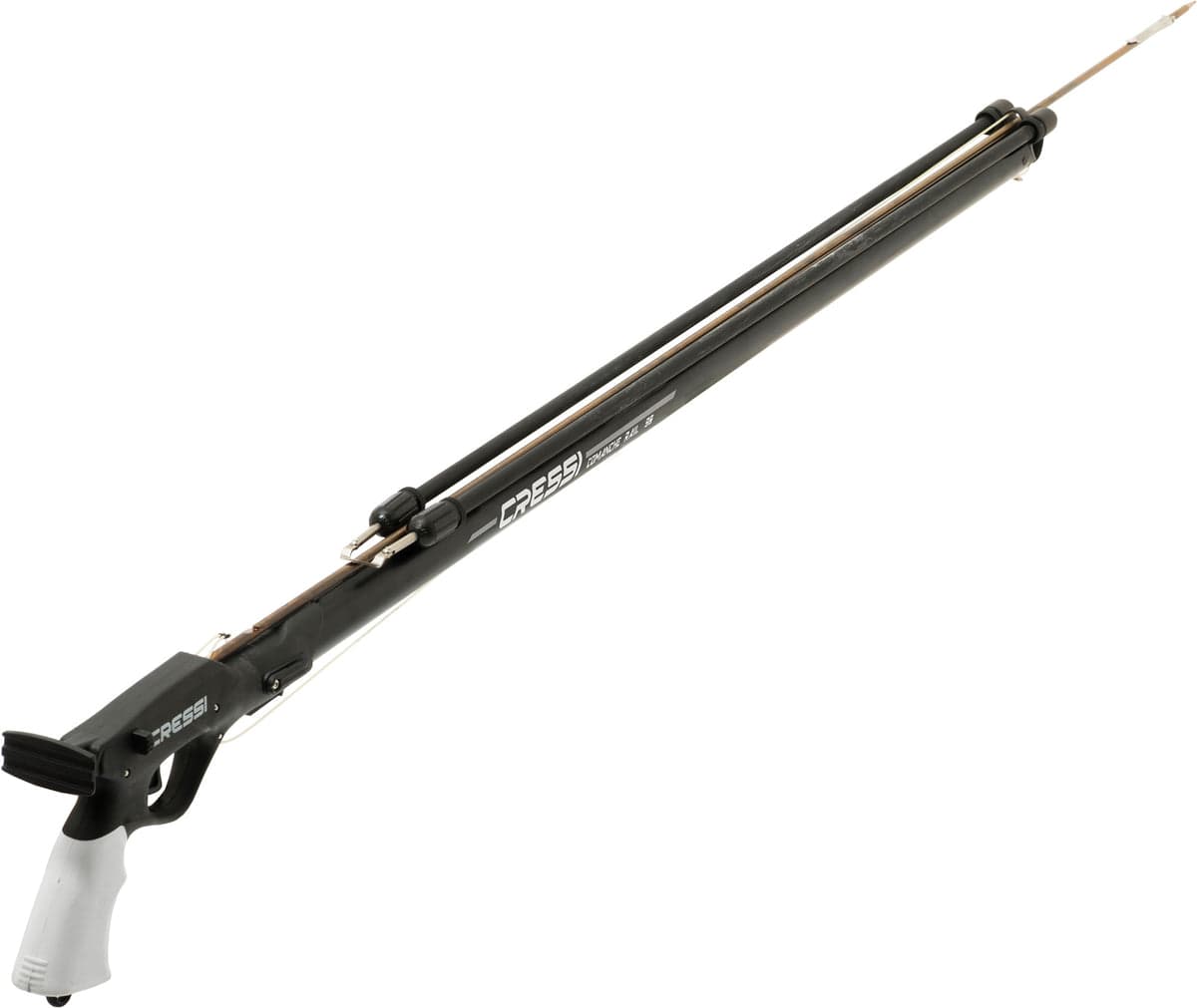
Cressi Comanche
Image: Cressi (manufacturer product page, opens in a new tab)

Cressi Comanche

One of the most frequently recommended first spearguns in beginner communities. Cressi is a large, long-established Italian dive manufacturer, so bands, shafts, and parts are easy to find and replace. It's a straightforward closed-muzzle aluminum railgun offered in several lengths, which makes it easy to match to your local water — the reasons it lands on 'first speargun' lists year after year.

Wood · entry~$180–280
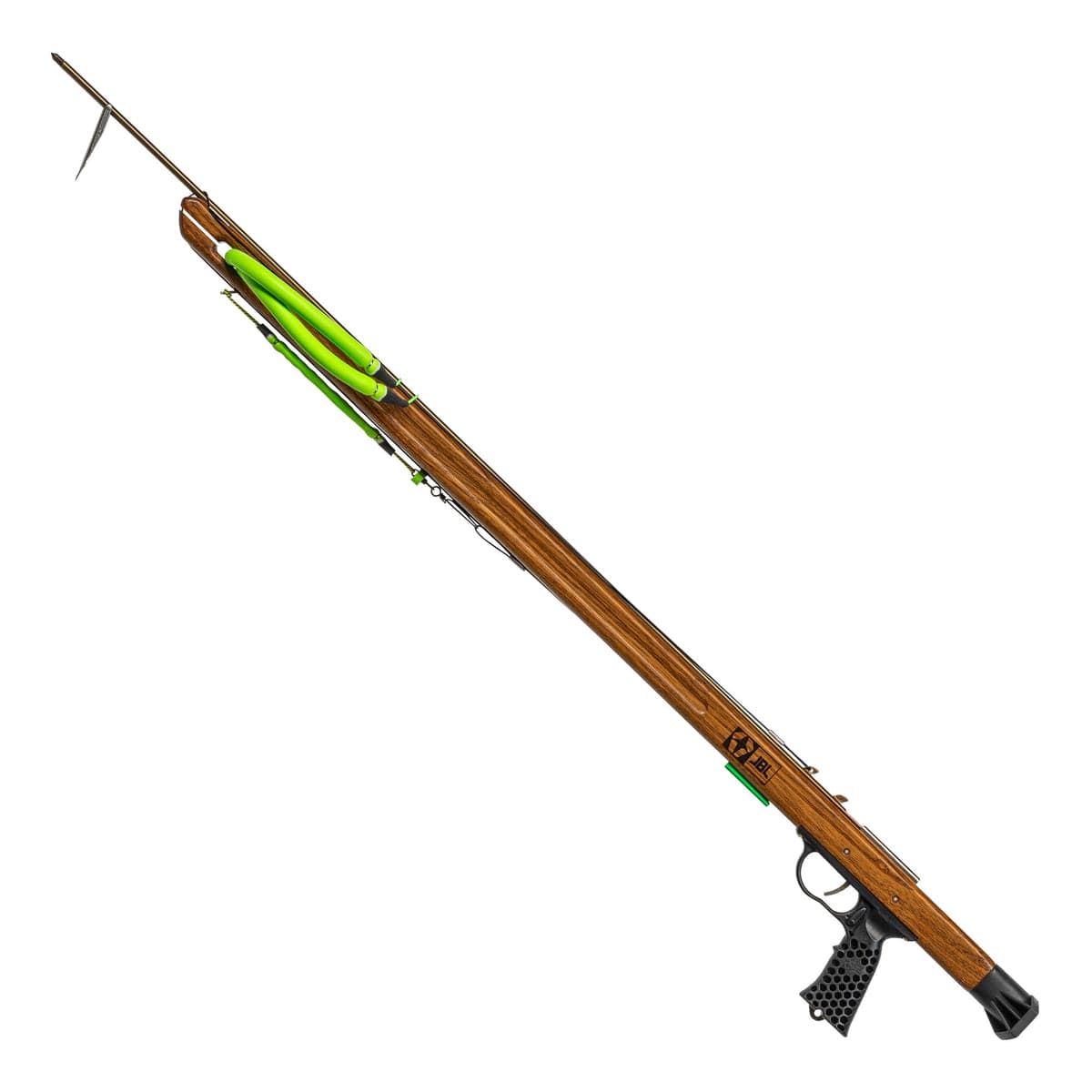
JBL Elite Woody Magnum
Image: JBL (manufacturer product page, opens in a new tab)

JBL Elite Woody Magnum

JBL is a well-known American speargun brand with wide US retail support. The Woody Magnum line gives new divers an entry point into a laminated-wood barrel — heavier and quieter in the water than aluminum — without an investment-tier price. A reasonable pick for a diver who likes the feel of wood and wants parts and service that are easy to source stateside.

Mid / workhorse

~$220–420

Tougher builds and workhorse reputations for divers who already know they'll be in the water often.

Band railgun · workhorse~$260–420
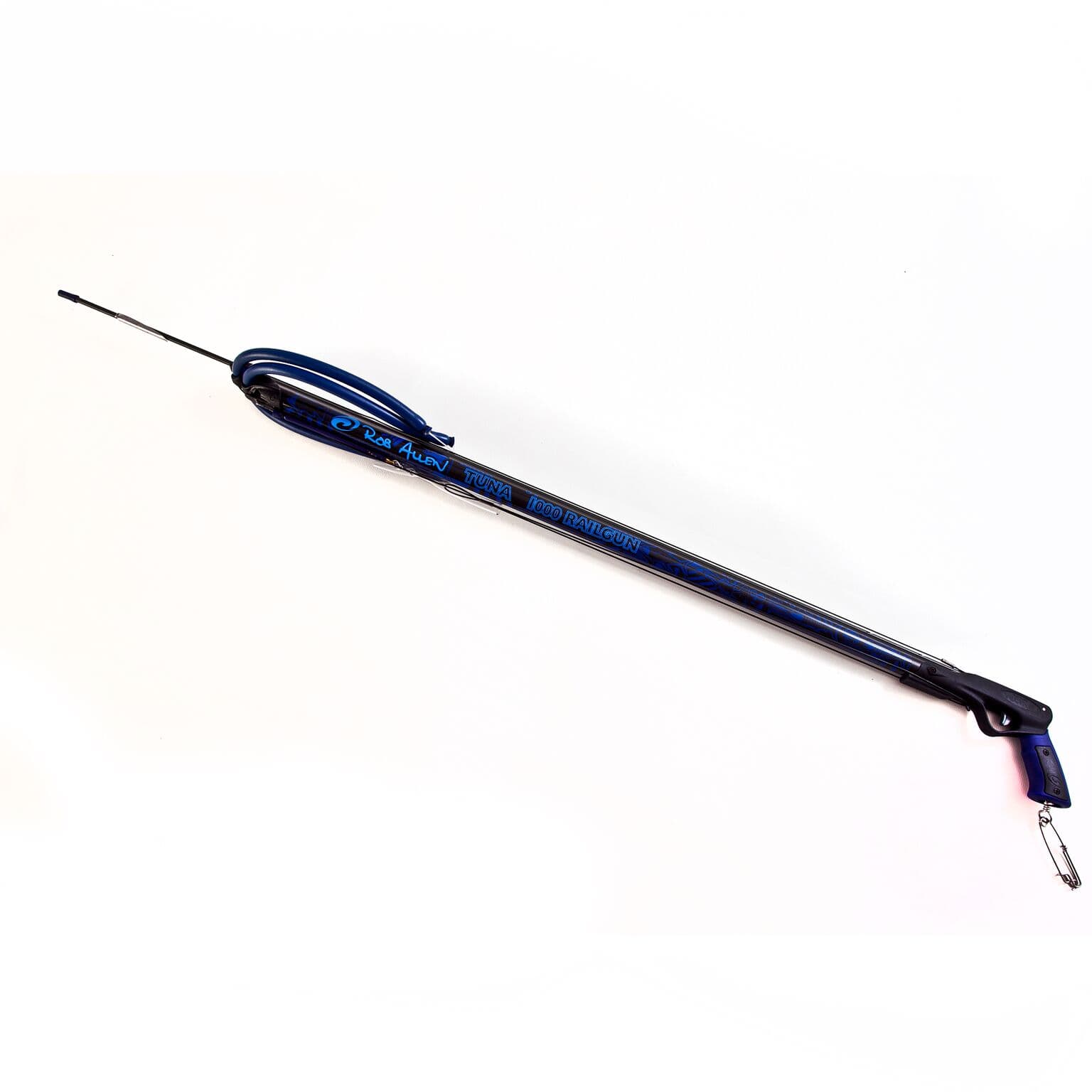
Rob Allen Tuna
Image: Rob Allen (manufacturer product page, opens in a new tab)

Rob Allen Tuna

The closest thing to a default answer in the sport: when experienced spearos are asked for one gun a beginner won't outgrow, the r/spearfishing community recommends the Rob Allen Tuna again and again — one diver's line, "the Honda Civics and Toyota Tacomas of the spearfishing world," sums up its reputation. A durable, no-nonsense South African railgun you can add a reel or heavier shafts to as you improve. If the mid tier is in your budget, this is the community's pick.

Band railgun · mid

Salvimar Hero

Salvimar is the European brand the r/spearfishing community actually names when beginners ask about a step-up gun — the recurring advice is "Salvimar is a very good brand… get a 90 cm double band and it'll be very versatile." The Hero is its accessible aluminum railgun with real US availability and parts support. In the 90–95 cm lengths it lines up exactly with the community's default-first-gun advice.

Pneumatic + investment

~$300–750

A niche pneumatic for experienced divers and a buy-once wood gun — chosen deliberately, not by default.

Pneumatic · niche~$300–360

Mares Cyrano 1.1

An honest caveat first: the spearfishing community's consensus for beginners is band gun first — the standing advice is literally "no pneumatic" for a first gun. We keep the Cyrano 1.1 here as the niche, experienced-diver option: it's the reference pneumatic, with an offset inner barrel for a better sight line and Mares' global parts support, and it earns its keep in the cold, murky, and tight-quarters diving where pneumatics still shine. Louder and harder to service yourself than a band gun — pick it deliberately, and only if you already know why you want one.

Wood · buy-once~$550–750

Riffe Mahogany Competitor Series

Riffe is a premium California wood-gun maker with a near-legendary reputation for build quality and resale value, and the Mahogany Competitor Series is the most accessible wood gun in its current production line. This is a 'buy once, keep for a decade' gun, not a starter — but a diver who already knows their local conditions and wants to skip the upgrade cycle often points here. Overkill for a true beginner, which is exactly why it sits in the investment tier.

Some links are affiliate links — Island Spear Co may earn a commission at no extra cost to you. We only point you to gear with a real reputation among divers — and we tell you plainly we haven’t bench-tested it.

Before you buy

Check your local rules first

Legality varies by location

Speargun legality, allowed lengths, and where you may use one vary widely by state and territory — some waters restrict or ban them, others limit distance from swimmers, piers, or freshwater. Check your state's spearfishing regulations before you buy so your new gun is legal where you dive.

Learn from these

Common beginner mistakes

Buying too much gun for the water

The most common first-gun mistake is a long bluewater gun for murky, close-quarters home reef. Length should follow visibility and target size — a shorter, quicker gun out-fishes an oversized one in low vis.

Skipping the float and float line

A float marks you for boat traffic, keeps you tied to a landmark, and gives a big fish something to fight besides your grip. It's a safety item first and a recovery tool second — don't treat it as optional.

Buying no-name gear with no parts support

Bands wear out and shafts bend — that's normal. A gun from an established brand means replacement parts are a search away. An unbranded bargain gun can become unusable the first time something breaks.

Not checking local rules before buying

Speargun legality, allowed lengths, and where you may use them vary widely by location — some waters restrict or ban them outright, others limit distance from swimmers, piers, or freshwater. Check your state's spearfishing regulations before you buy so your new gun is actually legal where you'll dive.

Loading out of the water or near people

A loaded speargun is a loaded weapon. Never load it on the boat, dock, or beach, and never point it at anyone. Load only in the water, aimed at the bottom or open water, with the safety on until you're ready to shoot.

Quick answers

Frequently asked questions

What size speargun is best for a beginner?
The most common recommendation from experienced spearos is a ~90 cm double-band gun — big enough to grow into, small enough to swing and load. Go shorter (75–90 cm) if you mostly dive low-visibility water, reef structure, or for smaller fish; save 100–110 cm for clear, open tropical water and larger fish. Match the length to the water you actually dive most, not the biggest fish you hope to shoot.
Should a beginner get a band or pneumatic speargun?
For most beginners, especially in the US, a band-powered (rubber) gun is the more commonly recommended starting point. Band guns are simpler, quieter, cheaper to maintain, easy to tune, and have widely available parts. Pneumatic (air-powered) guns are compact and powerful but louder and harder to service yourself, so they're usually a deliberate choice rather than a default first gun.
How much should I spend on my first speargun?
A complete entry-level band railgun from an established brand typically runs roughly $120–260 depending on length and retailer. That's enough to start catching fish well. Premium wood and machined guns ($450+) are excellent but genuinely unnecessary for a beginner — you can always upgrade once you know your local diving.
Do I need a reel on my first speargun?
Not necessarily. Many beginners start with a float and a float line rather than a reel — it's simpler, helps mark your position for safety, and lets a big fish fight the float instead of tearing free. A reel is worth adding later when you start targeting fish that run hard, particularly for boat and bluewater diving.

If you take one thing from this guide: pick the length that fits your water, choose a band railgun from a brand you can get parts for, rig it with a float line, and dive it a lot. That combination will teach you more about what you actually want in a gun than any spec sheet.

New to the sport entirely? Our spearfishing gear list for beginners lays out everything you need to get in the water. And before you check out, confirm your state's spearfishing regulations — speargun legality and length limits genuinely vary by state and territory, and it's a quick check that saves an expensive mistake.