Island Spear Co.

Gear guides Best Spearfishing Wetsuit

Best Spearfishing Wetsuit: An Honest Buyer's Guide

Open-cell vs lined, camo, and — most important — what thickness to run for your water temperature. A plain-English wetsuit primer.

6 picks across 3 tiersReviewed July 7, 2026

A wetsuit does three jobs for a spearo: it keeps you warm enough to stay in the water and stay relaxed, it adds a little quiet and camouflage, and it protects your skin from sun, stings, and reef. Warmth is the one that matters most — a cold diver breathes harder, holds their breath worse, and quits early, so the right suit is the one that keeps you comfortable for the whole session in the water you actually dive.

The two decisions that drive everything are construction (open-cell vs lined) and thickness (set by water temperature). Get those right and the rest — camo pattern, brand, one-piece vs two-piece — is detail. This guide explains each, gives you a temperature-to-thickness starting chart, and points to real, well-regarded suits. As always: we launched in 2026 and have not physically tested this gear; picks are curated from specs, reputation, and community consensus, with no paid placement.

The first decision

Open-cell vs closed-cell (lined)

Open-cell (raw neoprene interior)

The spearfishing standard. Open-cell neoprene has a raw, slightly sticky inner surface that seals against your skin, which makes it noticeably warmer for a given thickness — a big deal on repeated breath-hold dives. The trade-offs: it's more fragile, and you can't pull it on dry — you don a wet suit with a lubricant (soapy water or a conditioner solution) or it will tear. Most dedicated spearos accept that ritual for the warmth.

Closed-cell / lined (nylon or jersey inside)

A fabric lining on the inside makes the suit tougher and much easier to slide on and off dry — great for beginners, rentals, and rough handling. The cost is warmth: a lined suit is cooler than an open-cell suit of the same thickness, because it doesn't seal to your skin as tightly. A perfectly reasonable first suit, especially in warm water, as long as you know you're giving up some warmth for convenience.

Honest take: if you'll dive often and want maximum warmth per millimeter, open-cell is worth the donning hassle. If you want easy and durable while you learn, a lined suit is a fair starting point — just size the thickness up a touch to make up for the lost warmth.

The part everyone gets wrong

Water temperature → wetsuit thickness

Thickness is set by water temperature, and freedivers run colder than scuba divers do — you surface constantly, stay wet, and aren't warmed by the exertion of a working dive, so err thicker than a scuba chart would suggest. These are open-cell starting points for a full-body suit; add a millimeter or two if you run cold, dive long sessions, or wear a lined suit:

  • Tropical, ~80°F+ (27°C+): 1.5–3 mm, or even a dive skin / rash guard in the warmest, shortest sessions. Think Caribbean and Pacific reef in summer.
  • Warm subtropical, ~72–80°F (22–27°C): 3 mm. The classic warm-water spearfishing suit.
  • Temperate, ~62–72°F (17–22°C): 5 mm. The most common all-round thickness for much of the US coast in season.
  • Cool, ~55–62°F (13–17°C): 7 mm, usually with a hood, gloves, and socks. Cold-water spearing territory.
  • Cold, below ~55°F (13°C): 7 mm+ with full hood/gloves/socks, or into drysuit-and-training territory — plan carefully and don't push cold tolerance.

Two honest caveats: cold tolerance is personal — some divers need a step thicker than the chart — and a suit that's too warm is genuinely dangerous on land in the sun (overheating). Match the suit to your coldest regular water and manage heat on the surface by staying wet and unzipped between drops.

Cut and camo

Two-piece, and does camo matter?

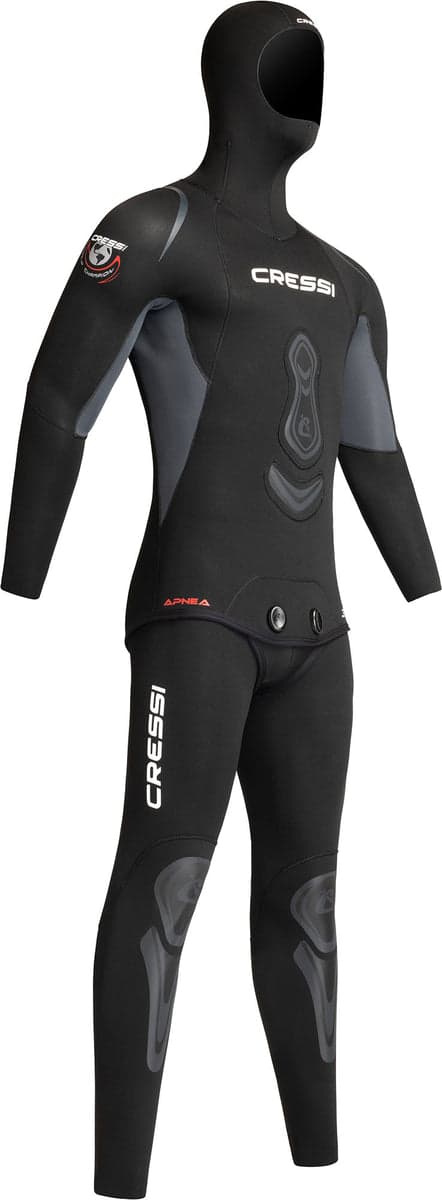
Most spearfishing suits are two-piece: a high-waisted "long john" bottom plus a hooded jacket, so the core and head — where you lose the most heat — get a double layer of neoprene. The jacket usually has a reinforced loading pad on the chest so you can brace a speargun butt without bruising. That two-piece, hooded, load-padded cut is what separates a real spearfishing suit from a surf or scuba suit.

Camo patterns help you blend into a given backdrop, and many divers like them — but be realistic: water clarity, your movement, and how you approach fish matter far more than the exact print. A camo suit won't rescue a clumsy stalk, and a plain suit won't ruin a patient one. Pick camo if you like it and it suits your local bottom; don't pay a big premium for the pattern alone over fit and warmth.

Why fit is warmth

Fit: snug, not baggy

A wetsuit keeps you warm by trapping a thin layer of water that your body heats; if the suit is baggy, cold water flushes through and steals that heat every time you move. A good spearfishing suit fits snug everywhere without choking your neck or restricting your breathing. Off-the-rack sizing works for many builds, but if you're between sizes or an unusual shape, many spearfishing brands offer made-to-measure — worth it for warmth and comfort on a suit you'll wear for years.

Two honest notes the community repeats. First: because fit is everything, a local dive shop where you can try suits on beats ordering from Amazon — the advice and the fit check are worth the little extra. Second: a second-hand suit is a genuinely smart first buy. Experienced spearos routinely tell beginners to buy a used wetsuit — if you don't stick with the sport you've lost little, and a well-kept suit has years left in it. That advice costs us a commission; it's still the right advice.

The recommendations

Well-regarded spearfishing wetsuits by budget

These are real, widely respected models chosen for the reasons noted on each card — brand reputation, parts availability, and how often each comes up in beginner discussions. We haven’t tested them; treat each link as a starting point for your own research, and check current price and the exact length that fits your water.

Entry / warm water

~$90–220

Beginner-friendly suits — easy-wearing lined options and affordable open-cell — for warm and temperate water.

Lined · 3mm beginner~$90–180
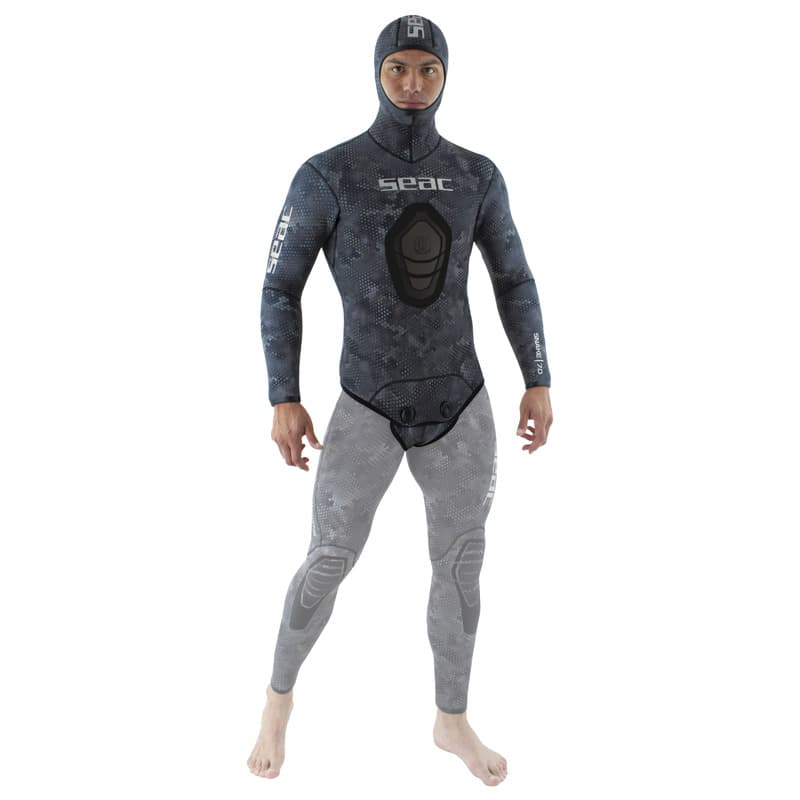
Seac Kama spearfishing wetsuit
Image: Seac (manufacturer product page, opens in a new tab)

Seac Kama 3mm

Seac is a large, established Italian dive brand with broad Amazon availability, and the Kama 3mm is the specific suit to look for — retail buying guides call it a great starter wetsuit, and 3mm is the right thickness for the warm subtropical water most of our readers actually dive. Durable, reasonably priced, and simple to don for someone new to the sport: a sensible first suit where you value convenience and toughness over squeezing out the last degree of warmth.

The spearo standard

~$180–400

Two-piece open-cell camo suits with hooded jackets and chest loading pads — the working spearfishing suit.

Warm-water camo + the cold-water slot

~$250–520

The 3mm open-cell camo suit our warm-water readers will actually wear most of the year — plus one clearly-labeled cold-water 7mm.

Open-cell · 3mm two-piece camo
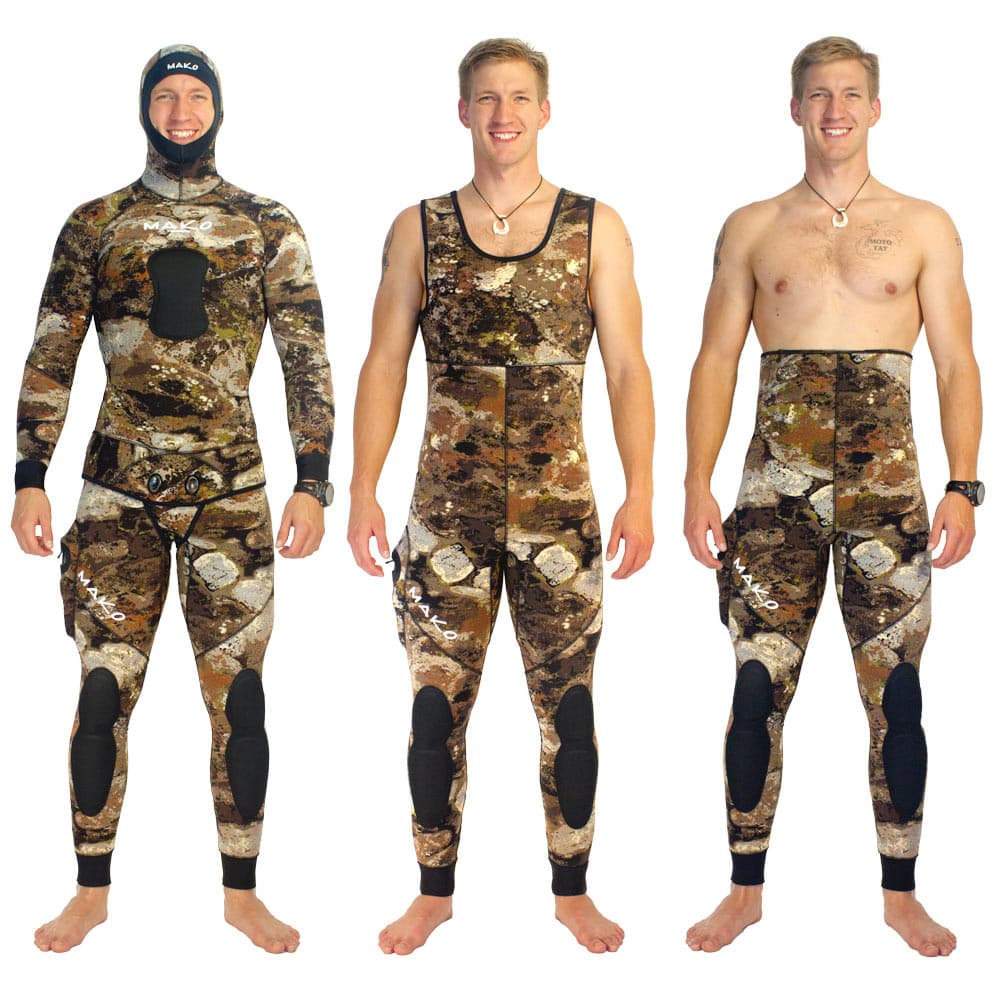
MAKO Yamamoto reef camo two-piece open-cell wetsuit
Image: Mako Spearguns (manufacturer product page, opens in a new tab)

MAKO 3mm Yamamoto Reef Camo Two-Piece

MAKO Spearguns has a strong value reputation in the spearfishing community for open-cell camo suits that punch above their price — and for the warm subtropical water most of our readers dive (Puerto Rico, Florida), 3mm is the thickness that actually matches the community pattern: rash guard in summer, 3mm open-cell two-piece for 'winter.' Yamamoto neoprene, hooded jacket, chest loading pad. This, not a 7mm, is the working suit for our waters.

Open-cell · cold water ONLY~$300–520

Omer Spearfishing Wetsuit (7mm)

The one cold-water slot in this guide, and be clear about who it's for: this is a suit for water in the 50s°F — northern seasons, deep cold upwellings, winter diving well outside the tropics. If you dive Puerto Rico or Florida, you will likely never need 7mm; buy the 3mm instead. For divers who genuinely face cold water, Omer is a major spearfishing brand and its thicker open-cell suits — hooded jackets, camo options — are a common, sensible pick.

Some links are affiliate links — Island Spear Co may earn a commission at no extra cost to you. We only point you to gear with a real reputation among divers — and we tell you plainly we haven’t bench-tested it.

Before you buy

Check your local rules first

The suit is legal — the fishing has rules

A wetsuit isn't regulated, but the diving you'll do in one is — seasons, size and bag limits, protected species, gear restrictions, and marine protected areas all vary by location. Before you gear up, read your state's spearfishing regulations so a warm, comfortable dive stays a legal one.

Learn from these

Common beginner mistakes

Buying too thin for breath-hold diving

Freedivers get colder than scuba divers — constant surfacing, always wet, little exertion warmth. A suit that feels fine for a quick swim leaves you shivering after an hour of drops. Size thickness to your coldest regular water, and err thicker if you run cold or dive long.

Buying a surf or scuba suit instead of a spearfishing suit

General wetsuits lack the two-piece hooded warmth and the chest loading pad a spearo needs, and they're often cut for different movement. A purpose-built spearfishing suit is warmer where it counts and won't bruise your sternum when you load a gun.

Getting a baggy fit

A loose suit flushes cold water through with every kick, killing its warmth. Fit should be snug everywhere without restricting breathing. If you're between sizes or an unusual build, consider made-to-measure — it's the difference between warm and miserable.

Pulling an open-cell suit on dry

Open-cell neoprene sticks to skin by design, and yanking it on dry will tear it. Don it with plenty of lube — diluted hair conditioner or soapy water — and take your time. Skipping this step is how new divers destroy an expensive suit on day one.

Choosing camo over fit and warmth

Camo pattern matters far less than clarity, approach, and a suit that actually fits and keeps you warm. Buy the pattern you like once fit and thickness are right — don't pay a premium for a print that won't fix a clumsy stalk.

Quick answers

Frequently asked questions

Should a beginner get an open-cell or closed-cell wetsuit?
Open-cell suits are warmer per millimeter and are the spearfishing standard, but they're more fragile and must be donned with lubricant. Lined (closed-cell) suits are tougher and far easier to pull on and off dry, which makes them a friendly first suit — at the cost of some warmth. If you'll dive often, open-cell is worth the hassle; if you want easy and durable while learning, a lined suit sized a touch thicker is a fair start.
What thickness wetsuit do I need for my water temperature?
As open-cell starting points: 1.5–3 mm for tropical water (80°F+), 3 mm for warm subtropical (72–80°F), 5 mm for temperate (62–72°F), and 7 mm with a hood for cool water (55–62°F), going thicker still below that. Freedivers run colder than scuba divers, so err thicker, and add a millimeter for long sessions, a lined suit, or if you personally run cold.
Does a camo wetsuit actually help?
A little, in the right backdrop — camo can help you blend into a specific bottom type. But water clarity, your movement, and a patient approach matter much more than the exact pattern. Choose camo if you like it and it suits your local reef, but prioritize fit, warmth, and thickness first; don't pay a big premium for the print alone.
Why do freedivers wear thicker suits than scuba divers in the same water?
Because breath-hold divers surface constantly, stay wet, and don't generate the steady warmth of a working scuba dive, so they lose heat faster. A thickness that's comfortable on scuba can leave a freediver cold, which is why spearfishing charts skew a step thicker and lean toward warmer open-cell construction.
Bottom line: pick your thickness from your coldest regular water, choose open-cell if you want maximum warmth or a lined suit if you want easy-and-durable while you learn, and make sure it fits snug. Warmth keeps you relaxed, and a relaxed diver dives better and longer.

Pair the suit with the right freediving fins and mask, or see the whole kit in the beginner spearfishing gear list. And whatever you dive, confirm your state's spearfishing regulations before you get in the water.