Island Spear Co.

Regulations South Carolina

Spearfishing Regulations in South Carolina

Checked against the primary source (SCDNR) on July 5, 2026state

Governing agency: South Carolina Department of Natural Resources (SCDNR) — Marine Resources Division (salt water) and Freshwater Fisheries (fresh water). Last verified July 5, 2026 by independent primary-source check.

Summary

South Carolina has an Atlantic coast, so spearfishing is legal in both salt and fresh water under different rules. In salt water, spearfishing is a lawful method subject to the same size, creel and seasonal limits as any other gear, and requires a Saltwater Recreational Fishing License; powerheads/bang sticks are banned in state waters. In fresh water, spears and gigs are legal nongame devices — you may spear only nongame (rough) fish, never game fish, and never in Game Zone 1 or in SCDNR State-Managed Lakes. A recreational fishing license (saltwater or freshwater as appropriate) is required and is actively enforced.

License

What you need to be legal

LegalA license is required
License
South Carolina Saltwater Recreational Fishing License (marine waters) or South Carolina Freshwater Fishing License (inland waters)
Who needs it
Anyone spearing or gigging fish in South Carolina salt water needs a Saltwater Recreational Fishing License; anyone spearing/gigging nongame fish in fresh water needs a Freshwater Fishing License. All forms of gigging require a license. If you sell your catch, a commercial license is required instead of a recreational one. (s1, s4, s5)
Resident cost
Resident Saltwater Recreational Fishing License: $15 annual, $10 for 14 days, $45 for 3 years. Resident Freshwater Fishing License: $10 annual, $5 for 14 days, $30 for 3 years. A $25 resident combination license includes freshwater fishing. Fees effective 7/1/2025–6/30/2026. (s6, s7)
Non-resident cost
Nonresident Saltwater Recreational Fishing License: $75 annual, $35 for 7 days, $10 for 1 day. Nonresident Freshwater Fishing License: $35 annual, $11 for 14 days, $105 for 3 years. Fees effective 7/1/2025–6/30/2026. 6
Where to buy
Online through SCDNR at dnr.sc.gov/licensing, by phone (1-866-714-3611), or from license agents statewide. (s4, s6)

Exemptions

  • General SCDNR license exemptions (e.g., certain age brackets, and free fishing days set by SCDNR) apply as they do to any recreational angler; confirm current exemptions with SCDNR (unverified for spearfishing specifically)

The full story

The full story

South Carolina has no phantom-license problem — the license is real, issued, and enforced. If you spear in salt water you need a Saltwater Recreational Fishing License; if you spear or gig nongame fish in fresh water you need a Freshwater Fishing License; 'all forms of gigging require a license.' The nuance in South Carolina is not law-vs-practice on paperwork — it is the sharp split between what 'spearfishing' and 'gigging' mean and where each is allowed. (s1, s4, s5)

In SALT water, spearfishing is a legitimate, well-established method. It is bounded by the same size, creel and season limits as any gear, and by a firm ban on bang sticks / powerheads in state waters (SC Code 50-5-110). The state's artificial-reef Special Management Zones are effectively reserved for handheld hook-and-line anglers and spearos — but even there, powerheads are excluded. Separately, South Carolina regulates 'gigging' (taking fish with a prong/spear/bow) with its own species rules: no flounder gigging in daylight, no shark gigging, and a December–February closure on gigging red drum and spotted seatrout, plus a Georgetown County daylight-gigging closure. The daylight flounder-gigging ban lives in SC Code 50-5-581, which expressly carves out underwater spearfishing — 'for the purposes of this section, gigging does not include underwater spear fishing' — so a submerged diver spearing flounder is not bound by that daylight clock (this is confirmed statutory language, not just an informal note). That carve-out is written into the flounder section specifically; a diver should not assume every gigging rule (e.g., the shark or red drum/seatrout gigging bans) contains the same words. (s2, s3, s9)

In FRESH water, South Carolina follows the common pattern: spears and gigs are 'nongame fishing devices,' so you may take rough/nongame fish with them but never game fish, and any game fish that ends up on your spear must be released. Two geography rules matter most: nongame devices are banned entirely in Game Zone 1 (the upstate corner in parts of Oconee, Pickens and Greenville counties) and may not be used in any SCDNR State-Managed Lake. Everywhere else in fresh water, with a freshwater license, spearing nongame fish is legal and needs no extra permit. (s5, s8)
Where it's legal

Saltwater & freshwater

Saltwater

Legal

South Carolina's marine waters are open to spearfishing. Spearfishing is a lawful method subject to the same size limits, creel/bag limits and closed seasons that apply to any gear for a given species, and a Saltwater Recreational Fishing License is required. Two hard gear limits: (1) bang sticks / powerheads are prohibited in state waters — it is unlawful to possess, land or sell any fish taken with a bangstick (SC Code 50-5-110); and (2) on artificial reefs designated as federal Special Management Zones (SMZs), fishing may be conducted ONLY with handheld hook-and-line gear and spearfishing gear EXCLUDING powerheads. Gigging (by prong/spear/bow) carries its own species rules: no flounder gigging during daylight hours, no gigging of sharks, and no gigging of red drum or spotted seatrout during December, January and February. 3 [Note: s2 is the freshwater gigs/spears device page and does not cover saltwater; saltwater gigging rules are anchored to s3 and, for flounder daylight, statute 50-5-581 9.]

Freshwater

Legal

Freshwater spearing and gigging are legal but limited to NONGAME fish. Spears and gigs are listed as authorized nongame fishing devices that 'may be used in freshwaters' — EXCEPT they are not allowed in Game Zone 1 (portions of Oconee, Pickens and Greenville counties, north of the Norfolk Southern Railroad main line) and may not be used in any SCDNR State-Managed Lake. You may take only nongame (rough) fish this way; any game fish caught by a nongame device must be immediately released, and possession of game fish while using nongame devices (other than cast/landing nets) is prohibited. A valid South Carolina freshwater fishing license is required; no additional permit or tag is needed. 5

Gear

What you can carry

Speargun
Lawful. In salt water, spearfishing gear is expressly allowed, including on the artificial-reef Special Management Zones (excluding powerheads). In fresh water, spears are listed among the authorized nongame fishing devices. (s2, s3, s5)
Pole spear
Lawful. A pole spear is a hand-held spear and falls within South Carolina's use of the general terms 'spear'/'gig'/'prong'; the SC Code defines a gig as a device to 'spear fish by hand' (50-5-15(27)). Not enumerated by the specific name 'pole spear.' (s1, s5)
Hawaiian sling
Not named specifically in SC law. A Hawaiian sling propels a spear and falls under the general spearfishing-gear / spear-and-prong language; treat it as covered-by-general-definition rather than expressly enumerated. (s2, s5 / unverified naming)
Spearfishing on SCUBA
Not expressly addressed on the SCDNR pages reviewed. South Carolina rules do not specifically permit or prohibit SCUBA/compressed-gas diving for spearfishing; verify with SCDNR Marine Resources before using SCUBA to spear. (unverified)

Gear restrictions

  • Bang sticks / powerheads are prohibited in state waters except for safety purposes; it is unlawful to possess, land or sell any fish taken with a bangstick (SC Code 50-5-110, and s3)
  • On artificial-reef Special Management Zones, only handheld hook-and-line and spearfishing gear (EXCLUDING powerheads) may be used 3
  • In fresh water, nongame fishing devices (including spears and gigs) may NOT be used in Game Zone 1 or in SCDNR State-Managed Lakes 5
  • Poison and explosives are prohibited to take marine resources (SC Code 50-5-110)

What you'll see

Target species

A field guide to the fish a spearo may actually encounter off South Carolina, with the regional nicknames Lowcountry and Southeast divers use. This is not exhaustive, and it is not a legality ruling. Most South Carolina spearfishing happens offshore and nearshore on live-bottom ledges, wrecks and artificial reefs — many of those fish are federally managed (snapper-grouper complex) with seasons and closures that differ from state inshore rules. South Carolina's waters are temperate, so ciguatera is not the concern it is in Florida or Puerto Rico, but powerheads are banned statewide, and several grouper are strictly no-take — always confirm the current SCDNR and NOAA/SAFMC rules before taking or eating anything.

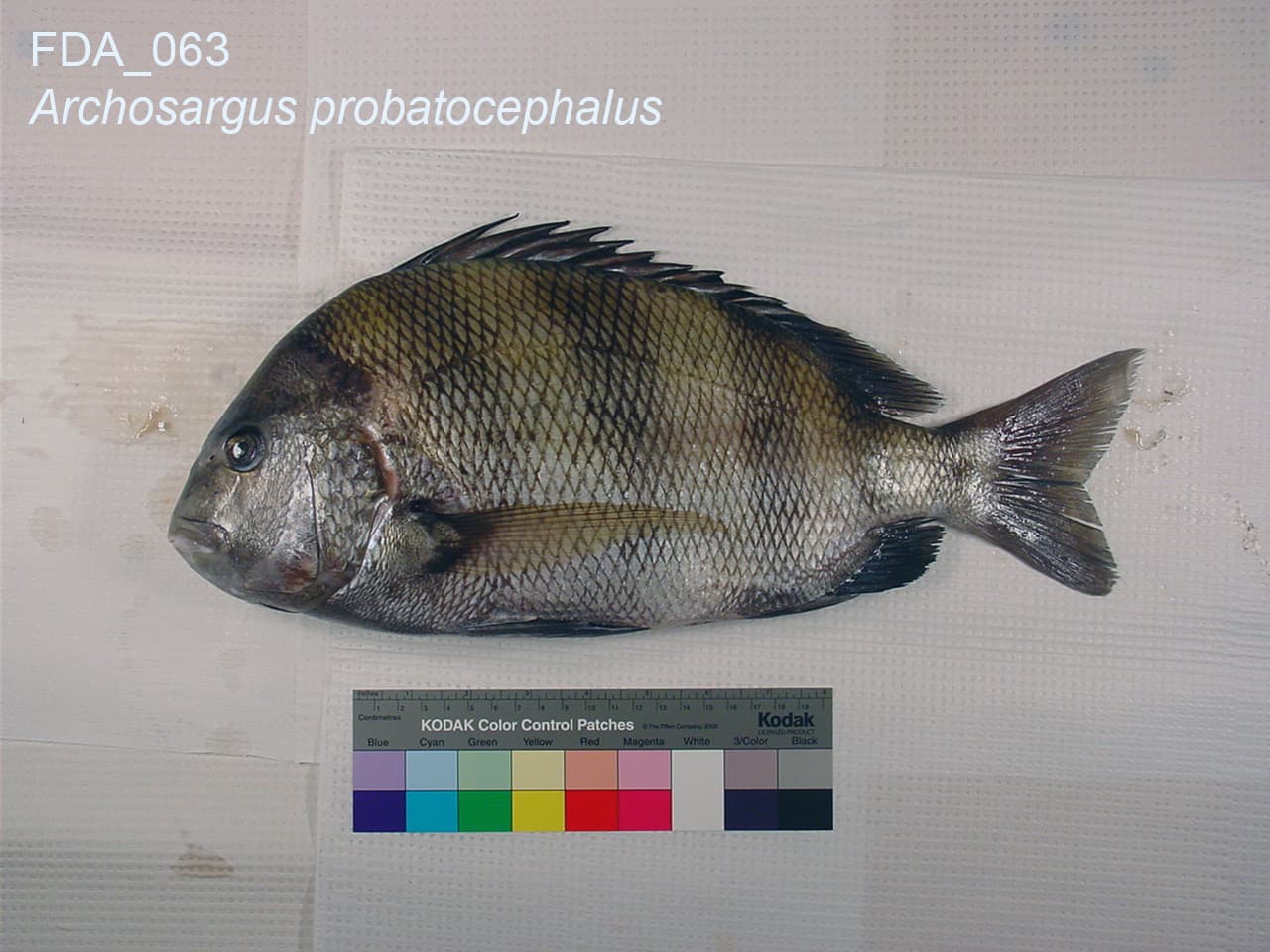
Sheepshead (Archosargus probatocephalus)
Photo: FDA

Sheepshead

Convict fishSheephead

Archosargus probatocephalus

Restricted — verify
nearshore1-4 kg, up to ~5 kg
Edibility & ciguatera
Very good eating; no ciguatera concern in South Carolina's temperate waters.
Where you'll see it
Jetties, bridge and pier pilings, nearshore wrecks and artificial reefs — anywhere with barnacles and structure. One of the most reliable inshore/nearshore spear targets in the state; watch the sharp gill plates and dorsal spines.
Legal status
Legal to spear in salt water subject to the same limits as any gear: 14 in TL minimum, 10 per person per day (not to exceed 30 per boat). Verify current SCDNR numbers.

Black Sea Bass

Sea bassBlack bass

Centropristis striata

Restricted — verify
reef0.3-1.5 kg, up to ~3 kg
Edibility & ciguatera
Excellent — sweet, firm white meat; no ciguatera concern in South Carolina.
Where you'll see it
The classic South Carolina live-bottom and artificial-reef fish, found over rock, rubble and wreckage from nearshore reefs out to the offshore ledges. Bold and abundant — a common spear target once you find structure.
Legal status
Federally managed in the South Atlantic snapper-grouper complex: 13 in TL minimum, 7 per person per day (within the 20-fish snapper-grouper aggregate). Verify current NOAA/SAFMC limits and which waters (state 0-3 nm vs federal) you are diving.
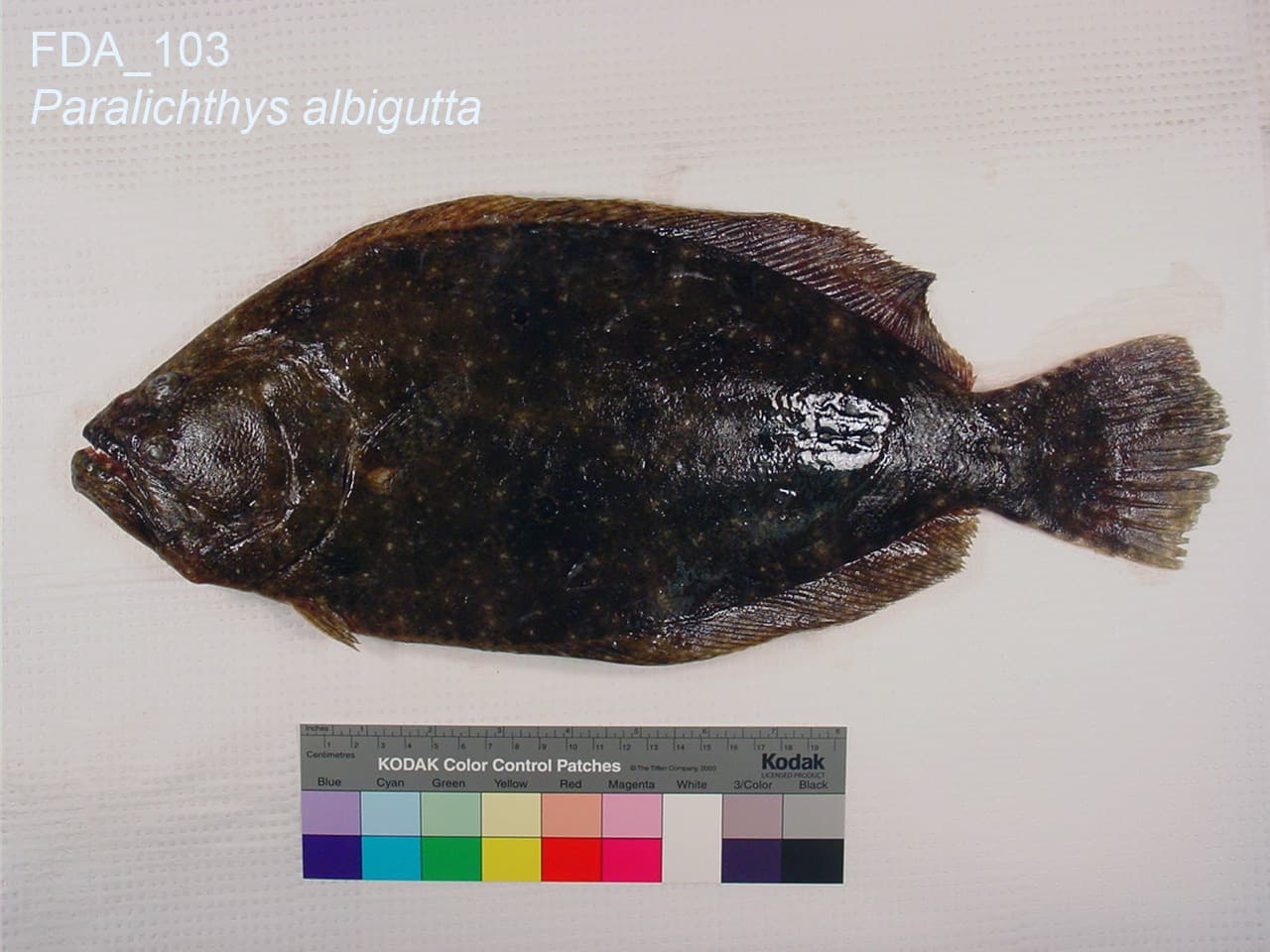
Flounder (Southern & Gulf) (Paralichthys albigutta)
Photo: FDA

Flounder (Southern & Gulf)

DoormatFlatfish

Paralichthys albigutta

Restricted — verify
bottom35-50 cm, 'doormats' larger
Edibility & ciguatera
Excellent eating; no ciguatera concern in South Carolina.
Where you'll see it
Sand and mud bottom near structure, creek mouths, inlets and nearshore reefs. South Carolina's flounder are mostly Southern flounder (Paralichthys lethostigma), with Gulf and summer flounder mixed in — all speared the same way, lying flat on the bottom.
Legal status
Legal to take by underwater spearfishing, 16 in TL minimum, 5 per person per day (not to exceed 10 per boat). Note: SC bans flounder GIGGING during daylight hours, but statute 50-5-581 expressly states 'gigging does not include underwater spear fishing,' so a submerged diver is not bound by that daylight clock. Verify current SCDNR numbers.
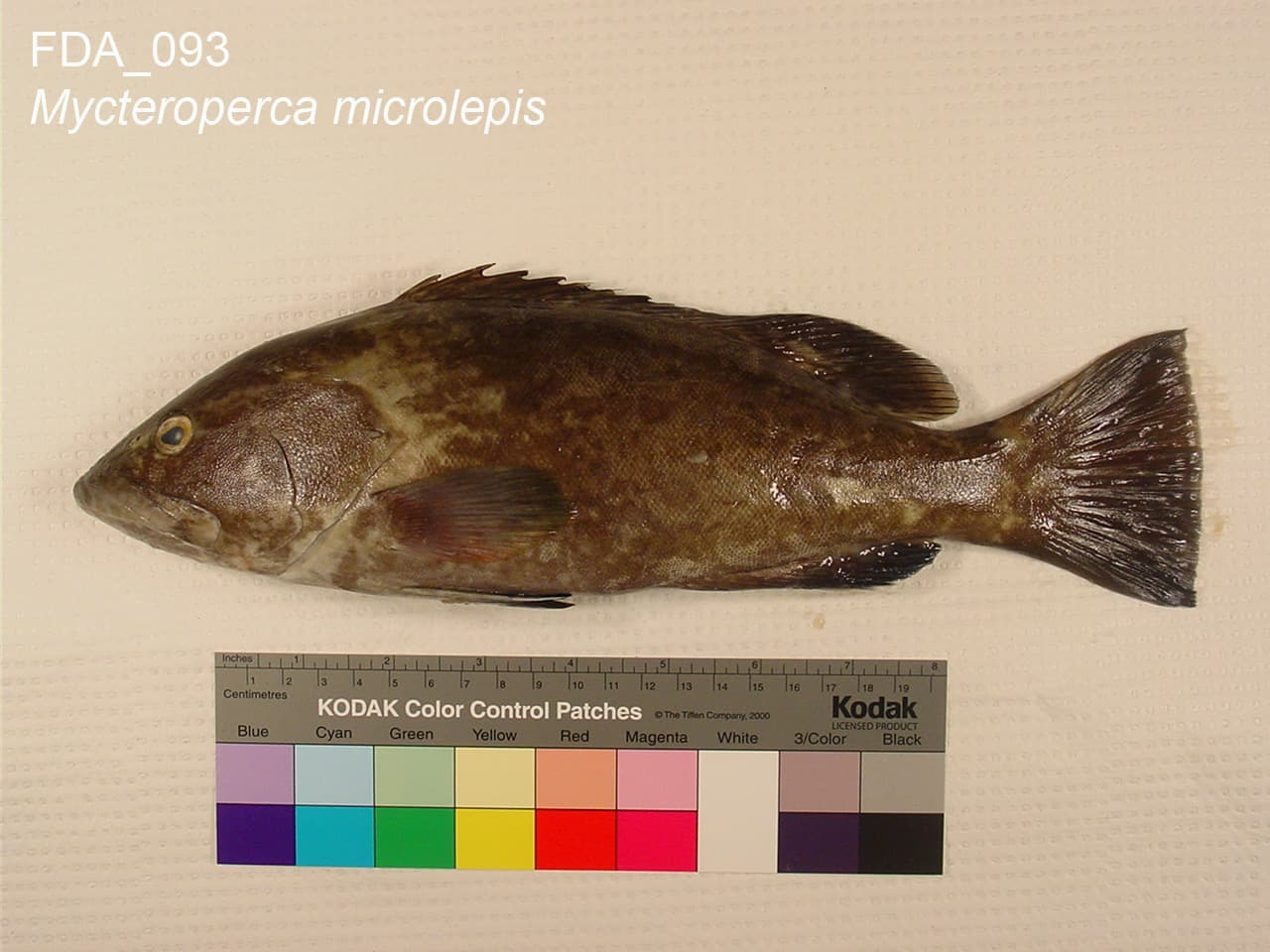
Gag Grouper (Mycteroperca microlepis)
Photo: FDA

Gag Grouper

GagGrey grouper

Mycteroperca microlepis

Restricted — verify
reef2-12 kg, up to ~23 kg
Edibility & ciguatera
Excellent eating; no ciguatera concern in South Carolina.
Where you'll see it
Offshore ledges, live bottom and wrecks; a strong fighter that bolts straight for structure — a classic South Atlantic spear target.
Legal status
Federally managed: 24 in TL minimum, within the 3-fish grouper aggregate. CLOSED in the South Atlantic during the shallow-water grouper spawning closure Jan 1-Apr 30. Verify current NOAA/SAFMC dates and limits.

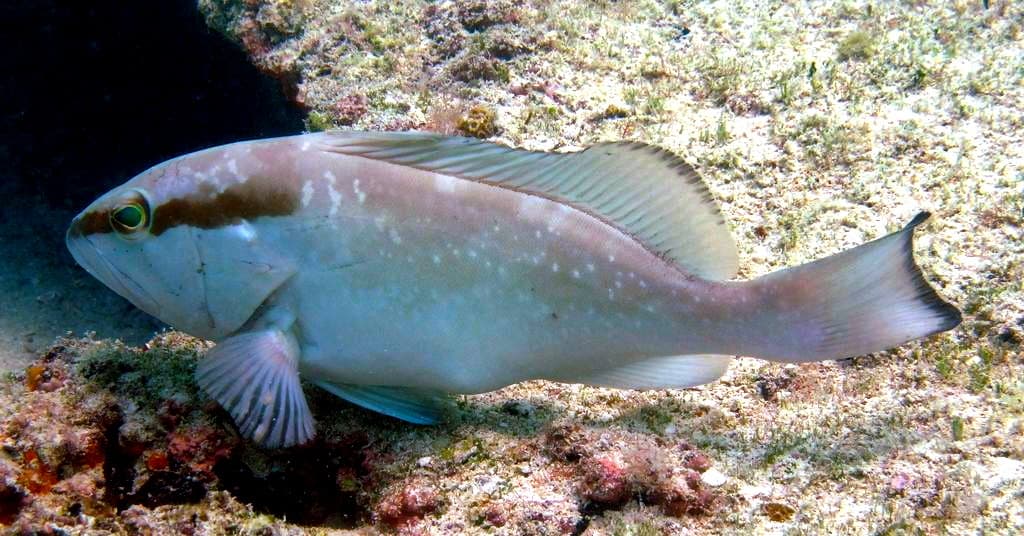
Scamp

Brownie?

Mycteroperca phenax

Restricted — verify
reef1-4 kg, up to ~14 kg
Edibility & ciguatera
Excellent — many rate it the best-eating South Atlantic grouper; no ciguatera concern in South Carolina.
Where you'll see it
Deeper offshore ledges and live bottom, often with gag; a prized, wary grouper that holds tight to structure.
Legal status
Federally managed: 20 in TL minimum, within the 3-fish grouper aggregate. CLOSED in the South Atlantic during the shallow-water grouper spawning closure Jan 1-Apr 30. Verify current NOAA/SAFMC dates and limits.
Red Grouper (Epinephelus morio)
Photo: Simões, N.; Zarco Perello, S.; Moreno Mendoza, R. / CC-BY 4.0

Red Grouper

Epinephelus morio

Restricted — verify
bottom2-7 kg, up to ~18 kg
Edibility & ciguatera
Excellent eating; no ciguatera concern in South Carolina.
Where you'll see it
Hard bottom and rocky ledges offshore, often solitary in excavated 'pits'; a strong, structure-oriented grouper.
Legal status
Federally managed: 20 in TL minimum, within the 3-fish grouper aggregate. CLOSED in the South Atlantic during the shallow-water grouper spawning closure Jan 1-Apr 30, and harvest off NC/SC in federal waters stays closed until June 1. Verify current NOAA/SAFMC dates and limits.
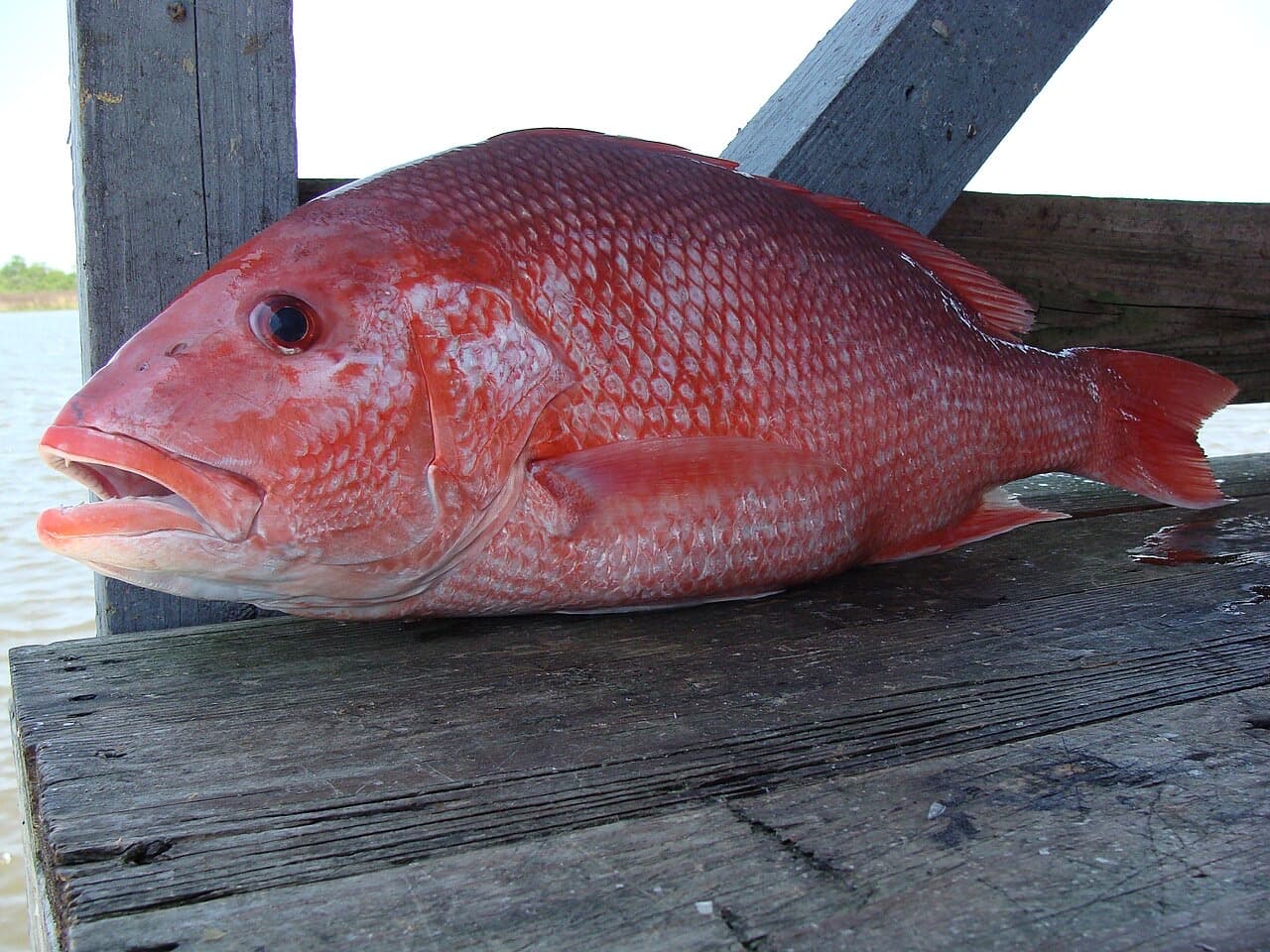
Red Snapper (Lutjanus campechanus)
Photo: Geeklikepi / CC-BY-SA 3.0

Red Snapper

American red snapperSow

Lutjanus campechanus

Restricted — verify
bottom1-7 kg, up to ~14 kg
Edibility & ciguatera
Excellent eating; no ciguatera concern in South Carolina.
Where you'll see it
Deep offshore ledges, wrecks and reefs (often 80-200+ ft — deep for freedivers). Abundant off South Carolina, but almost always out of season.
Legal status
One of the most tightly restricted fish on the coast. The South Atlantic recreational season is extremely short when it opens at all — the 2026 recreational season was paused by a federal court order and remains CLOSED. Do NOT target red snapper until NOAA announces an open season. Counts toward the 20-fish snapper-grouper aggregate. Verify current status with NOAA before any dive.

Vermilion Snapper

BeelinerB-liner

Rhomboplites aurorubens

Restricted — verify
reef0.3-1 kg, up to ~2.5 kg
Edibility & ciguatera
Very good eating; no ciguatera concern in South Carolina.
Where you'll see it
Offshore live bottom and ledges, often high in the water column over structure in large schools; a South Atlantic staple, though small and fast for a spear.
Legal status
Federally managed: 12 in TL minimum, 5 per person per day (within the 20-fish snapper-grouper aggregate). Verify current NOAA/SAFMC limits.
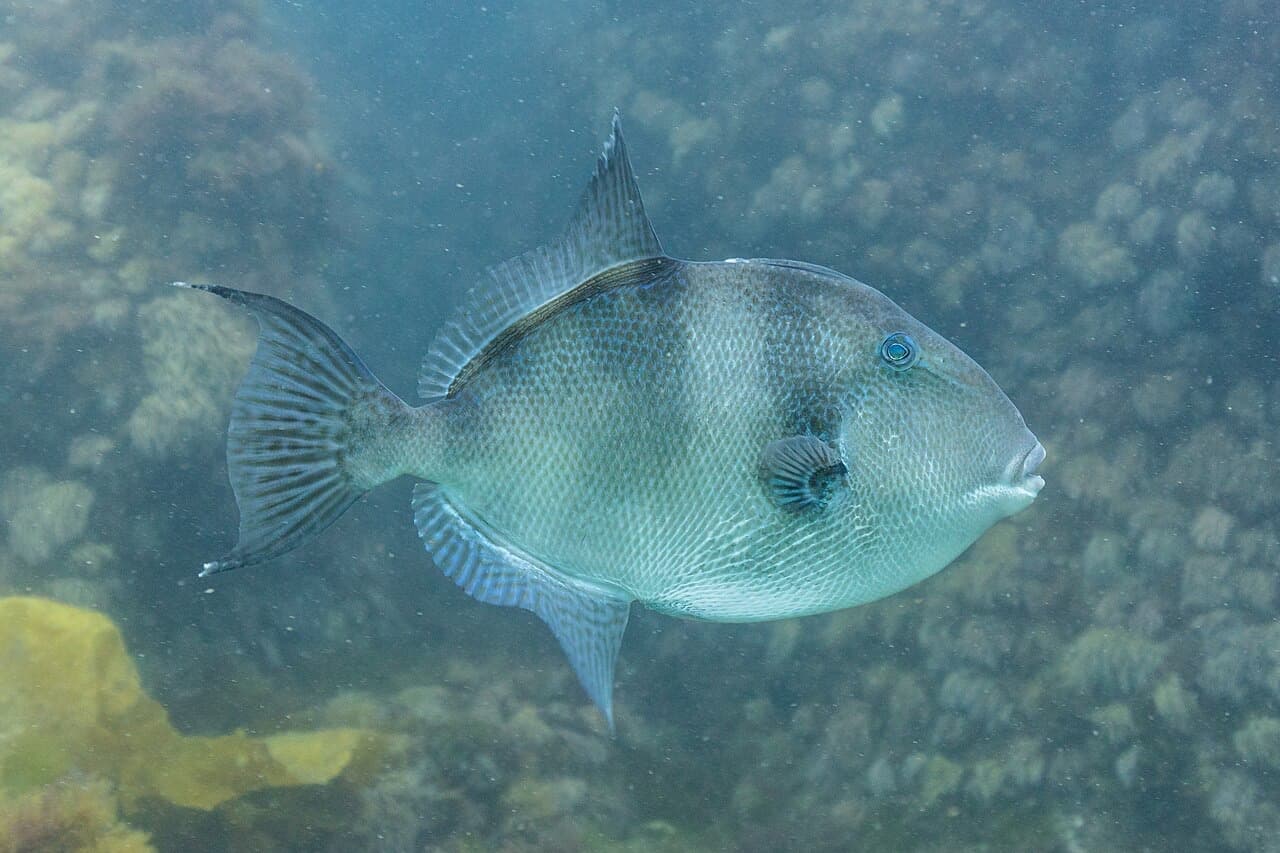
Gray Triggerfish (Balistes capriscus)
Photo: Diego Delso / CC-BY-SA 4.0

Gray Triggerfish

Trigger

Balistes capriscus

Restricted — verify
reef0.5-2 kg, up to ~33 cm
Edibility & ciguatera
Excellent — dense, sweet white meat; no ciguatera concern in South Carolina.
Where you'll see it
Offshore reefs, ledges and wrecks; curious and often approaches divers, but the tough hide and the locking dorsal 'trigger' make placement matter.
Legal status
Federally managed in the South Atlantic: 12 in FL minimum, within the snapper-grouper aggregate. Verify current NOAA/SAFMC size, bag and any seasonal limits.
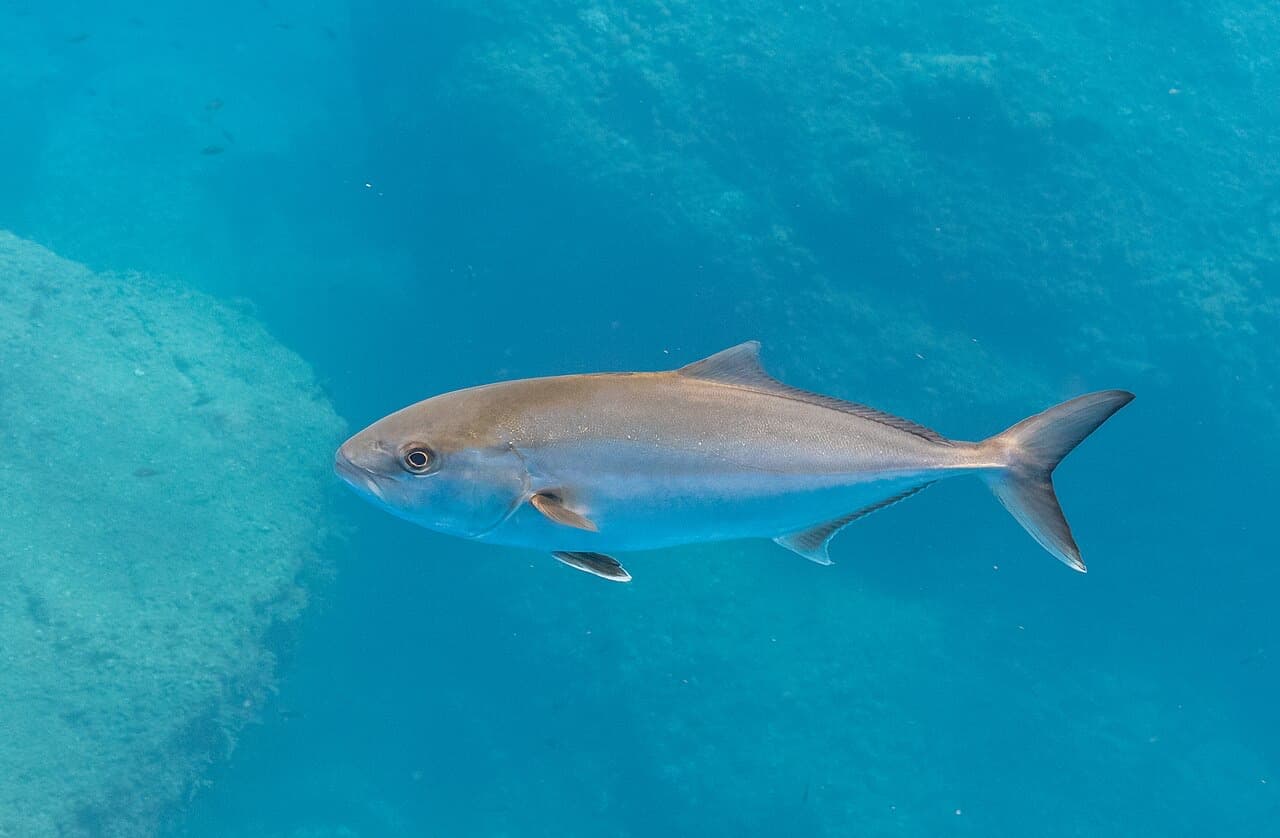
Greater Amberjack (Seriola dumerili)
Photo: Diego Delso / CC-BY-SA 4.0

Greater Amberjack

AJReef donkey

Seriola dumerili

Restricted — verify
reef9-27 kg, up to ~45 kg
Edibility & ciguatera
Good eating (watch for cosmetic flesh worms; large predators carry mercury — limit large fish). No ciguatera concern in South Carolina's temperate waters.
Where you'll see it
Offshore wrecks and deep reefs in aggressive schools — a bucket-list South Atlantic spearfishing brawl.
Legal status
Federally managed in the South Atlantic: 28 in FL minimum, 1 per person per day, with a recreational CLOSURE April 1-30. Verify current NOAA/SAFMC dates and limits.
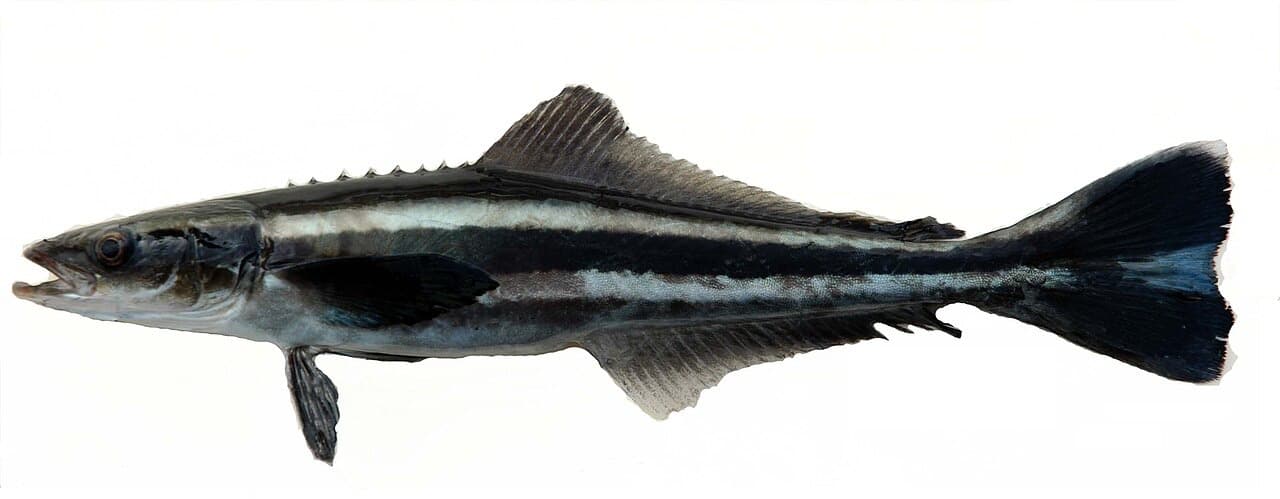
Cobia (Rachycentron canadum)
Photo: D Ross Robertson · Public domain

Cobia

LingLemonfish

Rachycentron canadum

Restricted — verify
pelagic9-27 kg, up to ~45 kg
Edibility & ciguatera
Excellent eating; no ciguatera concern in South Carolina.
Where you'll see it
Follows rays and turtles near the surface, hangs on wrecks, buoys and nearshore reefs; the spring run into Port Royal Sound and the Broad River is famous. Often a surprise cruising target.
Legal status
Legal to spear subject to size and creel limits: 36 in FL minimum; typically 1 per person per day and no more than a set number per boat, with special area rules for the Port Royal Sound/Broad River spawning stock. Bag and boat limits vary by area and change often — verify current SCDNR rules before targeting.
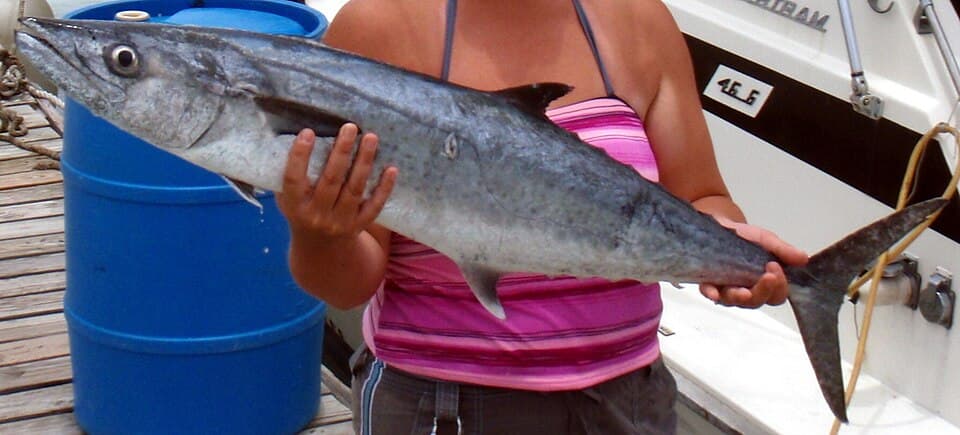
King Mackerel (Scomberomorus cavalla)
Photo: ScubaBear68 / CC BY 2.0

King Mackerel

KingfishSmoker

Scomberomorus cavalla

Restricted — verify
pelagic2-14 kg, up to ~23 kg
Edibility & ciguatera
Good eating, but large fish carry mercury — limit big 'smokers.' No ciguatera concern in South Carolina.
Where you'll see it
Nearshore to offshore over reefs and wrecks, fast-moving in the water column; usually a bluewater or reef spear target.
Legal status
Legal to spear subject to limits: 24 in FL minimum, 3 per person per day in the Atlantic. Verify current SCDNR/NOAA limits.

Atlantic Spadefish

SpadefishSpade

Chaetodipterus faber

Legal to spear
nearshore1-4 kg, up to ~9 kg
Edibility & ciguatera
Good, mild white meat; no ciguatera concern in South Carolina.
Where you'll see it
Nearshore wrecks, artificial reefs, buoys and navigation markers, often in tight schools in the water column — a common and approachable spear target on structure.
Legal status
Legal to spear. South Carolina sets no specific recreational size or creel limit for Atlantic spadefish; a valid Saltwater Recreational Fishing License is required. Verify current SCDNR rules.
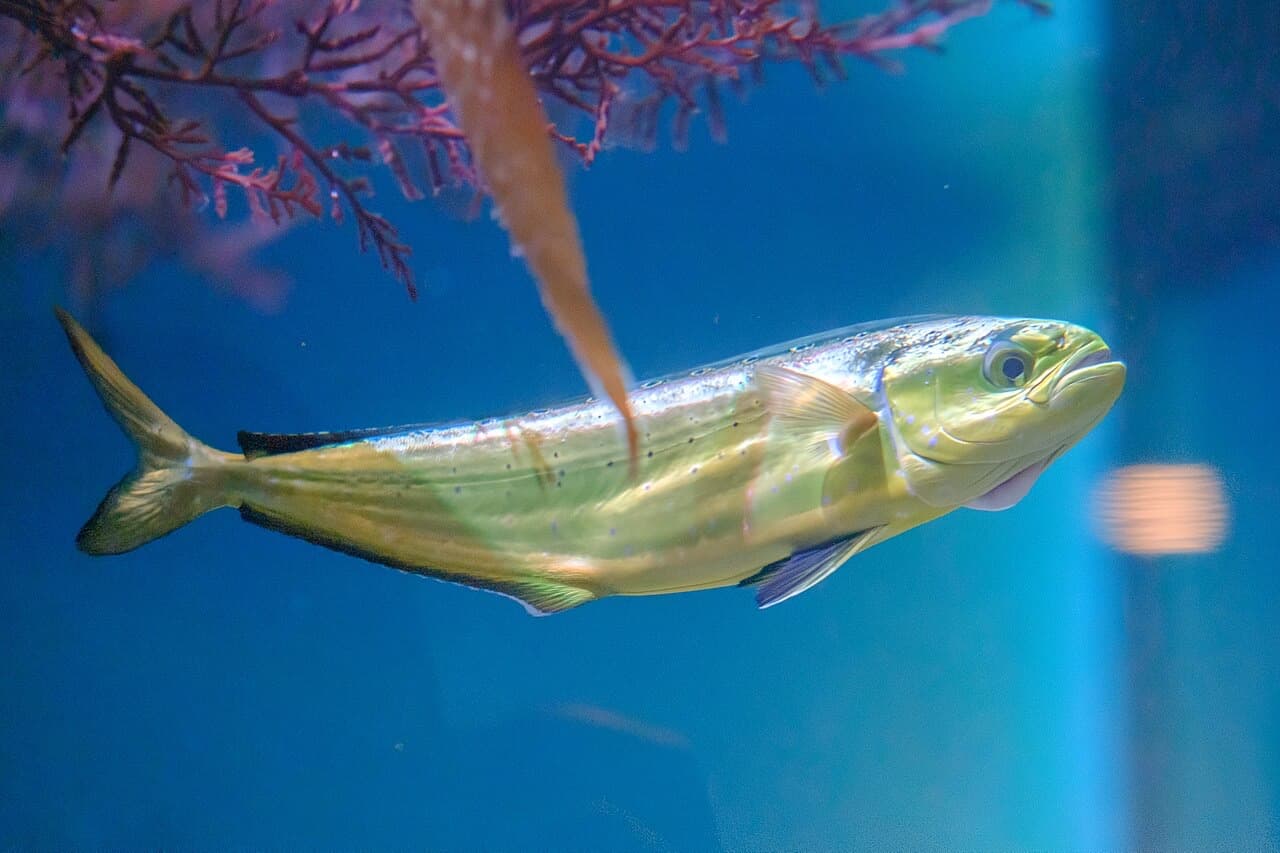
Mahi-mahi (Dolphinfish) (Coryphaena hippurus)
Photo: gendereuphorbia / CC0

Mahi-mahi (Dolphinfish)

DolphinDorado

Coryphaena hippurus

Restricted — verify
pelagic1.5-7 kg, up to ~40 kg
Edibility & ciguatera
Excellent eating; no ciguatera concern (open-water feeder). Ice quickly to avoid scombroid/histamine.
Where you'll see it
Offshore bluewater at the Gulf Stream edge around weedlines, floating debris and current rips — a bluewater target for divers running well offshore, not a reef fish.
Legal status
Legal to spear subject to limits: 20 in FL minimum, 10 per person per day (not to exceed 54 per boat). Verify current SCDNR/NOAA limits.
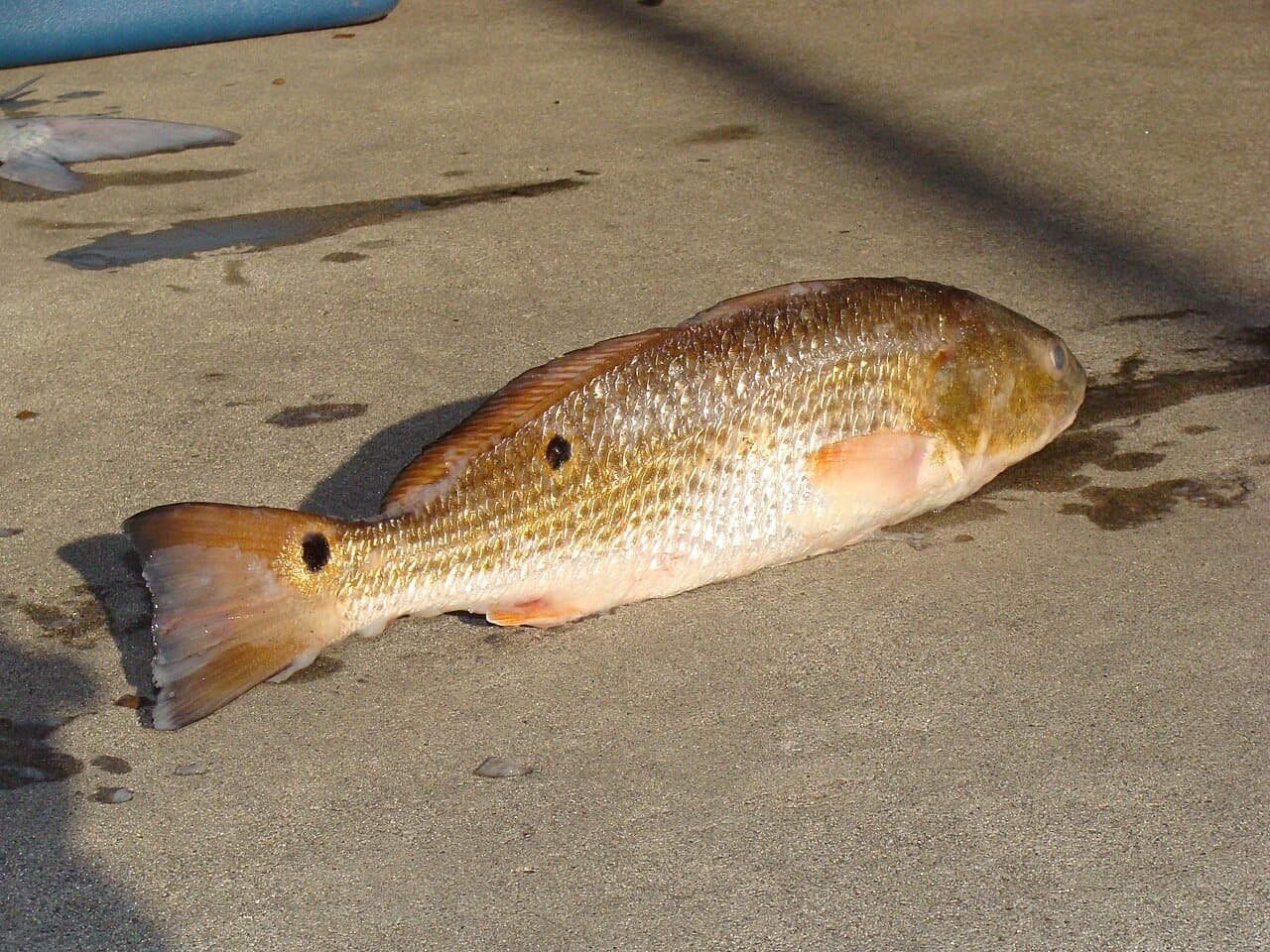
Red Drum (Sciaenops ocellatus)
Photo: Geeklikepi / CC-BY-SA 3.0

Red Drum

RedfishSpottail bassChannel bass

Sciaenops ocellatus

Restricted — verify
inshoreslot-sized inshore, adults to ~1.5 m
Edibility & ciguatera
Good in slot; no ciguatera concern in South Carolina.
Where you'll see it
Flats, oyster bars, creek mouths, inlets and the surf; a prized inshore gamefish. Unlike Florida, South Carolina does not ban spearing red drum outright, but it is tightly slot-limited and rarely a practical spear target in murky inshore water.
Legal status
Tightly managed and recently tightened: effective July 1, 2026 SCDNR set an 18-25 in TL slot with 1 per person per day and only 2 per boat (down from the former 15-23 in slot and 6-per-boat limit) in response to a declining stock. South Carolina also prohibits GIGGING red drum during December, January and February; whether that closure (or other gigging rules) reaches underwater spearfishing is not spelled out for red drum the way it is for flounder — verify with SCDNR before taking one by spear.
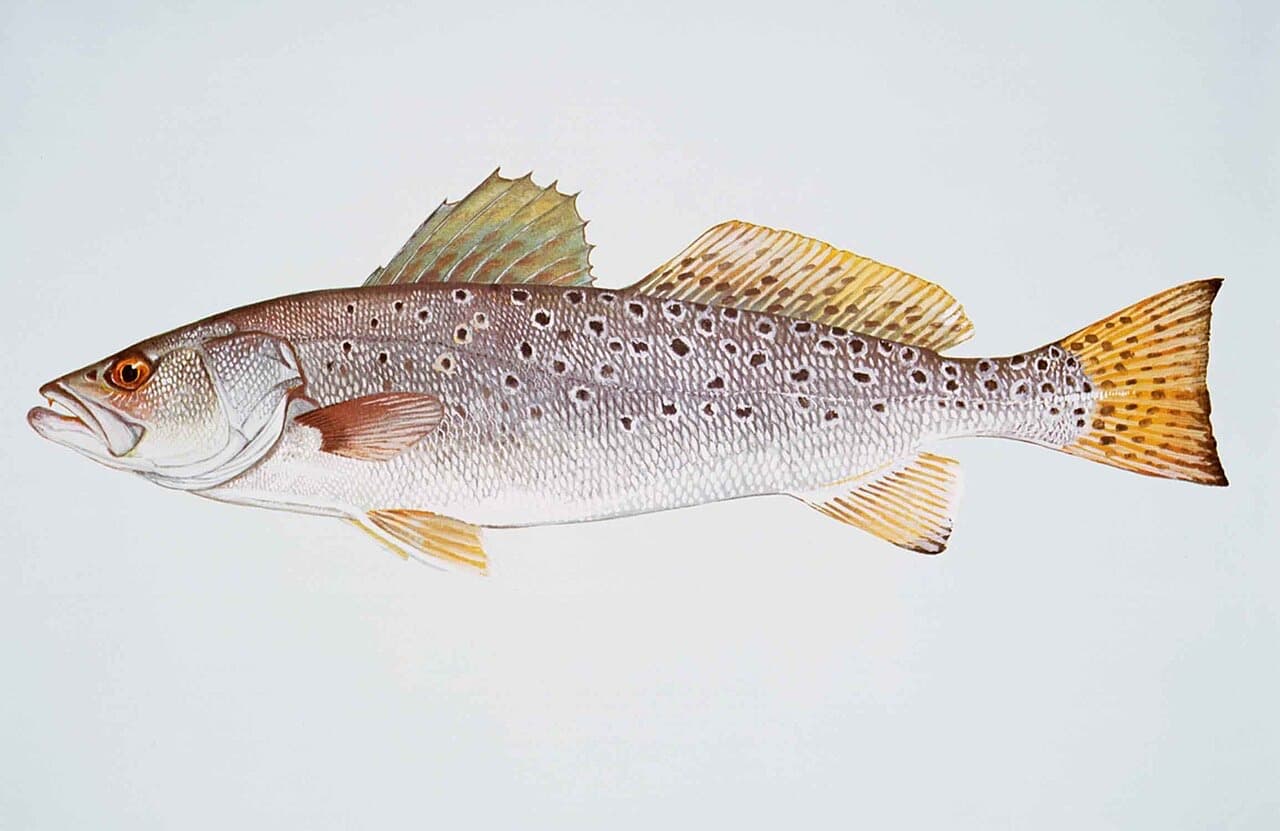
Spotted Seatrout (Cynoscion nebulosus)
Photo: USFWS

Spotted Seatrout

Speckled troutSpecks

Cynoscion nebulosus

Restricted — verify
inshore30-60 cm
Edibility & ciguatera
Good eating; no ciguatera concern in South Carolina.
Where you'll see it
Grass flats, creek mouths and channels; a very common inshore fish. As with red drum, South Carolina does not ban spearing seatrout outright, but it is limited and seldom a practical spear target inshore.
Legal status
Legal to take subject to limits: 14 in TL minimum, 10 per person per day. South Carolina prohibits GIGGING spotted seatrout during December, January and February; whether that closure reaches underwater spearfishing is not spelled out the way it is for flounder — verify with SCDNR before taking one by spear.
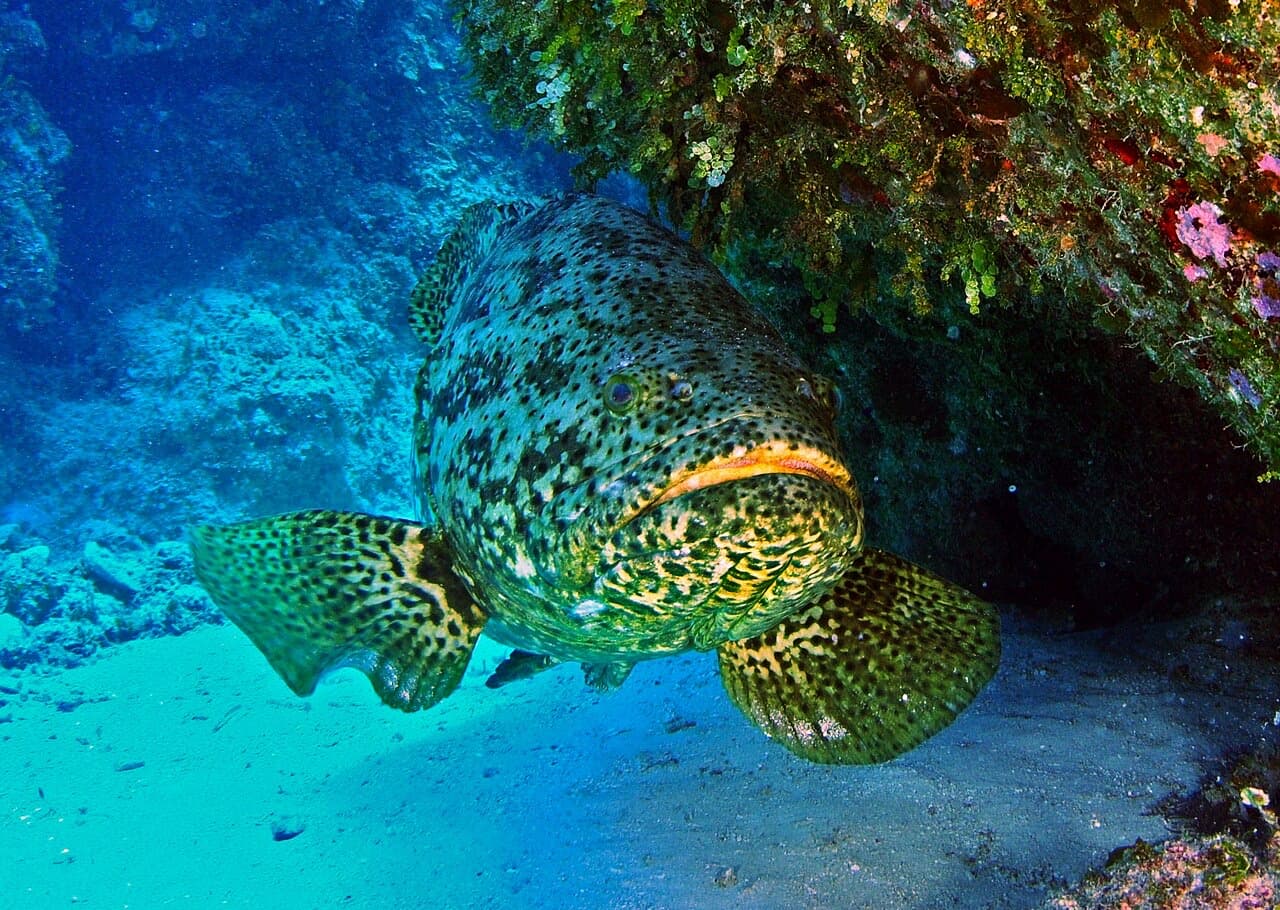
Goliath Grouper (Epinephelus itajara)
Photo: Albert kok / CC-BY-SA 3.0

Goliath Grouper

Jewfish

Epinephelus itajara

Protected — do not take
reefup to ~2.5 m / 360 kg
Edibility & ciguatera
Do not take — protected.
Where you'll see it
Wrecks and large reef structure near the northern edge of its range; a massive, curious fish that may shadow divers.
Legal status
PROHIBITED — no harvest by any method, including spearing, in South Atlantic (federal and South Carolina) waters. Must be released.

Speckled Hind

Epinephelus drummondhayi

Protected — do not take
bottomup to ~1.1 m / 30 kg
Edibility & ciguatera
Do not take — no-possession species.
Where you'll see it
Deep offshore live bottom and ledges off South Carolina. IMPORTANT: sometimes called 'strawberry grouper' for its red-and-white speckling, but that market name is ambiguous — it is also used for the red hind and for an Indo-Pacific grouper. Never rely on the 'strawberry grouper' nickname to decide a fish is legal; identify it precisely, because speckled hind is a no-take species.
Legal status
NO-TAKE — the South Atlantic annual catch limit for speckled hind is zero. All harvest, possession and retention are prohibited. Must be released.
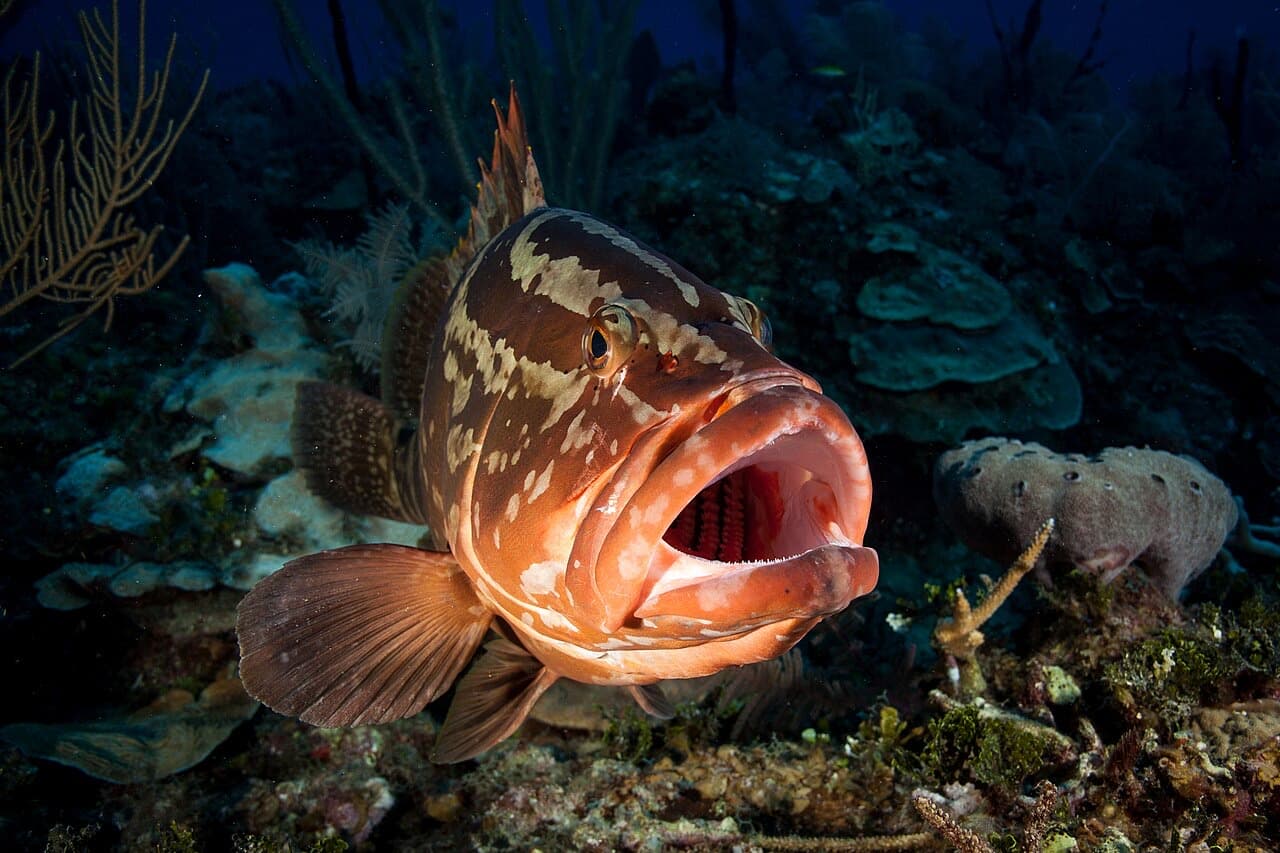
Nassau Grouper (Epinephelus striatus)
Photo: q phia / CC-BY 2.0

Nassau Grouper

Epinephelus striatus

Protected — do not take
reefup to ~1.2 m
Edibility & ciguatera
Do not take — protected.
Where you'll see it
Reefs and ledges; rare this far north but possible on offshore structure. Curious and easily approached, which is part of why it was overfished across its range.
Legal status
PROHIBITED — no harvest by any method, including spearing. Federally protected and ESA-listed as threatened. Must be released.

Local names & details still being verified

  • State (0-3 nm) vs federal (3-200 nm) waters: most offshore fish here (black sea bass, groupers, snappers, vermilion, triggerfish, amberjack) are federally managed under the South Atlantic snapper-grouper complex, and the seasons/closures cited — red snapper currently CLOSED, shallow-water grouper closed Jan 1-Apr 30, greater amberjack closed Apr 1-30, red grouper off SC/NC closed until Jun 1 — apply in federal waters. Confirm the current NOAA/SAFMC status and which waters you are diving before targeting any of them.
  • Red drum & spotted seatrout — South Carolina restricts GIGGING them (Dec-Jan-Feb closure) but does not, by name, extend or exempt underwater spearfishing the way the flounder statute (50-5-581) does. Whether a diver may legally spear red drum or seatrout in those months is genuinely unsettled — verify directly with SCDNR before doing so. Red drum limits changed effective July 1, 2026 (new 18-25 in slot, 1 per person, 2 per boat); the numbers above reflect that change but confirm against SCDNR before relying on them.
  • Sharks may NOT be gigged or speared in South Carolina salt water ('It is unlawful to gig for sharks') — not listed above as a target, but noted here so it is not assumed legal.
  • Local nicknames flagged with a '?' are regional and can be ambiguous: 'Brownie' for scamp is used but not universal; 'B-liner/Beeliner' for vermilion snapper is standard in SC, while 'Mingo' is more of a Gulf term and was left off. 'Blackfish' for black sea bass was deliberately omitted because in the Northeast it means tautog — confirm local usage.
  • Size and creel limits change frequently and differ between SC state rules and federal South Atlantic rules; the numbers here are current-as-retrieved starting points, not a ruling. Confirm every limit with SCDNR and NOAA/SAFMC before a dive.

A guide, not a ruling

Species identification and regional names are provided as a guide, not a substitute for local knowledge or a legality ruling. South Carolina's waters are temperate, so ciguatera is not the concern it is in Florida or Puerto Rico — but the real traps here are different: powerheads/bang sticks are banned statewide, most offshore fish are federally managed with seasons and closures (red snapper is currently closed; groupers close Jan 1-Apr 30), several species are strictly no-take (speckled hind, Warsaw grouper, goliath grouper, Nassau grouper), and sharks may not be speared. Confirm the current SCDNR and NOAA/SAFMC rules, sizes and seasons — and which waters you are diving — before taking any fish.

Do not spear

Prohibited species

  • SALT WATER: sharks may NOT be gigged/speared — 'It is unlawful to gig for sharks' 3
  • SALT WATER: red drum and spotted seatrout may NOT be gigged during December, January and February 3
  • SALT WATER: flounder may not be gigged during daylight hours (a time restriction, not a full prohibition) 3
  • FRESH WATER: all game fish may NOT be taken by spear or gig — only nongame (rough) fish; game fish taken incidentally must be released 5
  • ANY WATER: any fish taken with a bangstick/powerhead may not be possessed, landed or sold (SC Code 50-5-110, s3)

Where you can't

Area restrictions

  • SALT WATER: artificial reefs designated as Special Management Zones — fishing only with handheld hook-and-line and spearfishing gear excluding powerheads; no fish traps, longlines, gill nets or trawls 3
  • SALT WATER: Georgetown County — it is unlawful to gig for fish in salt waters from the northern tip of North Island to the northern tip of Magnolia Beach during daylight hours 3
  • FRESH WATER: Game Zone 1 (portions of Oconee, Pickens and Greenville counties, north of the Norfolk Southern Railroad main line) — nongame fishing devices, including spears and gigs, are not allowed (s5, s8)
  • FRESH WATER: SCDNR State-Managed Lakes — nongame fishing devices of any kind may not be used 5

Worth knowing

Notable rules, seasons & limits

  • Fresh water is nongame-only: you may spear/gig rough fish but never game fish, and game fish caught by a nongame device must be released immediately 5
  • Two large fresh-water no-go areas for spears/gigs: all of Game Zone 1 and every SCDNR State-Managed Lake (s5, s8)
  • Bang sticks / powerheads are banned in state waters and on the SMZ artificial reefs — a key difference from some neighboring states (SC Code 50-5-110, s3)
  • Gigging carries species/time rules distinct from underwater spearfishing: no daylight flounder gigging, no shark gigging, and a Dec–Feb closure on gigging red drum and spotted seatrout 3. The daylight flounder-gigging ban is set by SC Code 50-5-581, which expressly states 'for the purposes of this section, gigging does not include underwater spear fishing' — so a submerged diver taking flounder with a speargun is not caught by that daylight ban 9
  • SC statute defines a 'gig' broadly to include bow-and-arrow and any prong/spear device used to take fish by hand (SC Code 50-5-15(27))
  • In salt water, all normal size, creel and seasonal limits apply to spearfishing just as they do to hook-and-line (s2, s3)

What divers here typically use

Gear up for South Carolina spearfishing

Most divers working South Carolina's coast start with a band speargun sized to the water and the fish they are after. Our honest guide to the Best Speargun for Beginners walks through what to look for — curated from published specs and community consensus, not paid placement.

If you break them

Penalties

Spearing or gigging game fish in fresh water, using spears/gigs in Game Zone 1 or a State-Managed Lake, spearing/gigging without the required license, violating a saltwater size/creel/season limit, gigging a prohibited species (e.g., sharks; red drum/seatrout in the closed months; flounder in daylight), or using a bang stick/powerhead are violations of SC Code Title 50 and SCDNR regulations, enforceable by citation, fines, and possible license suspension; fish taken with a bangstick may be seized. Bang-stick violations are specifically penalized under SC Code 50-5-110: a person using a bang stick or similar device is guilty of a misdemeanor, fined not less than $25 nor more than $500 or imprisoned up to 30 days, plus a 12-month saltwater privilege suspension; using poison or an explosive carries a higher fine of $1,000–$2,500 1. Fine amounts for other specific violations (e.g., unlawful gigging or freshwater game-fish violations) vary by offense under Title 50 and were not each itemized on the pages reviewed. (SC Code Title 50, s1)

Not yet independently confirmed — verify directly

  • Whether SCUBA or compressed-gas diving is expressly permitted or prohibited for spearfishing — the SCDNR pages reviewed do not address it.
  • Explicit enumeration of 'pole spear' and 'Hawaiian sling' — South Carolina law uses the general terms spear/gig/prong (which these fall under) rather than naming them individually.
  • Exact penalty/fine dollar amounts for violations OTHER than the bang-stick/poison/explosive offense — e.g., unlawful gigging of a prohibited species or freshwater game-fish violations — vary by offense under SC Code Title 50 and were not each itemized on the pages reviewed. (The bang-stick penalty is now confirmed under 50-5-110: see penalties field.)
  • Precise license-exemption categories (age/other) as they specifically apply to spearfishing were not individually confirmed against a single SCDNR exemption schedule.

Confirm these points directly with South Carolina Department of Natural Resources (SCDNR) — Marine Resources Division (salt water) and Freshwater Fisheries (fresh water) before you rely on them.

Primary sources

Sources

Every fact above is drawn from these official sources. Each was retrieved on the date shown; regulations can change after that date.

  1. Source 7: SCDNR — Resident License Pricing (resident annual saltwater $15, freshwater $10, combination $25)

    Retrieved July 5, 2026https://www.dnr.sc.gov/licenses/pricingresident.html

  2. Source 8: SCDNR — Game Zone 1 boundary description (portions of Oconee, Pickens and Greenville counties)

    Retrieved July 5, 2026https://www.dnr.sc.gov/hunting/zones/zone1.html

Quick answers

Frequently asked questions

Is spearfishing legal in South Carolina?
Yes — spearfishing is legal in South Carolina's saltwater, and it is permitted in fresh water, subject to license, gear, species, and area rules. South Carolina's marine waters are open to spearfishing. Spearfishing is a lawful method subject to the same size limits, creel/bag limits and closed seasons that apply to any…
Do you need a license to spearfish in South Carolina?
Yes. South Carolina requires the South Carolina Saltwater Recreational Fishing License (marine waters) or South Carolina Freshwater Fishing License (inland waters). Resident cost: Resident Saltwater Recreational Fishing License: $15 annual, $10 for 14 days, $45 for 3 years. Resident Freshwater Fishing License: $10 annual, $5 for 14 days, $30 for 3 years. A $25 resident combination license includes freshwater fishing. Fees effective 7/1/2025–6/30/2026. (s6, s7) Non-resident cost: Nonresident Saltwater Recreational Fishing License: $75 annual, $35 for 7 days, $10 for 1 day. Nonresident Freshwater Fishing License: $35 annual, $11 for 14 days, $105 for 3 years. Fees effective 7/1/2025–6/30/2026.
Can you spearfish on scuba in South Carolina?
Not expressly addressed on the SCDNR pages reviewed. South Carolina rules do not specifically permit or prohibit SCUBA/compressed-gas diving for spearfishing; verify with SCDNR Marine Resources before using SCUBA to spear. (unverified)
What can't you spear in South Carolina?
Protected or no-take species you may not spear in South Carolina include: SALT WATER: sharks may NOT be gigged/speared — 'It is unlawful to gig for sharks', SALT WATER: red drum and spotted seatrout may NOT be gigged during December, January and February, SALT WATER: flounder may not be gigged during daylight hours, FRESH WATER: all game fish may NOT be taken by spear or gig — only nongame, ANY WATER: any fish taken with a bangstick/powerhead may not be possessed, landed or sold. Always check the full prohibited-species list and current seasons before diving, and confirm with South Carolina Department of Natural Resources (SCDNR) — Marine Resources Division (salt water) and Freshwater Fisheries (fresh water).

Stay current

Get an email when South Carolina's size & bag limits change

Regulations shift between seasons. We re-check South Carolina's rules against the primary source and send a short note when the limits, seasons, or licensing move — nothing else.

No spam. Regulations updates, gear data drops, and the launch of the guide.

Last verified July 5, 2026. Regulations change — always confirm the current rules with South Carolina Department of Natural Resources (SCDNR) — Marine Resources Division (salt water) and Freshwater Fisheries (fresh water) before you dive.