Island Spear Co.

Regulations Hawaii

Spearfishing Regulations in Hawaii

Checked against the primary source (DAR) on July 5, 2026state

Governing agency: Hawaiʻi Department of Land and Natural Resources, Division of Aquatic Resources (DAR). Last verified July 5, 2026 by independent primary-source check.

Summary

Spearfishing is legal and popular throughout Hawaiʻi's ocean waters, and the state's rules are unusually permissive: spears are allowed for all finfish subject to size limits, closed seasons, and area rules, and — unlike most U.S. states — SCUBA spearfishing is legal statewide EXCEPT along the entire West Hawaiʻi (Big Island) coast. Hawaiʻi residents need no recreational saltwater license, but since a 2024 rule that is now actively issued and enforced, non-residents age 15 and older must buy a Nonresident Recreational Marine Fishing License before fishing (including spearfishing) in the ocean. It is always unlawful to spear any crustacean (except introduced freshwater prawn), sea turtle, or marine mammal, and spearfishing is banned outright in Marine Life Conservation Districts and restricted in numerous Fisheries Management Areas and community subsistence areas.

License

What you need to be legal

LegalA license is required
License
Nonresident Recreational Marine Fishing License (NRMFL) — non-residents only; residents need none
Who needs it
Hawaiʻi RESIDENTS need NO recreational marine fishing license to spearfish in the ocean. NON-RESIDENTS age 15 or older must obtain a Nonresident Recreational Marine Fishing License before they 'fish for, take, or catch any marine life for noncommercial or recreational purposes' — which includes spearfishing — in Hawaiʻi ocean waters (s2, s3). Active-duty U.S. armed forces members stationed in Hawaiʻi (and their spouses and minor children) are exempt. Anyone taking marine life for commercial purpose (including charter services) needs a Commercial Marine License instead ($100 resident / $250 non-resident) 2. A separate Freshwater Game Fishing License is required to take introduced freshwater game fish 2.
Resident cost
None — Hawaiʻi does not require residents to hold a recreational marine (saltwater) fishing license for spearfishing. (A Freshwater Game Fishing License, $5 for residents over 15, is required only to take introduced freshwater game fish.) 2
Non-resident cost
NRMFL: $20 (1-day), $40 (7-day), $70 (annual), plus any online processing fee (s2, s3). Non-resident Freshwater Game Fishing License: $25 annual, $10 (7-day tourist), $20 (30-day tourist) 2.
Where to buy
Online at the state licensing portal https://fishing.hawaii.gov (NRMFL and lay-net permits). Freshwater Game Fishing Licenses and Commercial Marine Licenses are issued through DAR/DLNR. Support: fishinglicense@hawaii.gov (s3, s4).

Exemptions

  • All Hawaiʻi residents (no recreational marine license required at all)
  • Non-residents under age 15
  • Active-duty members of the U.S. armed forces on duty in the State, and their spouses and minor children

The full story

The full story

Hawaiʻi is a textbook LAW-vs-PRACTICE case — but the reverse of the usual one. For decades the state required NO recreational saltwater fishing license of anyone. A nonresident recreational marine license was authorized by statute (Hawaiʻi Revised Statutes §188-72). The important question for a diver is whether that authorization was ever actually turned into a real, issued, enforced requirement — or left dormant on paper.

It is now real and in force. DAR adopted the implementing rule (Hawaiʻi Administrative Rules § 13-74-11) effective May 2, 2024, then built an actual online licensing system at fishing.hawaii.gov and rolled out issuance and enforcement in early February 2025, with the state projecting roughly $1 million in annual revenue (s2, s3, s5). So a non-resident who spearfishes in the ocean without the NRMFL is breaking a rule that is genuinely being enforced — this is not a paper tiger. Hawaiʻi residents, by contrast, still need no recreational marine license at all.

The second point divers most often get wrong is SCUBA. Popular blogs and even some shops state flatly that Hawaiʻi bans SCUBA spearfishing. It does not. The statewide rules permit spears for all finfish and say nothing prohibiting SCUBA. The only SCUBA-spearfishing prohibition in the state regulations sits inside the West Hawaiʻi Regional FMA — which covers the entire west coast of the Big Island — plus night-only spear restrictions in certain other FMAs 2. So SCUBA spearfishing is legal on Oʻahu, Maui, Kauaʻi, and elsewhere (outside MLCDs and other closed areas), but illegal along West Hawaiʻi.

Where it's legal

Saltwater & freshwater

Saltwater

Legal

Legal statewide. The DAR statewide 'Firearms and spears' rule states 'Fishing with spears allowed for all fishes, but must follow minimum size for spearing of certain species, closed seasons and other restrictions' 2. Non-residents 15+ need the NRMFL first (s2, s3). It is always unlawful to spear any crustacean (except introduced freshwater prawn), turtle, or aquatic mammal 2. Spearing is banned entirely in Marine Life Conservation Districts and restricted or prohibited in many Fisheries Management Areas (FMAs), Community-Based Subsistence Fishing Areas (CBSFAs), and marine reserves — check the specific area before diving.

Freshwater

Legal

Very limited. Hawaiʻi's freshwater fisheries are small (a few reservoirs and streams). Introduced freshwater game fish — largemouth/smallmouth bass, tucunaré (peacock bass), bluegill, channel catfish, rainbow trout — require a Freshwater Game Fishing License and the permitted methods listed by DAR are hook-and-line / pole-and-line, not spearing 2. The one clear freshwater spearing allowance flows from the statewide crustacean rule: introduced freshwater prawn is the sole exception to the ban on spearing crustaceans, so it may be speared 2. Spears (and thrownets) are specifically prohibited in the Wailoa River 2. Whether spearing of introduced freshwater game fish is expressly prohibited statewide is not spelled out in a single sentence in the booklet — see unverified.

Gear

What you can carry

Speargun
Generally allowed statewide — the rules permit 'fishing with spears... for all fishes' and do not restrict propulsion type in most waters 2. Spearguns are specifically PROHIBITED in some managed areas — e.g., spear guns are barred in the Hāʻena Community-Based Subsistence Fishing Area (Kauaʻi) — and only pole spears are allowed in others (see area restrictions). Marine Life Conservation Districts such as Molokini Shoal prohibit taking ALL marine life, so spearfishing of any kind (spear gun or pole spear) is banned there as part of the general take prohibition, not by a spear-gun-specific rule 2.
Pole spear
Allowed statewide, and in several restricted areas the pole spear is the ONLY permitted spear (e.g., within the four Puʻuhonua and the Puakaiʻa Miloliʻi zone of the Miloliʻi CBSFA, 'to use or possess any spear except pole spear' is prohibited). Where lengths are capped, pole spears must be 8 feet or less — that cap appears in the Hāʻena CBSFA on Kauaʻi (this is a Hāʻena rule, NOT a Molokini rule) 2.
Hawaiian sling
Not named in the DAR regulations. The rules speak only of a 'spear'; a Hawaiian sling is a hand-propelled spear and would be treated as a spear (allowed where spears are allowed, banned where 'any spear except pole spear' is prohibited). Because DAR does not name it explicitly, confirm with DAR — see unverified.
Spearfishing on SCUBA
Legal statewide EXCEPT where an area rule bans it — this is Hawaiʻi's most important and most-misreported gear point. Hawaiʻi has NO statewide ban on SCUBA spearfishing; the statewide 'Firearms and spears' rule imposes no SCUBA restriction 2. However, SCUBA spearfishing is PROHIBITED throughout the West Hawaiʻi Regional FMA — effectively the entire west coast of the Big Island — where it is unlawful 'to engage in SCUBA spearfishing, possess both SCUBA gear and a spear at the same time, or possess SCUBA gear and any specimen of speared aquatic life at the same time' 2. Several other FMAs additionally bar any spear use / possession of a spear with dive gear at night. (Many secondary sources wrongly state Hawaiʻi bans SCUBA spearfishing statewide — it does not.)

Gear restrictions

  • Unlawful to spear any crustacean (crabs, lobster/ula, etc.) — the sole exception is introduced freshwater prawn 2.
  • Unlawful to spear any turtle or any aquatic (marine) mammal at any time 2.
  • Unlawful to pursue, take or kill any fish, crustacean, mollusk, turtle, or marine mammal with firearms, except tuna and billfish that have already been gaffed 2 — this firearms prohibition bears on powerhead use; see unverified.
  • SCUBA spearfishing prohibited throughout the West Hawaiʻi Regional FMA (whole west Big Island coast) 2.
  • In several FMAs, no spear may be used or possessed with dive gear between sunset and sunrise (night spearing bans) 2.
  • In the Hāʻena CBSFA (Kauaʻi): spear guns are prohibited, spearing at night (6:00 pm–6:00 am) is prohibited, and the only permitted spears are pole spears 8 feet or less 2. (This spear-gun / night / 8-ft-pole rule belongs to Hāʻena, NOT to Molokini.)
  • Molokini Shoal MLCD (and other MLCDs) prohibit taking all marine life, so all spearfishing is banned inside them as part of the general take prohibition 2.
  • Minimum sizes for spearing certain species and species-specific closed seasons apply (e.g., uhu/parrotfish rules) 2.

What you'll see

Target species

A field guide to the fish a spearo may actually encounter in Hawaiʻi's ocean, with the Hawaiian (and local pidgin/Japanese) names divers here use. This is not exhaustive, and it is not a legality ruling. Hawaiʻi lets you spear all finfish, but many carry minimum sizes, bag limits or closed seasons, and several reef fish are protected in specific managed areas — always confirm the current DAR rules for the exact spot you dive. Remember three hard statewide lines: never spear a crustacean (except introduced freshwater prawn), a sea turtle, or a marine mammal. And watch ciguatera on large reef predators and on roi.

Uhu (Parrotfish)

Uhu

Chlorurus perspicillatus

Restricted — verify
reef30-50 cm, large males to ~70 cm
Edibility & ciguatera
Very good eating; low ciguatera risk (an algae/coral grazer, not a predator).
Where you'll see it
Reefs and coral flats, grazing on algae — a classic sight-hunted spear target. 'Uhu' is the group name for Hawaiʻi's parrotfishes; the dark terminal-phase males called uhu ʻeleʻele and uhu uliuli are singled out for extra protection. As key reef herbivores they are managed carefully.
Legal status
Legal to spear with limits: 10 in minimum for uhu generally, 14 in for uhu ʻeleʻele / uhu uliuli / uhu pālukaluka, and a bag limit of 2 total (all parrotfish species). Uhu ʻeleʻele and uhu uliuli are NO-TAKE on Maui, and several areas add night-spearing bans on uhu. Verify the rule for your island/area.

Kala (Bluespine Unicornfish)

Kala

Naso unicornis

Restricted — verify
reefmin 14 in (~36 cm), up to ~70 cm
Edibility & ciguatera
Good eating (a popular local table and dried fish); low ciguatera risk. A herbivore.
Where you'll see it
Reefs and drop-offs, often in loose schools grazing on leafy algae; the forehead 'horn' and blue tail spines are unmistakable. A key reef grazer targeted under herbivore-management limits.
Legal status
Legal to spear with a 14 in minimum size and a bag limit of 4. Handle the scalpel-sharp tail spines with care. Verify current herbivore-management rules for your area.

Kole (Goldring Surgeonfish)

Kole

Ctenochaetus strigosus

Restricted — verify
reefmin 5 in (~13 cm), up to ~18 cm
Edibility & ciguatera
Excellent eating — widely considered one of the sweetest reef fish in Hawaiʻi; low ciguatera risk.
Where you'll see it
Reefs and coral rubble, grazing on fine algae and detritus; small, dark with a fine gold ring around the eye. A prized small-fish spear target.
Legal status
Legal to spear with a 5 in minimum size. Watch the sharp tail spine. Verify current limits for your area.

Kūmū (Whitesaddle Goatfish)

Kūmū

Parupeneus porphyreus

Restricted — verify
reefmin 10 in (~25 cm), up to ~40 cm
Edibility & ciguatera
Excellent eating — a highly prized, historically ceremonial fish; low ciguatera risk.
Where you'll see it
Sandy patches and hard bottom near reef, using its chin barbels to probe for food; reddish with a pale saddle before the tail. A Hawaiian endemic and a top spear target.
Legal status
Legal to spear with a 10 in minimum size statewide; on Maui the minimum is 12 in with a daily bag/possession limit of 1, and Maui rules also cap the sale of kūmū to that daily limit (commercial dealers with receipts excepted). There is no statewide ban on selling kūmū. Verify current rules for your island.

Moi (Pacific Threadfin)

Moi

Polydactylus sexfilis

Restricted — verify
inshoremin 11 in (~28 cm), up to ~45 cm
Edibility & ciguatera
Excellent eating — a delicacy once reserved for Hawaiian royalty; low ciguatera risk.
Where you'll see it
Shallow sandy shorebreak, surge zones and turbid nearshore water, often right in the whitewater; silver with distinctive threadlike lower pectoral filaments.
Legal status
CLOSED SEASON — no take June 1 through August 31 (spawning). In the open season (September–May) the minimum size is 11 in and the bag/possession limit is 15. Verify current dates.

ʻŌmilu (Bluefin Trevally)

ʻŌmiluBlue ulua

Caranx melampygus

Restricted — verify
reef40-70 cm, up to ~1 mCiguatera: moderate
Edibility & ciguatera
Very good eating (prized as sashimi); moderate ciguatera risk that rises with size — flag larger fish.
Where you'll see it
Reefs, drop-offs and channels, often cruising in fast-moving pairs or small schools; electric-blue fins and dark spots. A hard-fighting, wary spear target. 'Papio' is the juvenile, 'ulua' the adult.
Legal status
Legal to spear under the ulua/pāpio rules: 10 in minimum size and a non-commercial bag limit of 20 (total all trevally species). Verify current limits.

White Ulua (Giant Trevally)

Ulua aukeaWhite ulua

Caranx ignobilis

Restricted — verify
nearshoreup to ~1.7 m / 80 kgCiguatera: high
Edibility & ciguatera
Good eating when small, BUT large giant trevally are a leading ciguatera vector in Hawaiʻi — big fish carry meaningful risk. Flag and be cautious with large ulua.
Where you'll see it
Nearshore reefs, harbours, channels and sand flats; a powerful apex predator and a bucket-list spearfishing brawl. 'Papio' is the juvenile, 'ulua' the adult.
Legal status
Legal to spear under the ulua/pāpio rules: 10 in minimum size and a non-commercial bag limit of 20 (total all trevally species). Verify current limits.
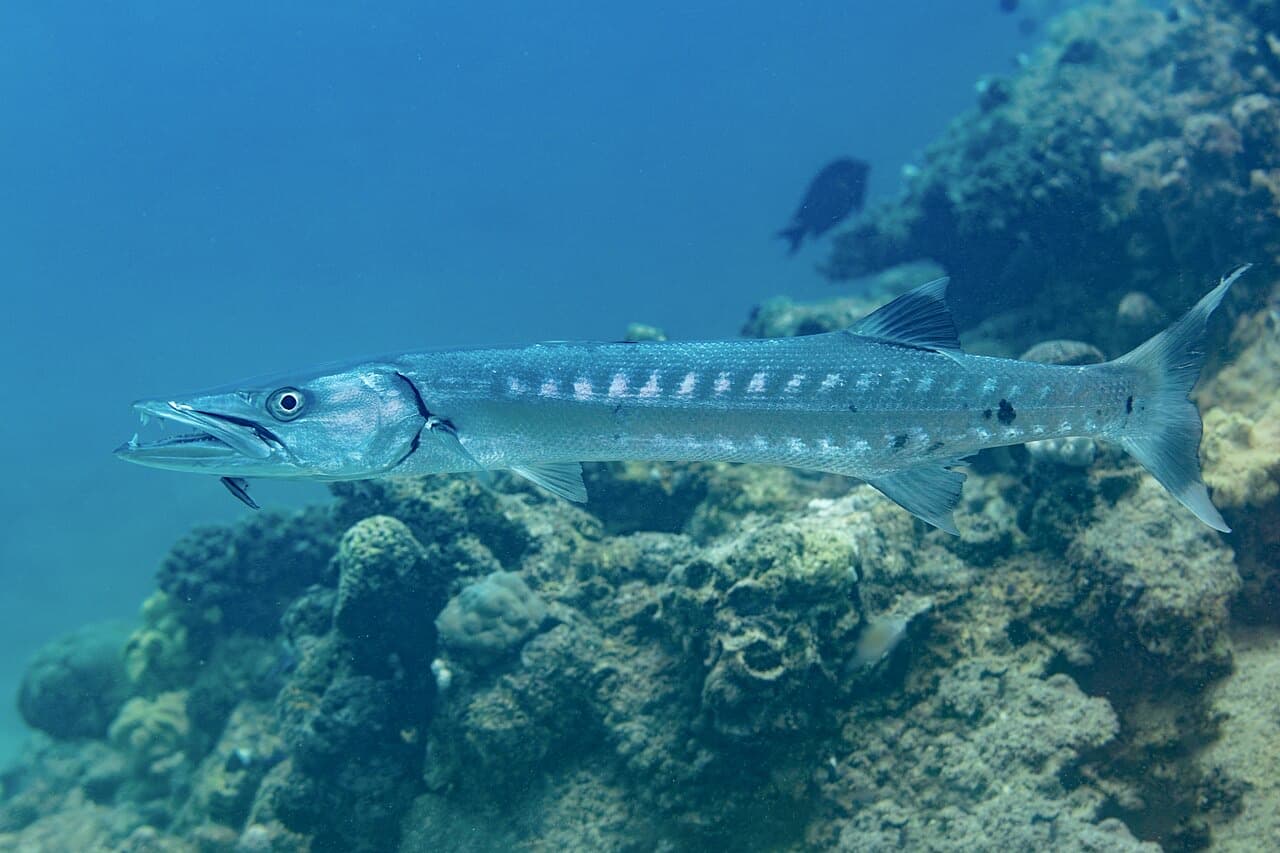
Kākū (Great Barracuda) (Sphyraena barracuda)
Photo: Diego Delso / CC-BY-SA 4.0

Kākū (Great Barracuda)

Kākū

Sphyraena barracuda

Legal to spear
reef60-150 cmCiguatera: high
Edibility & ciguatera
HIGH ciguatera risk in Hawaiʻi — large kākū are among the fish most implicated in local poisoning. The toxin is heat-stable and not removed by cooking; most divers do not eat large ones.
Where you'll see it
Reefs, harbours and drop-offs; long, silver and toothy, often hanging motionless and curious near divers. (Not to be confused with kawaleʻā, the smaller Hawaiian barracuda.)
Legal status
Legal to spear (no DAR size or bag limit), but the severe ciguatera risk means most divers release or avoid large fish. Confirm no area closure where you dive.
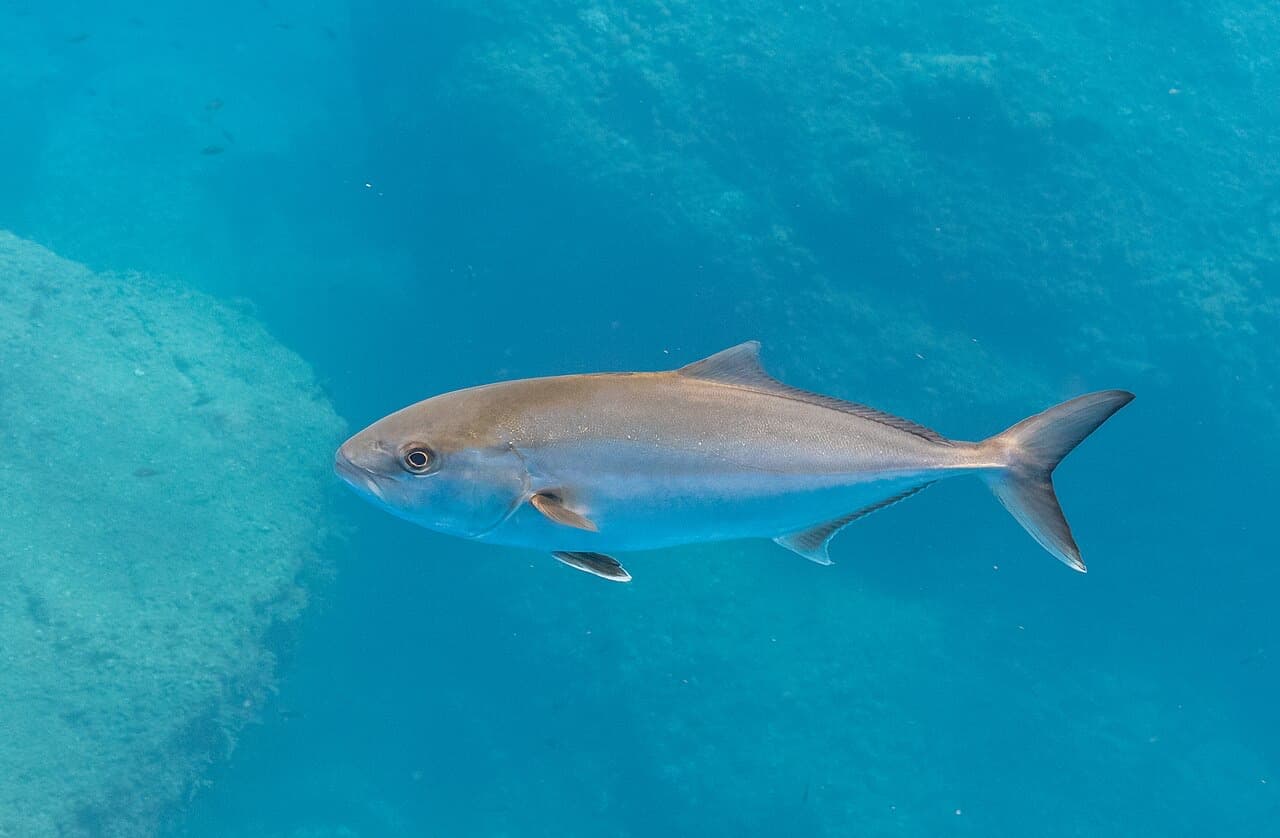
Kahala (Greater Amberjack) (Seriola dumerili)
Photo: Diego Delso / CC-BY-SA 4.0

Kahala (Greater Amberjack)

Kahala

Seriola dumerili

Legal to spear
reefup to ~1.7 m / 60 kgCiguatera: high
Edibility & ciguatera
HIGH ciguatera risk — kahala was the fish most frequently implicated in Hawaiʻi ciguatera poisoning in the 1970s, and the commercial fishery was effectively shut down around 1990 over ciguatera and flesh worms. Do not confuse wild kahala with farmed 'Kanpachi/kampachi' (Seriola rivoliana), which is a different, low-risk fish.
Where you'll see it
Deeper reefs, ledges and wrecks in strong schools; a hard-fighting amberjack. A dramatic spear encounter, but a risky food fish in the wild.
Legal status
Legal to spear (no DAR size or bag limit), but the high wild-caught ciguatera risk means many divers do not eat it. Confirm no area closure where you dive.
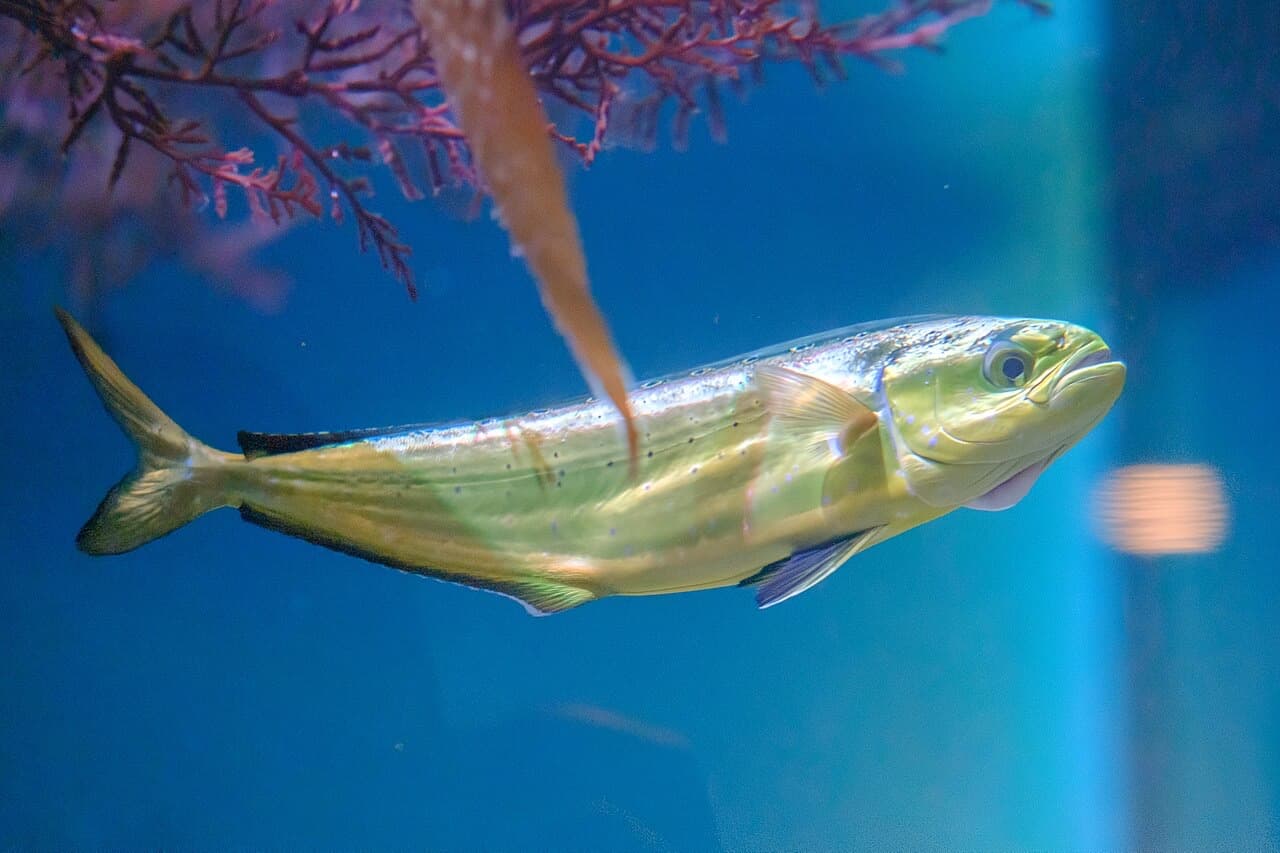
Mahimahi (Dolphinfish) (Coryphaena hippurus)
Photo: gendereuphorbia / CC0

Mahimahi (Dolphinfish)

Mahimahi

Coryphaena hippurus

Legal to spear
pelagic1.5-7 kg, up to ~30 kg
Edibility & ciguatera
Excellent eating; low ciguatera risk (an open-water feeder). Ice quickly to avoid scombroid/histamine.
Where you'll see it
Offshore bluewater around weedlines, FADs and floating debris — a bluewater target, not a reef fish. Brilliant green-gold and unmistakable.
Legal status
Legal to spear. DAR sets no recreational size or bag limit for mahimahi; non-residents 15+ still need the marine license.

Roi (Peacock Grouper / Peacock Hind)

Roi

Cephalopholis argus

Legal to spear
reef25-40 cm, up to ~50 cmCiguatera: high
Edibility & ciguatera
DO NOT EAT in Hawaiʻi — roi is the single most ciguatera-implicated species on many Hawaiian reefs. Prized food elsewhere in the Pacific, but in Hawaiʻi it commonly carries ciguatoxin. Spearing removes it from the reef; do not eat what you take.
Where you'll see it
Reefs and coral heads, dark with electric-blue spots; an INTRODUCED, invasive predator (brought in during the 1950s–60s and now eating native reef fish). Communities hold 'Roi Roundups' to cull them by spear.
Legal status
TAKE ENCOURAGED (invasive) — no size or bag limit, and removal is actively promoted to protect native reef fish. But the ciguatera risk means take it to remove it, not to eat.

Taʻape (Bluestripe Snapper)

Taʻape

Lutjanus kasmira

Legal to spear
reef20-30 cm
Edibility & ciguatera
Good, mild eating; low ciguatera risk. An underused food fish Hawaiʻi is actively trying to bring to market.
Where you'll see it
Reefs, ledges and wrecks in dense yellow-and-blue schools; an INTRODUCED snapper (brought in during the 1950s–60s) now abundant statewide. Easy schooling spear target.
Legal status
TAKE ENCOURAGED (introduced/invasive) — no DAR size or bag limit; taking taʻape is promoted to reduce competition with native reef fish.

Toʻau (Blacktail Snapper)

Toʻau

Lutjanus fulvus

Legal to spear
reef25-35 cmCiguatera: moderate
Edibility & ciguatera
Edible, but a moderate ciguatera risk — toʻau is among the introduced snappers implicated in local poisoning. Be cautious, especially with larger fish.
Where you'll see it
Reefs, harbours and rocky nearshore, often near structure; an INTRODUCED snapper (brought in during the 1950s–60s) with a yellow body and dark tail. Frequently mistaken for taʻape.
Legal status
TAKE ENCOURAGED (introduced/invasive) — no DAR size or bag limit; removal is promoted, but note the ciguatera caution before eating.

Nenue (Rudderfish / Sea Chub)

Nenue

Kyphosus sandwicensis

Legal to spear
reef30-50 cm
Edibility & ciguatera
Eaten locally; low ciguatera risk. A herbivore whose flavour is strong and can be muddy — bleed and ice promptly. Some divers leave the rare golden 'queen nenue' out of respect for local tradition.
Where you'll see it
Reefs, surge zones and drop-offs in grey schools grazing on algae; fast and wary. A common shore-dive spear target.
Legal status
Legal to spear. DAR sets no specific size or bag limit for nenue at this time — verify current herbivore-management rules for your area.

Menpachi / ʻŪʻū (Soldierfish)

ʻŪʻūMenpachi

Myripristis berndti

Legal to spear
reef15-30 cm
Edibility & ciguatera
Excellent eating — a prized fried/pan fish; low ciguatera risk.
Where you'll see it
Reef caves, ledges and holes by day, coming out at night; bright red with large eyes. A favourite night-dive spear target ('menpachi' is the everyday local/Japanese name; 'ʻūʻū' is Hawaiian).
Legal status
Legal to spear. DAR sets no specific size or bag limit for soldierfish; night spearing is restricted in some managed areas — verify before a night dive.

Mū (Bigeye Emperor)

Monotaxis grandoculis

Legal to spear
reef30-50 cm, up to ~60 cmCiguatera: moderate
Edibility & ciguatera
Good eating; moderate ciguatera risk — larger fish especially, so use caution.
Where you'll see it
Sandy reef edges and rubble, often solitary or in small groups near ledges; silvery with big eyes. A wary, respected spear target.
Legal status
Legal to spear. DAR sets no specific size or bag limit for mū at this time — verify current rules for your area.

Manini (Convict Tang)

Manini

Acanthurus triostegus

Legal to spear
reef15-20 cm
Edibility & ciguatera
Good small pan fish; low ciguatera risk. A herbivore.
Where you'll see it
Shallow reef flats and surge zones in large grazing schools; silver with black 'convict' bars. A common, approachable small-fish spear target — take only what you'll eat.
Legal status
Legal to spear. DAR sets no specific size or bag limit for manini at this time; watch the sharp tail spine and verify current herbivore-management rules for your area.

Pākuʻikuʻi (Achilles Tang)

Pākuʻikuʻi

Acanthurus achilles

Restricted — verify
reef15-24 cm
Edibility & ciguatera
Eaten locally; low ciguatera risk. A herbivore — but conservation status makes it a fish to think twice about.
Where you'll see it
High-energy surge zones and shallow reef; dark with a vivid orange teardrop by the tail. A prized-looking surgeonfish that is specifically protected in West Hawaiʻi.
Legal status
NO-TAKE in the West Hawaiʻi Regional FMA (the entire Big Island west coast) under HAR 13-60.41 — a temporary adaptive-management rule in effect through December 18, 2026, so confirm it has not lapsed or been made permanent. Elsewhere it falls under surgeonfish/herbivore-management limits. Confirm the rule for your exact area before taking one.

Local names & details still being verified

  • Uhu (parrotfish) — we present 'uhu' as the group name divers use, and note that the dark terminal-phase males 'uhu ʻeleʻele' and 'uhu uliuli' get extra protection (14 in minimum, no-take on Maui). The exact species-to-Hawaiian-name mapping for parrotfish is genuinely tricky (the names track colour phase/sex as much as species — e.g. Chlorurus perspicillatus and Scarus rubroviolaceus), so treat the single scientific name as representative of the group and confirm the specific fish before relying on a size rule.
  • Ulua/pāpio (trevally) ciguatera — large giant trevally (white ulua) are a well-known Hawaiʻi ciguatera vector; ʻōmilu (bluefin) risk is lower but rises with size. Risk is highly area-dependent — ask locally about specific reefs before eating any large jack.
  • Size/bag limits and closed seasons differ by ISLAND (Maui has stricter uhu, kūmū and weke rules) and by managed area (FMAs, CBSFAs, MLCDs). Confirm the current DAR rule for the exact island and spot you dive.
  • 'No size/bag limit' entries (kākū, kahala, mahimahi, roi, taʻape, toʻau, nenue, menpachi/ʻūʻū, mū, manini) reflect the absence of a species-specific DAR finfish limit as read here — verify against the current DAR regulations, since rules are added over time and area rules may still apply.
  • Kūmū vs. moano — several Hawaiian goatfishes share overlapping local usage. We use 'kūmū' strictly for Parupeneus porphyreus (whitesaddle goatfish); confirm the fish in hand, as 'weke' and 'moano' are different goatfishes with their own rules.

A guide, not a ruling

Species identification and Hawaiian/local names are provided as a guide, not a substitute for local knowledge. In Hawaiʻi you may spear all finfish, but many carry minimum sizes, bag limits, or closed seasons, and some reef fish are protected in specific Marine Life Conservation Districts, Fisheries Management Areas, and community subsistence areas — confirm the current DAR rules for your exact island and dive site before taking any fish. Never spear a crustacean (except introduced freshwater prawn), a sea turtle, or a marine mammal. Many large reef predators — and roi, kahala and kākū in particular — carry ciguatera toxin that cooking does not remove.

Do not spear

Prohibited species

  • Any crustacean — all crabs and lobster (ula) — may NOT be speared (sole exception: introduced freshwater prawn) 2
  • Sea turtles — may not be speared or taken 2
  • Marine (aquatic) mammals — dolphins, whales, Hawaiian monk seals — may not be speared 2
  • Uhu ʻeleʻele and uhu uliuli (certain parrotfish) — protected from take in listed areas; other uhu carry size limits, seasonal closures, and night-spearing bans 2
  • Area-specific protected species where spearing/take is barred (e.g., within the West Hawaiʻi Regional FMA: pākuʻikuʻi, several stingrays and reef sharks, whale shark, horned helmet, Triton's trumpet) 2
  • Note: any finfish species that has a minimum size or closed season may not be speared out of season or under size; MLCDs prohibit taking all marine life 2

Where you can't

Area restrictions

  • Marine Life Conservation Districts (MLCDs) — e.g., Hanauma Bay, Molokini Shoal, Old Kona Airport, Kealakekua Bay, Waikīkī, Pūpūkea, Lapakahi, Waialea Bay, Mānele-Hulopoʻe, Honolua-Mokuleʻia — prohibit taking marine life, so all spearfishing is banned inside them (Molokini permits only trolling in its Subzone B) 2.
  • West Hawaiʻi Regional FMA (entire west coast of the Big Island): SCUBA spearfishing prohibited, and possessing SCUBA gear together with a spear or speared catch is prohibited 2.
  • Community-Based Subsistence Fishing Areas / traditional zones — within the four Puʻuhonua and the Puakaiʻa Miloliʻi zone (Miloliʻi CBSFA, South Kona) only pole spears are allowed and spearing named reef species (uhu, pākuʻikuʻi, weke ʻula, moano kea, ʻūʻū) is prohibited; the Hāʻena CBSFA (Kauaʻi) permits only pole spears 8 feet or less and prohibits spear guns and spearing at night (6:00 pm–6:00 am) 2.
  • Numerous FMAs impose night-spearing bans (no spear use or possession with dive gear from sunset to sunrise) and rotating open/closed fishing years 2.
  • Wailoa River: possession or use of a spear (or thrownet) is prohibited 2.
  • Dive-flag zone rule: while spearfishing you may not surface more than 100 feet from your dive flag in ocean waters (50 feet in navigable streams) except in an emergency 2.
  • State Park waters and other posted reserves / prohibited fishing zones apply their own rules 2.

Worth knowing

Notable rules, seasons & limits

  • SCUBA spearfishing is legal in Hawaiʻi statewide — a rarity in the U.S. — but is BANNED along the entire West Hawaiʻi (Big Island) coast under the West Hawaiʻi Regional FMA; know which coast you are on 2.
  • Residents need no recreational saltwater license; non-residents 15+ must buy the NRMFL first, and it is genuinely issued and enforced (see 'The full story') (s2, s3, s5).
  • Dive flag is mandatory: display a flag (min 12"x12"; larger on vessels >16 ft with an alpha flag) only while diving, remove it when not diving, illuminate it at night, and stay within 100 ft of it (50 ft in streams) 2.
  • Never spear crustaceans (except introduced freshwater prawn), turtles, or marine mammals — this is a hard statewide line 2.
  • Spearing must still respect species minimum sizes, bag limits, and closed seasons (notably the detailed uhu/parrotfish rules, and no spearing uhu at night in listed areas) 2.
  • Shark fins may not be possessed, sold, traded, or distributed 2.
  • Drones may not be used to take aquatic life without a permit (reconnaissance only) 2.

What divers here typically use

Gear up for Hawaii spearfishing

Most divers working Hawaii's coast start with a band speargun sized to the water and the fish they are after. Our honest guide to the Best Speargun for Beginners walks through what to look for — curated from published specs and community consensus, not paid placement.

If you break them

Penalties

Fishing and spearing rules are enforced by the DLNR Division of Conservation and Resources Enforcement (DOCARE). Violations of Hawaiʻi's aquatic-resource statutes (HRS ch. 187A/188) and administrative rules (HAR Title 13) can carry fines, citations, and confiscation of gear and catch, with escalated penalties for protected species (turtles, marine mammals, prohibited take). Exact fine amounts and statutory penalty tiers are not stated in the DAR regulations booklet and should be confirmed in HRS ch. 187A/188 and the relevant HAR chapters before publication 2.

Not yet independently confirmed — verify directly

  • Exact penalty/fine dollar amounts and statutory penalty tiers for spearing/fishing violations are not stated in the DAR booklet; verify in HRS ch. 187A/188 and HAR Title 13 before relying on any figure.
  • 'Hawaiian sling' is not named in the DAR regulations — the rules speak only of a 'spear.' Its legality is inferred (it is a hand-propelled spear); confirm with DAR, especially in 'pole spear only' areas.
  • Powerheads/bang sticks ARE named in the booklet — but only as items a diver may lawfully POSSESS in the water within several Marine Life Conservation Districts (e.g., Waikīkī, Pūpūkea, Lapakahi, Honolua-Mokuleʻia), a shark-defense carve-out, not an authorized fish-taking method (s2). No statewide rule expressly authorizes taking fish with a powerhead; the statewide 'firearms' prohibition (no taking marine life with firearms except gaffed tuna/billfish) governs, so using a powerhead to take fish is very likely unlawful — confirm the exact treatment with DAR/DOCARE.
  • The exact statewide rule on spearing introduced freshwater GAME fish: DAR lists permitted freshwater methods (hook-and-line/pole-and-line) that do not include spearing, and requires a Freshwater Game Fishing License, but the booklet contains no single explicit 'no spearing freshwater game fish' sentence; the clear freshwater spear allowance is introduced freshwater prawn only.
  • The full statewide list of Marine Life Conservation Districts and every FMA/CBSFA spear rule was not enumerated exhaustively here; representative examples are cited from the booklet — check the specific area's rule (HAR Title 13) before diving.

Confirm these points directly with Hawaiʻi Department of Land and Natural Resources, Division of Aquatic Resources (DAR) before you rely on them.

Primary sources

Sources

Every fact above is drawn from these official sources. Each was retrieved on the date shown; regulations can change after that date.

  1. Source 3: Hawaiʻi DLNR/DAR — Nonresident Recreational Marine Fishing License (who must obtain, fees, exemptions, where to buy)

    Retrieved July 5, 2026https://dlnr.hawaii.gov/dar/licenses-and-permits/nonresident-recreational-marine-fishing-license/

  2. Source 6: Hawaiʻi DLNR/DAR — Nonresident Recreational Marine Fishing License FAQ (PDF)

    Retrieved July 5, 2026https://dlnr.hawaii.gov/dar/files/2025/01/NRMFL-FAQs.pdf

Quick answers

Frequently asked questions

Is spearfishing legal in Hawaii?
Yes — spearfishing is legal in Hawaii's saltwater, and it is permitted in fresh water, subject to license, gear, species, and area rules. Legal statewide. The DAR statewide 'Firearms and spears' rule states 'Fishing with spears allowed for all fishes, but must follow minimum size for spearing of certain species,…
Do you need a license to spearfish in Hawaii?
Yes. Hawaii requires the Nonresident Recreational Marine Fishing License (NRMFL) — non-residents only; residents need none. Resident cost: None — Hawaiʻi does not require residents to hold a recreational marine (saltwater) fishing license for spearfishing. (A Freshwater Game Fishing License, $5 for residents over 15, is required only to take introduced freshwater game fish.) Non-resident cost: NRMFL: $20 (1-day), $40 (7-day), $70 (annual), plus any online processing fee (s2, s3). Non-resident Freshwater Game Fishing License: $25 annual, $10 (7-day tourist), $20 (30-day tourist).
Can you spearfish on scuba in Hawaii?
Legal statewide EXCEPT where an area rule bans it — this is Hawaiʻi's most important and most-misreported gear point. Hawaiʻi has NO statewide ban on SCUBA spearfishing; the statewide 'Firearms and spears' rule imposes no SCUBA restriction. However, SCUBA spearfishing is…
What can't you spear in Hawaii?
Protected or no-take species you may not spear in Hawaii include: Any crustacean — all crabs and lobster, Sea turtles — may not be speared or taken, Marine, Uhu ʻeleʻele and uhu uliuli, Area-specific protected species where spearing/take is barred, Note: any finfish species that has a minimum size or closed season may not be speared out of season or under size; MLCDs prohibit taking all marine life. Always check the full prohibited-species list and current seasons before diving, and confirm with Hawaiʻi Department of Land and Natural Resources, Division of Aquatic Resources (DAR).
Stay current

Get an email when Hawaii's size & bag limits change

Regulations shift between seasons. We re-check Hawaii's rules against the primary source and send a short note when the limits, seasons, or licensing move — nothing else.

No spam. Regulations updates, gear data drops, and the launch of the guide.

Last verified July 5, 2026. Regulations change — always confirm the current rules with Hawaiʻi Department of Land and Natural Resources, Division of Aquatic Resources (DAR) before you dive.