Island Spear Co.

Regulations Florida

Spearfishing Regulations in Florida

Checked against the primary source (FWC) on July 4, 2026state

Governing agency: Florida Fish and Wildlife Conservation Commission (FWC). Last verified July 4, 2026 by independent primary-source check.

Summary

Spearfishing is legal in most of Florida's saltwater with a recreational saltwater fishing license. Florida defines spearfishing broadly (hand- or mechanically-propelled single or multi-pronged spear or lance, barbed or barbless, by a person swimming at or below the surface), so pole spears, spearguns and Hawaiian slings are permitted, but powerheads, bangsticks and rebreathers are banned. A specific list of species may not be taken by spear, and spearfishing is prohibited in fresh water for game fish, in certain areas (near beaches, piers, bridges, jetties), and throughout Monroe County from Long Key north to the Miami-Dade County line.

License

What you need to be legal

LegalA license is required
License
Florida Recreational Saltwater Fishing License
Who needs it
Anyone who takes or attempts to take saltwater fish or other saltwater organisms in Florida state or federal waters, including by spearfishing, must have a recreational saltwater fishing license unless specifically exempt.
Resident cost
$17.00 annual (or $79.00 for a five-year license). A no-cost Resident Saltwater Shoreline-Only license is available, but per FWC it is 'not valid when fishing from a vessel, or a shoreline reached by vessel' and 'not valid if taking or attempting to take by swimming or diving.' Because FWC defines spearfishing as taking by a person swimming at or below the surface, the shoreline-only license does NOT cover spearfishing — spearfishers need the full recreational saltwater fishing license.
Non-resident cost
$17.00 for 3 days, $30.00 for 7 days, or $47.00 annual.
Where to buy
Online at GoOutdoorsFlorida.com, at Florida county tax collectors' offices, or from license vendors (vendors may add a small issuance fee).

Exemptions

  • Youth under 16 years of age
  • Florida residents age 65 or older (with proof of age/residency or a no-cost Resident 65+ Hunt/Fish Certificate)
  • Florida residents certified as totally and permanently disabled holding a Florida Resident Disabled Person's Hunting and Fishing License
  • Active-duty and reserve military members, and disabled veterans, participating in permitted outdoor recreational events (active-duty Florida residents home on leave are also exempt per FWC guidance)
  • Anglers fishing from a for-hire/charter vessel with a valid charter license, or from a vessel or pier covered by a valid saltwater vessel or pier license
  • Anglers fishing during designated free saltwater fishing days
  • Florida residents fishing from land or a structure fixed to land who qualify for food stamps, temporary cash assistance, or Medicaid (with proof)

Where it's legal

Saltwater & freshwater

Saltwater

Legal

Spearfishing is legal in Florida saltwater with a recreational saltwater fishing license, subject to the prohibited-species list, gear restrictions, and area restrictions below. FWC does not distinguish general spearfishing rules between the Gulf and Atlantic coasts, but county-specific and area-specific restrictions apply (notably Monroe County and Volusia County).

Freshwater

Not permitted

Game fish (e.g., largemouth bass, black crappie, bluegill and other sunfish, peacock bass) may be taken only with pole and line or rod and reel; spearing and gigging of game fish is prohibited. Nongame fish may be taken by manually operated spears, gigs, snatch hooks, crossbow, or bow and arrow, subject to daylight/night and location rules. Any hand- or mechanically-propelled spear used to harvest marine species while diving in fresh water is prohibited, and spearfishing for mullet in fresh water is prohibited (though gigging mullet from above the water is permitted).

Gear

What you can carry

Speargun
Allowed. Florida's definition of spearfishing covers a 'hand or mechanically propelled, single or multi-pronged spear or lance, barbed or barbless,' which includes spearguns. Not permitted for the prohibited species listed below.
Pole spear
Allowed. FWC's lionfish page 6 explicitly names the 'pole spear' as a lawful spearing device, and it is covered by the statutory definition (hand-propelled single or multi-pronged spear or lance).
Hawaiian sling
Allowed. FWC's spearing page does not name gear types, but FWC's lionfish page 6 explicitly names the 'Hawaiian Sling' as a lawful spearing device, and it is covered by the statutory definition of a hand-propelled spear or lance. (Only 'speargun' is not named individually by FWC; its permissibility follows from the general definition.)
Spearfishing on SCUBA
Spearfishing while on SCUBA is not prohibited by FWC in Florida saltwater; the definition covers a person 'swimming at or below the surface of the water,' which includes divers. However, rebreathers are prohibited for spearfishing (except that divers may use rebreathers to spear and remove invasive lionfish). Note that separate FWC rules restrict the use of SCUBA for certain fisheries (e.g., some lobster/stone crab and area-specific rules) that are outside the scope of spearfishing itself.

Gear restrictions

  • Powerheads are prohibited
  • Bangsticks are prohibited
  • Rebreathers are prohibited (exception: divers may use rebreathers to spear and remove invasive lionfish)

What you'll see

Target species

A field guide to the fish a spearo may actually encounter in Florida saltwater, with the regional nicknames locals use. This is not exhaustive, and it is not a legality ruling. Florida's biggest spearfishing trap is that many species are legal on hook-and-line but ILLEGAL to spear — always confirm the current FWC rules, seasons and sizes, and watch ciguatera risk on large reef fish in the Keys before taking or eating anything.

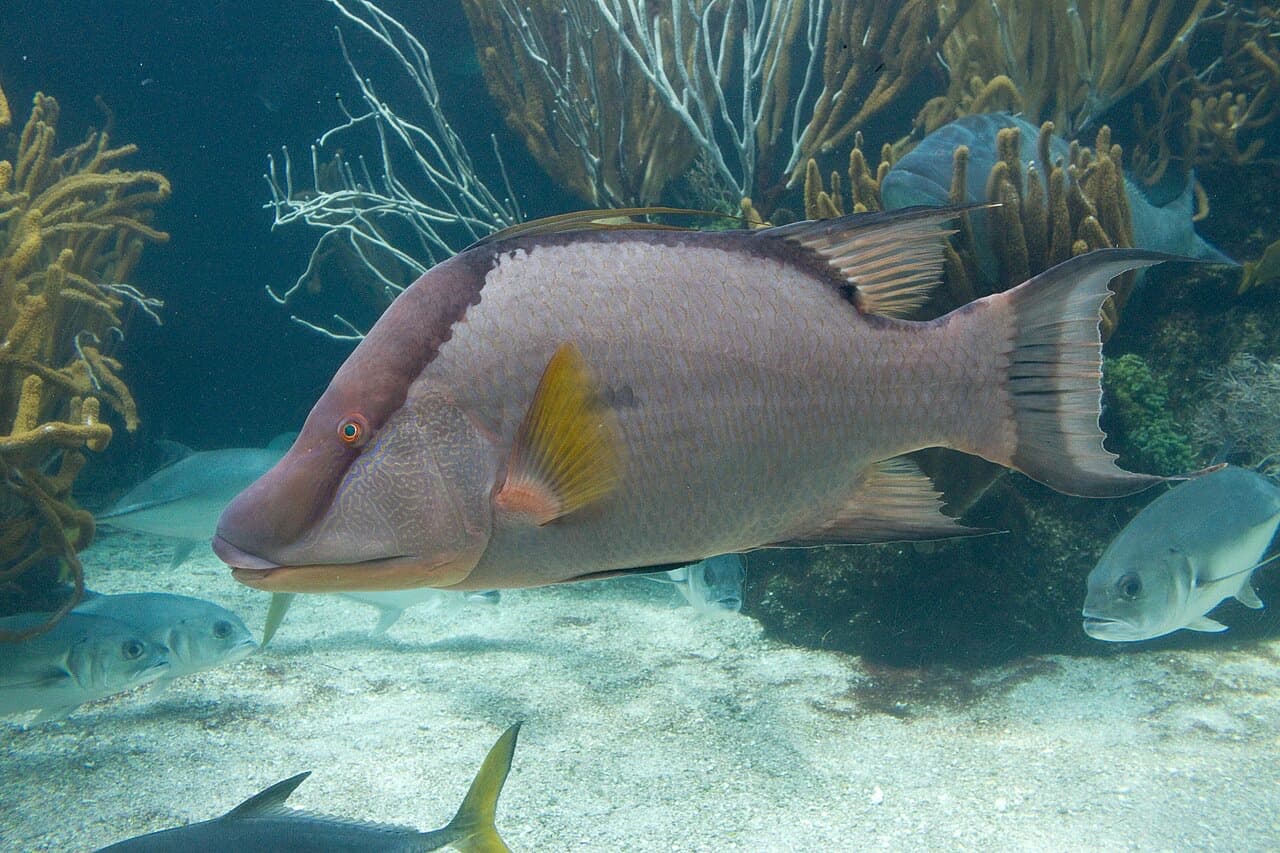
Hogfish (Lachnolaimus maximus)
Photo: Brian Gratwicke / CC-BY 2.0

Hogfish

Hog snapper

Lachnolaimus maximus

Restricted — verify
reef0.5-3 kg, up to ~9 kg
Edibility & ciguatera
Excellent — one of the most prized eating fish in Florida; low ciguatera concern.
Where you'll see it
Hard bottom, reef and rubble in 15-120 ft. A spearfishing favourite because it rarely takes a hook — sight-hunted along ledges.
Legal status
Legal to spear, size/limit differs by coast: Gulf 14 in fork minimum, 5/day; Atlantic 16 in fork minimum, 1/day with a May 1-Oct 31 season. Verify the management boundary and current dates.
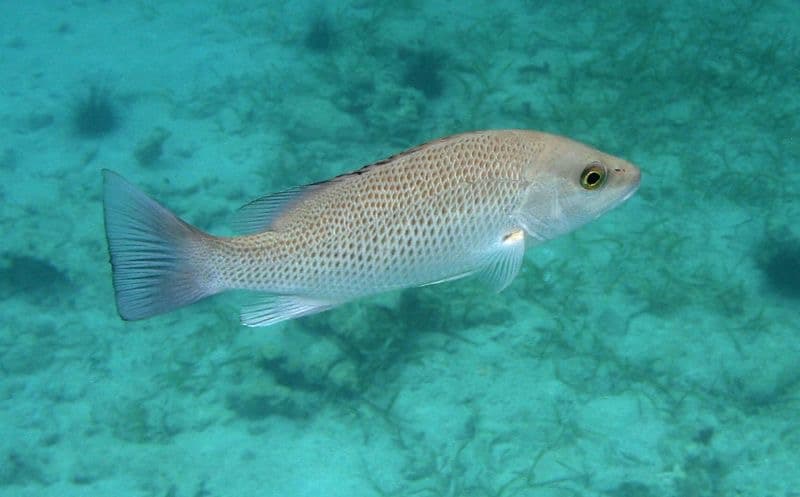
Mangrove (Gray) Snapper (Lutjanus griseus)
Photo: Clinton & Charles Robertson / CC-BY 2.0

Mangrove (Gray) Snapper

MangoBlack snapper

Lutjanus griseus

Legal to spear
reef25-35 cm inshore, larger offshore
Edibility & ciguatera
Excellent eating; low ciguatera risk.
Where you'll see it
Mangroves, docks, wrecks, patch reefs and deeper ledges; wary and a good ambush target.
Legal status
Legal to spear year-round, 10 in minimum, 5/day within the 10-fish snapper aggregate.
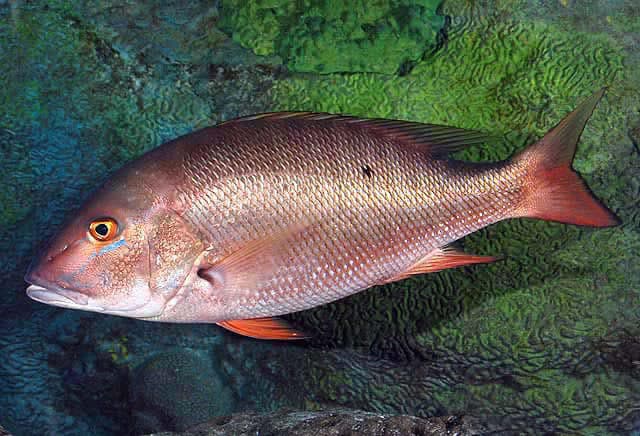
Mutton Snapper (Lutjanus analis)
Photo: D Ross Robertson · Public domain

Mutton Snapper

Mutton

Lutjanus analis

Legal to spear
reef1.5-7 kg, up to ~11 kg
Edibility & ciguatera
Excellent eating; low ciguatera risk (minor caution on very large Keys fish).
Where you'll see it
Reefs, sand holes near reef edges and wrecks; spooky, often holds off structure.
Legal status
Legal to spear year-round, 18 in minimum, 5/day within the snapper aggregate. Note spawning-area/season closures in parts of SE Florida and the Keys — verify.
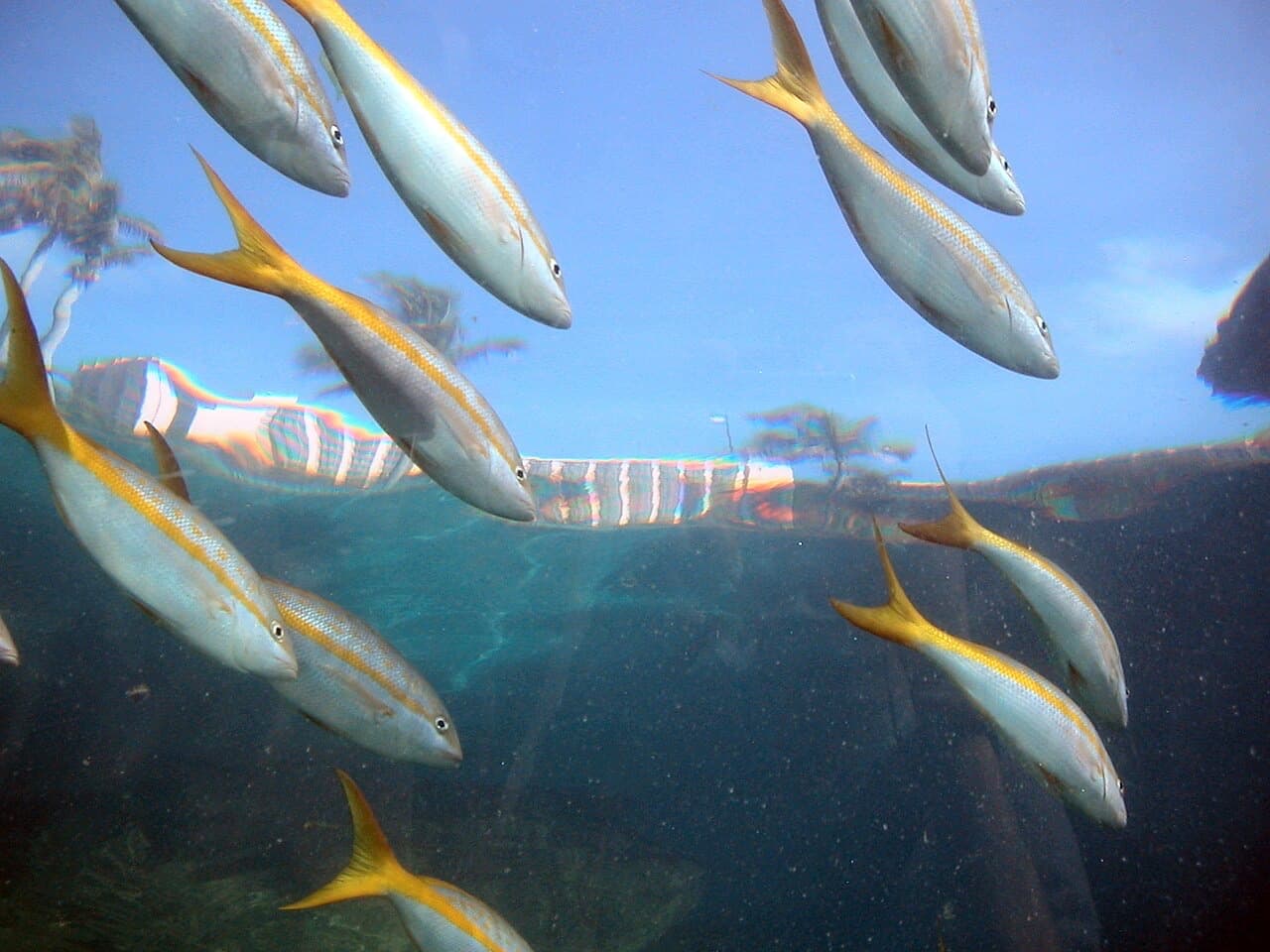
Yellowtail Snapper (Ocyurus chrysurus)
Photo: Fred Hsu / CC-BY-SA 3.0

Yellowtail Snapper

YellowtailFlag

Ocyurus chrysurus

Legal to spear
reef0.5-1.5 kg, up to ~3 kg
Edibility & ciguatera
Excellent eating; low ciguatera risk.
Where you'll see it
Keys and SE Florida reefs, up in the water column over coral; skittish and a harder spear target.
Legal status
Legal to spear year-round, 12 in minimum, 10/day within the snapper aggregate.
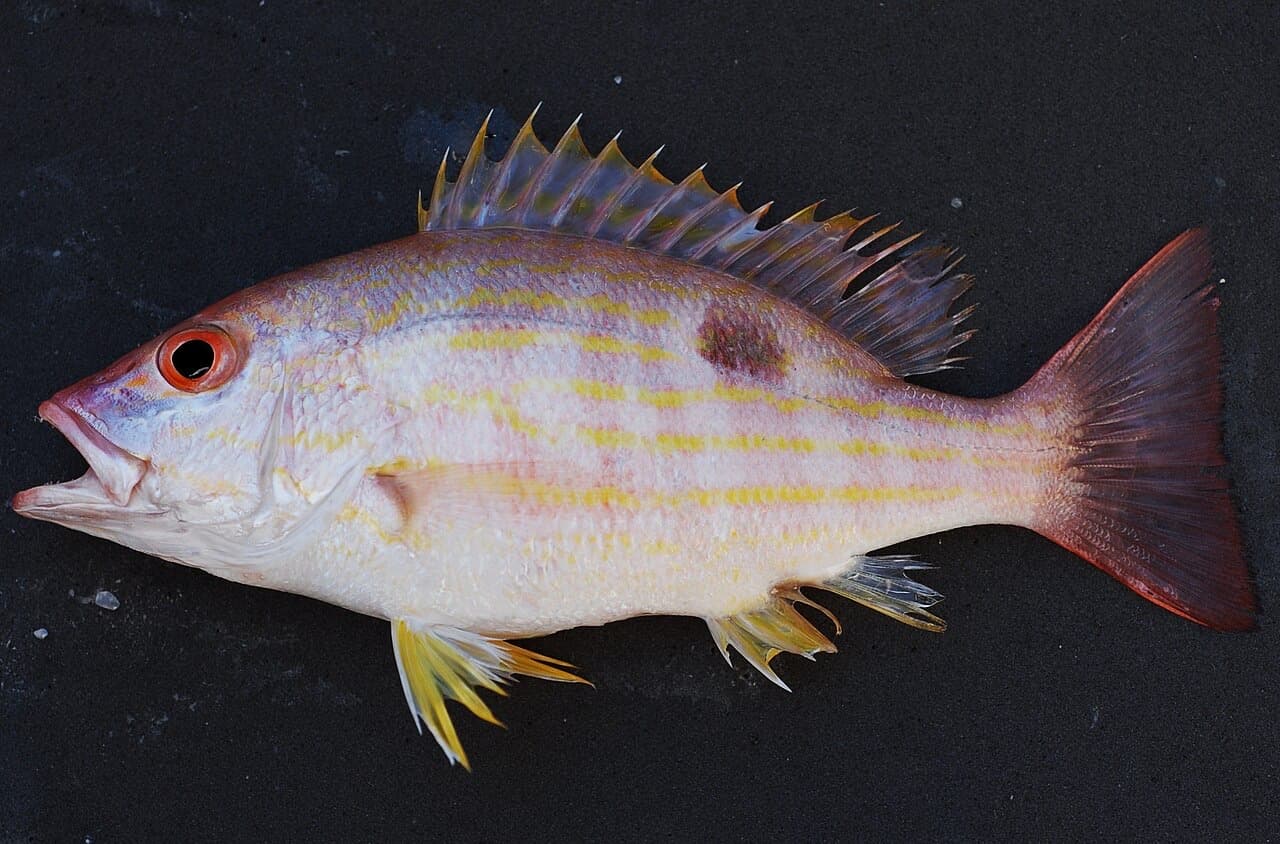
Lane Snapper (Lutjanus synagris)
Photo: NOAA

Lane Snapper

LaneCandy snapper

Lutjanus synagris

Restricted — verify
reef20-35 cm
Edibility & ciguatera
Very good eating; low ciguatera risk.
Where you'll see it
Reefs, hard bottom and grass edges; common and approachable.
Legal status
Legal to spear within the snapper aggregate. Atlantic 8 in minimum, 10/day; Gulf rules changed in 2026 (10 in minimum, 20/day) — verify current Gulf numbers.
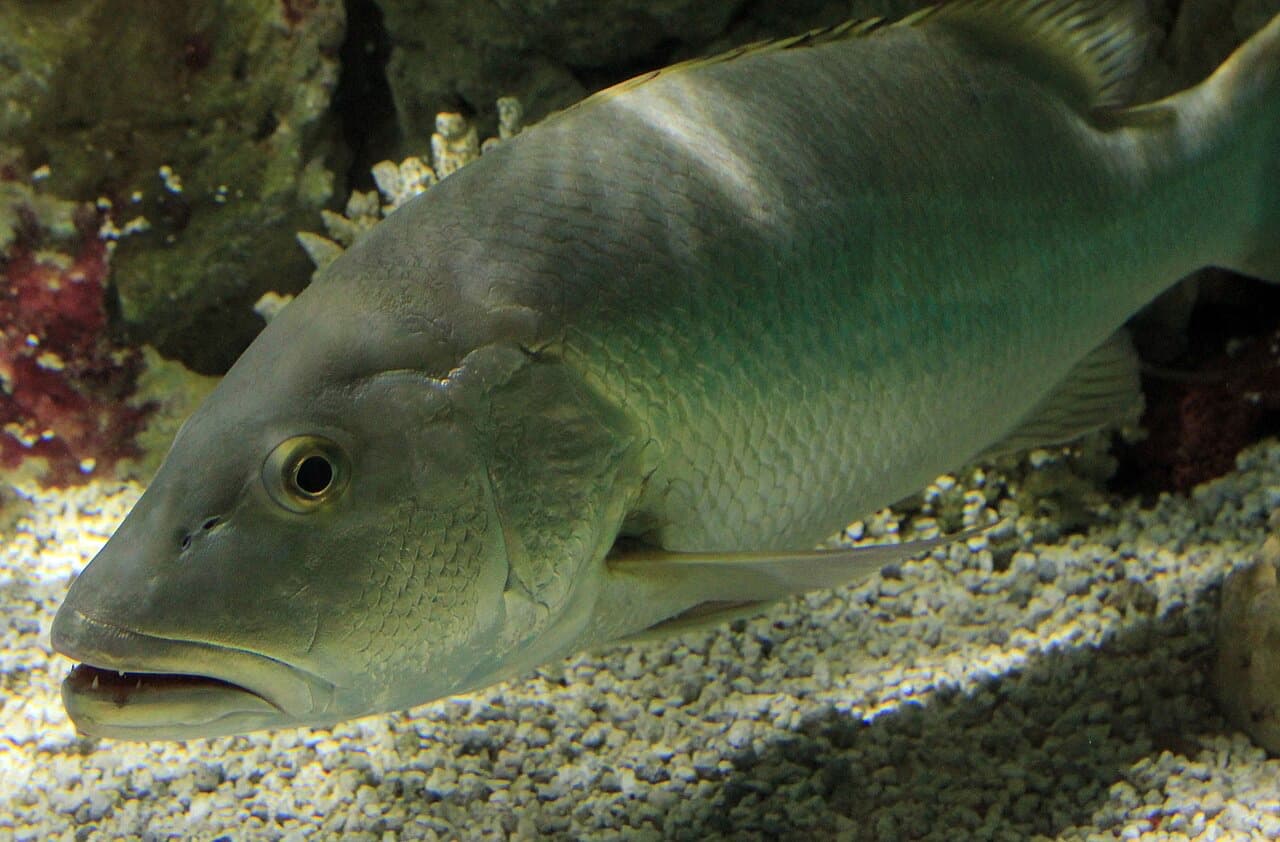
Cubera Snapper (Lutjanus cyanopterus)
Photo: Yinan Chen · Public domain

Cubera Snapper

Cuban snapper

Lutjanus cyanopterus

Legal to spear
reefup to ~1.5 m / 45+ kgCiguatera: high
Edibility & ciguatera
Good eating, BUT large cubera carry meaningful ciguatera risk in south Florida and the Keys — flag big fish.
Where you'll see it
Wrecks, deep ledges and channel structure in the Keys and SE Florida; big adults are apex reef ambushers.
Legal status
Legal to spear year-round, 12 in minimum; 10/day under 30 in within the aggregate, plus a limited allowance for larger fish per vessel — verify the current large-fish provision.
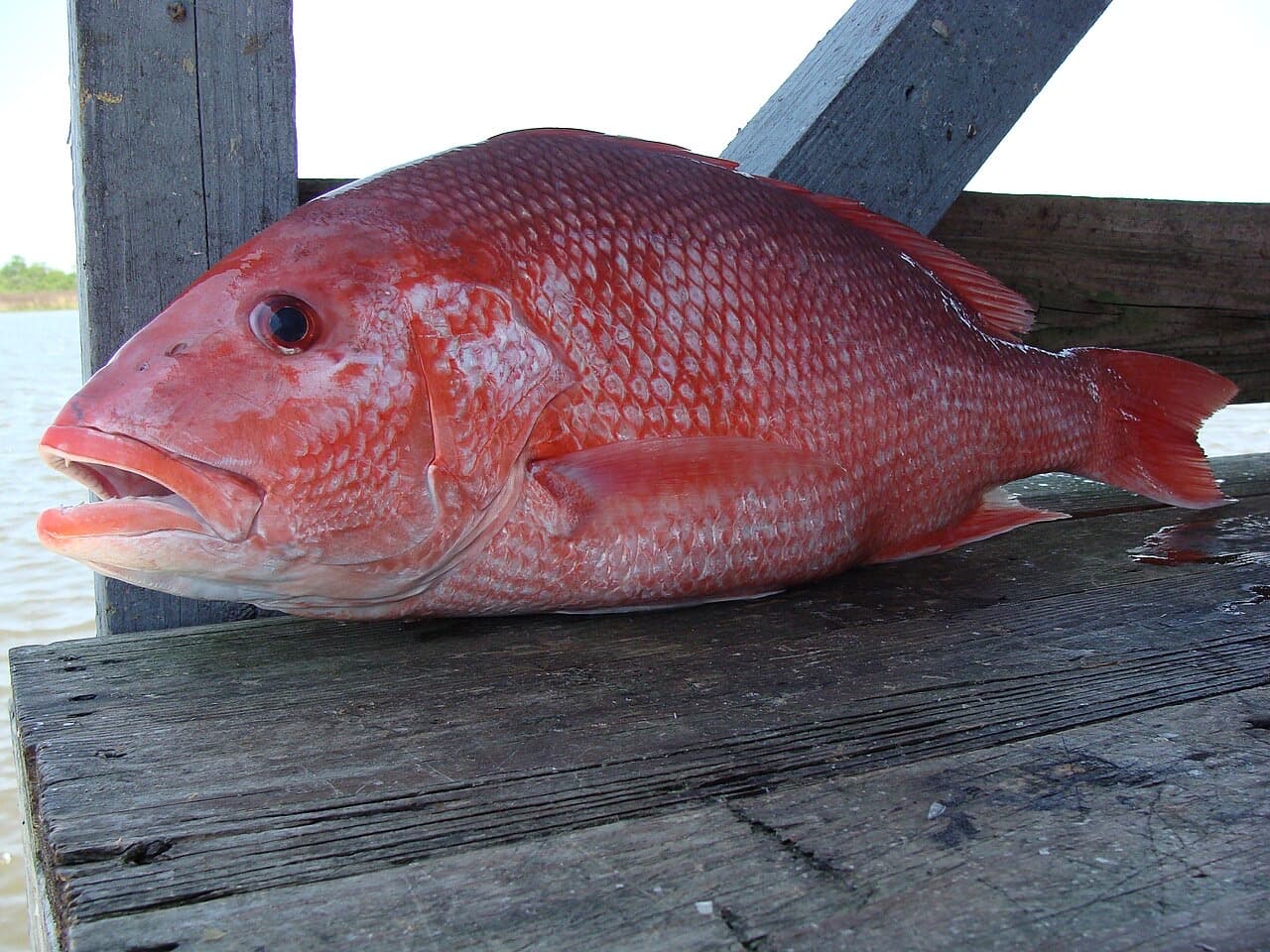
Red Snapper (Lutjanus campechanus)
Photo: Geeklikepi / CC-BY-SA 3.0

Red Snapper

American red snapperSow

Lutjanus campechanus

Restricted — verify
bottom1-7 kg, up to ~14 kg
Edibility & ciguatera
Excellent eating; low ciguatera risk.
Where you'll see it
Deep wrecks, ledges and artificial reefs (often 60-200+ ft — deep for freedivers); tightly seasonal.
Legal status
Legal to spear only during the short, annually-set season (Gulf 16 in, Atlantic 20 in). Most of the year it is CLOSED — always confirm open dates before targeting.
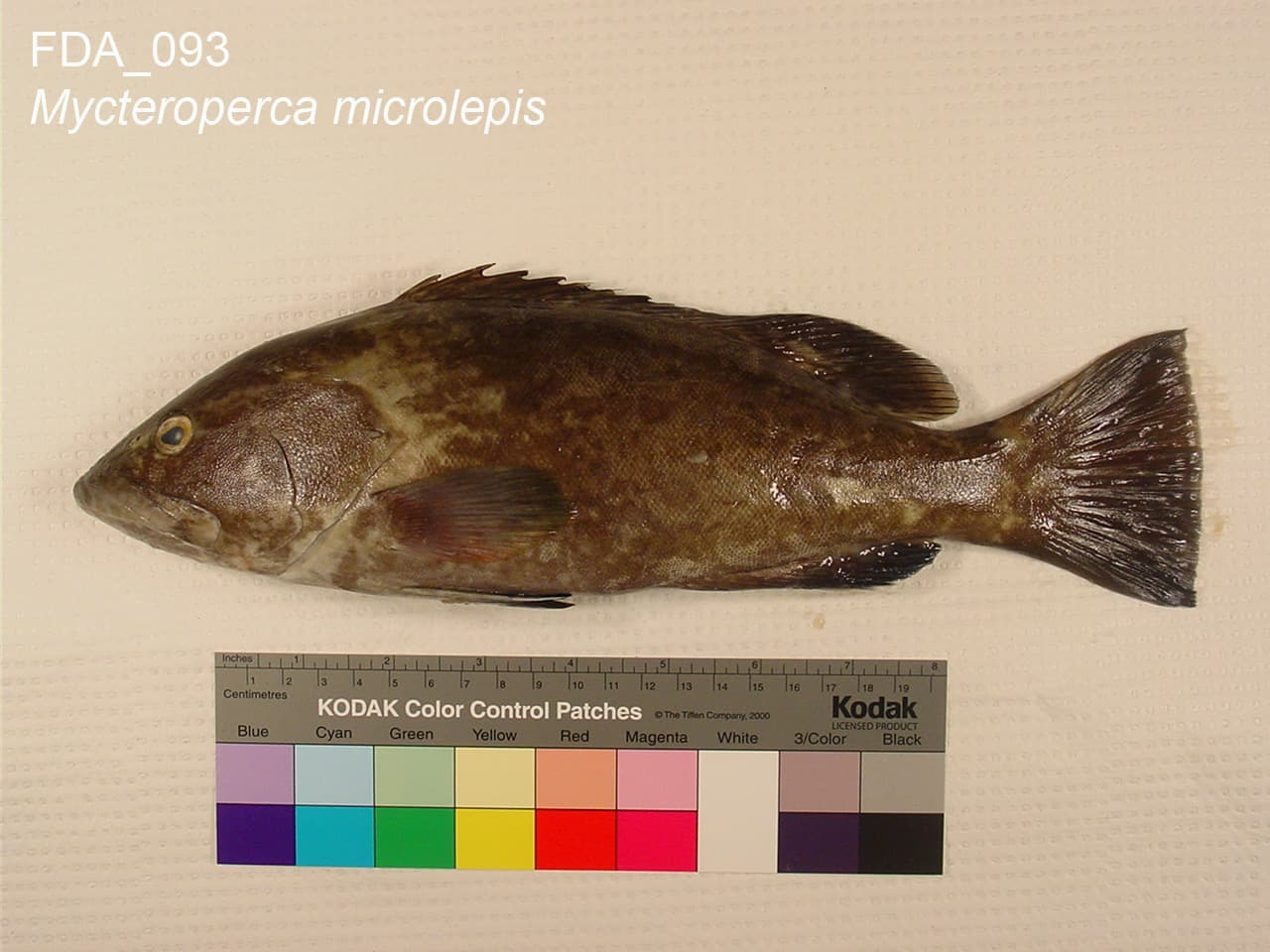
Gag Grouper (Mycteroperca microlepis)
Photo: FDA

Gag Grouper

GagGrey grouper

Mycteroperca microlepis

Restricted — verify
reef2-12 kg, up to ~23 kg
Edibility & ciguatera
Excellent eating; low ciguatera risk.
Where you'll see it
Ledges, wrecks and live bottom; a strong fighter that bolts to structure — a classic spear target.
Legal status
Legal to spear in season, 24 in minimum, within the grouper aggregate. Atlantic CLOSED Jan 1-Apr 30; Gulf season is set annually (often fall) — verify current dates.
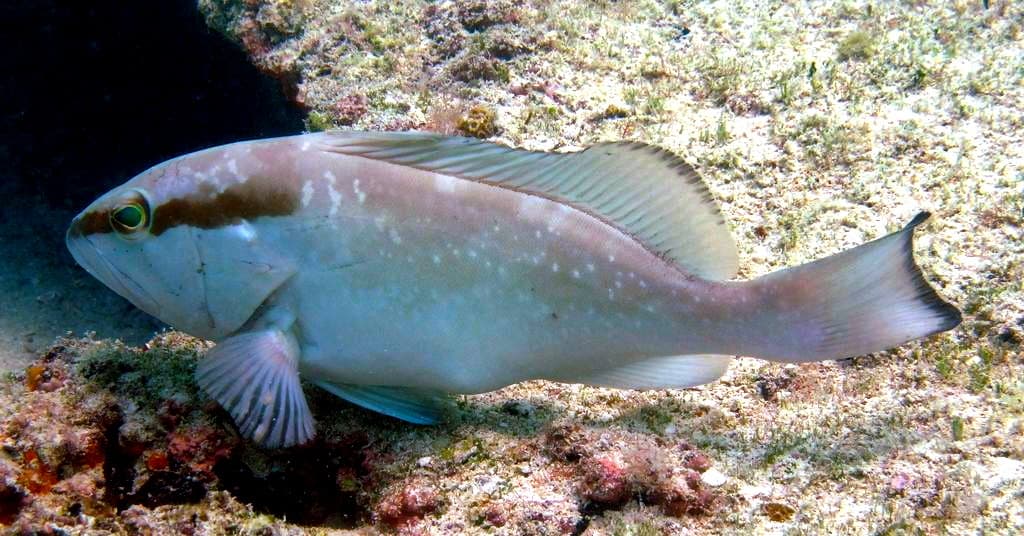
Red Grouper (Epinephelus morio)
Photo: Simões, N.; Zarco Perello, S.; Moreno Mendoza, R. / CC-BY 4.0

Red Grouper

Red grouper

Epinephelus morio

Restricted — verify
bottom2-7 kg, up to ~18 kg
Edibility & ciguatera
Excellent eating; low ciguatera risk.
Where you'll see it
Hard bottom and rocky ledges, often solitary in excavated 'pits'; a common Gulf spear target.
Legal status
Legal to spear, 20 in minimum, within the grouper aggregate (Gulf 2/day, Atlantic 3/day). Atlantic CLOSED Jan 1-Apr 30 — verify.
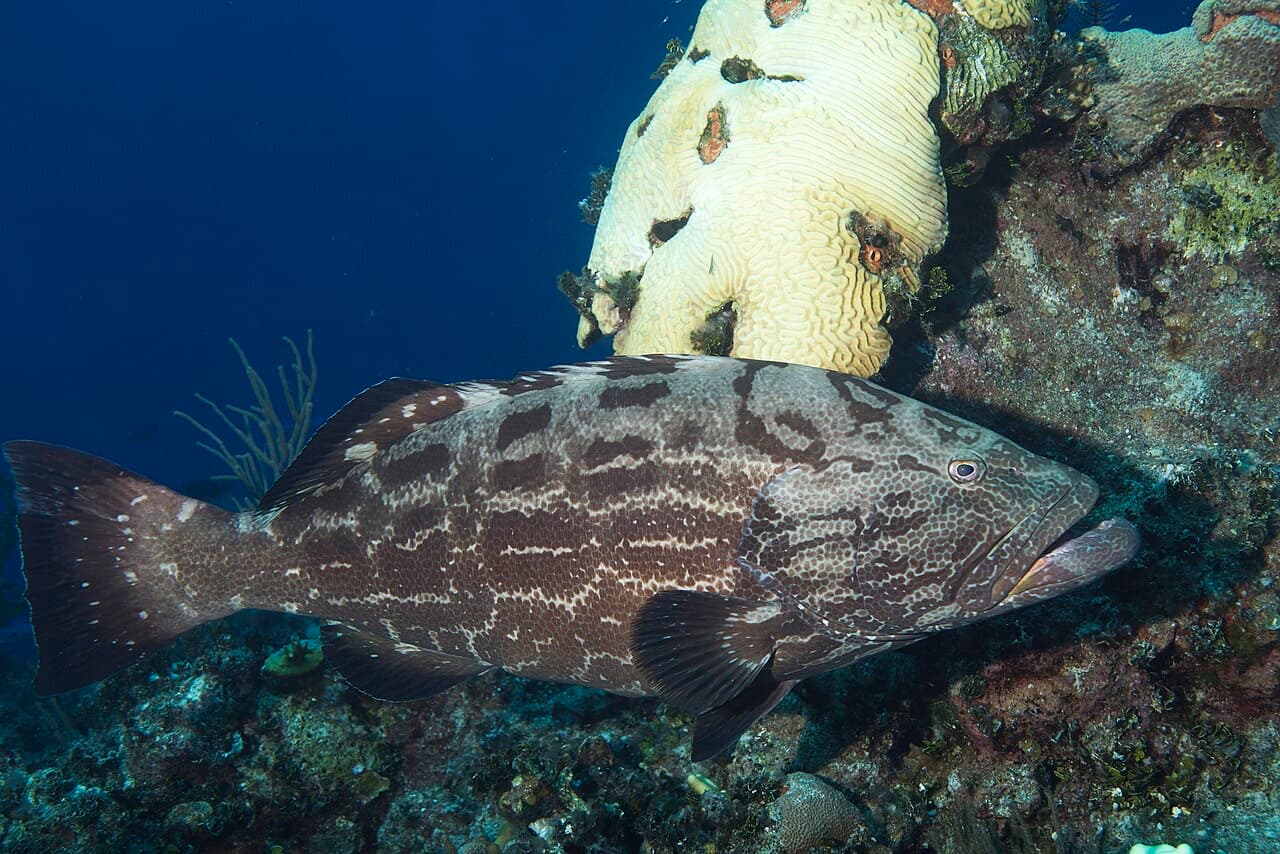
Black Grouper (Mycteroperca bonaci)
Photo: R Vasconcellos / CC-BY 4.0

Black Grouper

Black

Mycteroperca bonaci

Restricted — verify
reef5-18 kg, up to ~45 kgCiguatera: moderate
Edibility & ciguatera
Excellent eating, BUT large Keys/SE-Florida black grouper carry some ciguatera risk — flag big fish.
Where you'll see it
Deeper reefs, ledges and wrecks in the Keys and SE Florida; a wary trophy target.
Legal status
Legal to spear, 24 in minimum, within the grouper aggregate. Atlantic CLOSED Jan 1-Apr 30 — verify.
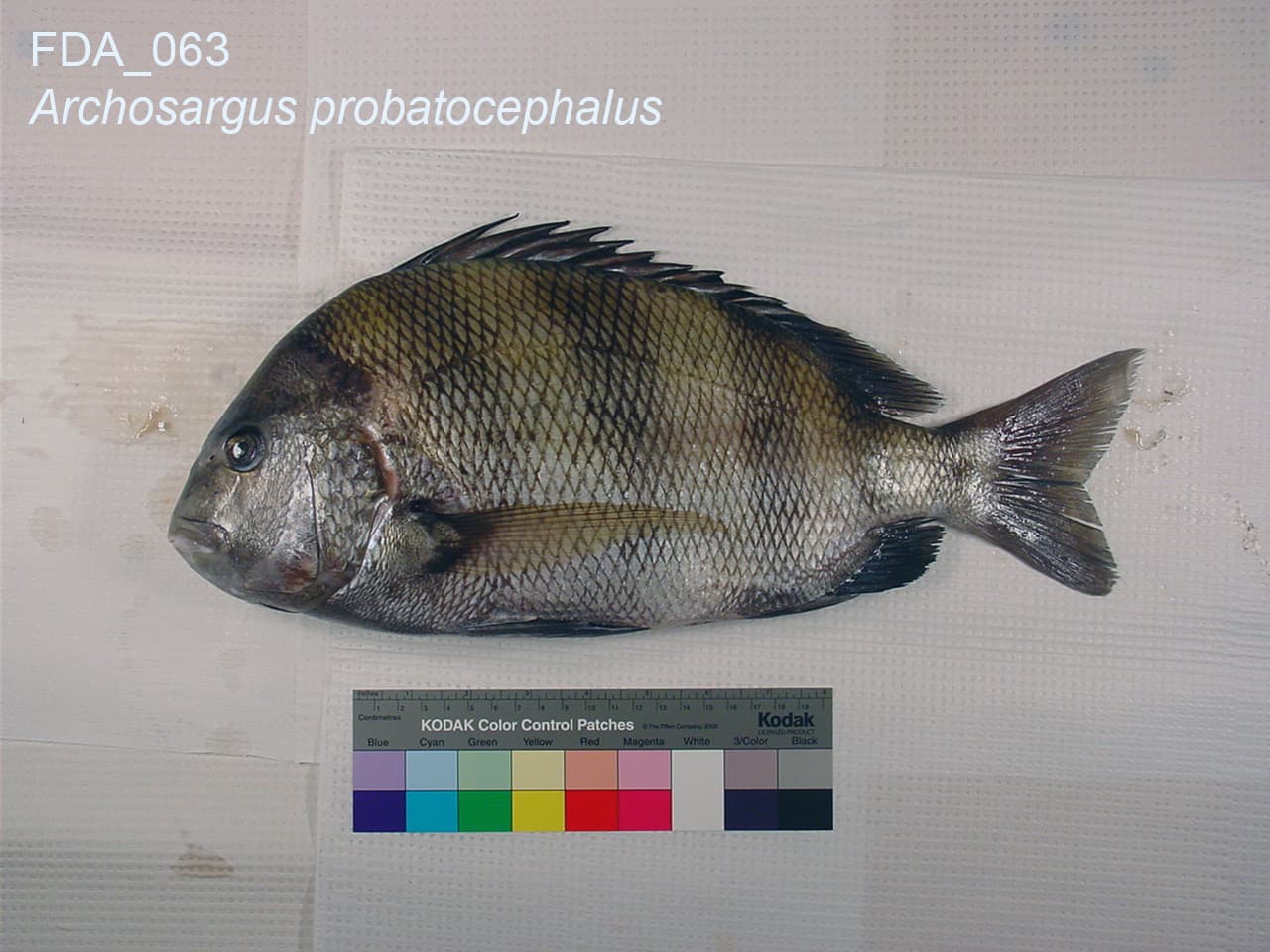
Sheepshead (Archosargus probatocephalus)
Photo: FDA

Sheepshead

Convict fishSheephead

Archosargus probatocephalus

Legal to spear
inshore0.5-4 kg, up to ~5 kg
Edibility & ciguatera
Very good eating; low ciguatera risk.
Where you'll see it
Docks, bridges, jetties, wrecks and reefs — anywhere with barnacles; one of the few inshore fish specifically legal to spear (even in Volusia inland waters with a barbed 3-prong spear).
Legal status
Legal to spear year-round, 12 in minimum, 8/day (vessel cap of 50 in March-April).
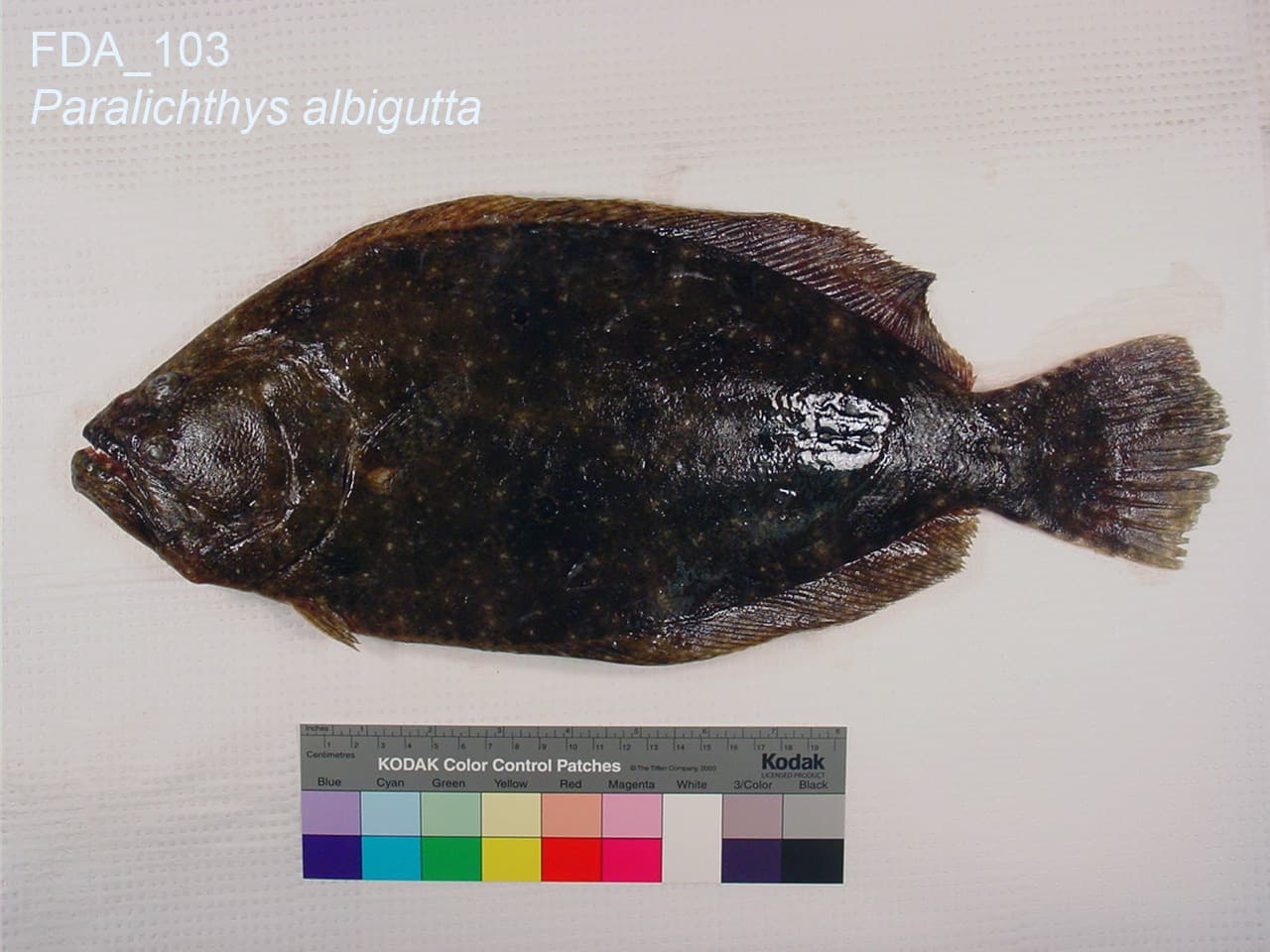
Flounder (Gulf & Southern) (Paralichthys albigutta)
Photo: FDA

Flounder (Gulf & Southern)

DoormatFlatfish

Paralichthys albigutta

Restricted — verify
bottom30-50 cm, 'doormats' to ~63 cm
Edibility & ciguatera
Excellent eating; low ciguatera risk.
Where you'll see it
Sand/mud bottom near structure, inlets and grass edges; a top gigging/spearing inshore target (also allowed in Volusia inland waters with a barbed 3-prong spear).
Legal status
Legal to spear, 14 in minimum, 5/day, but CLOSED statewide Oct 15-Nov 30.
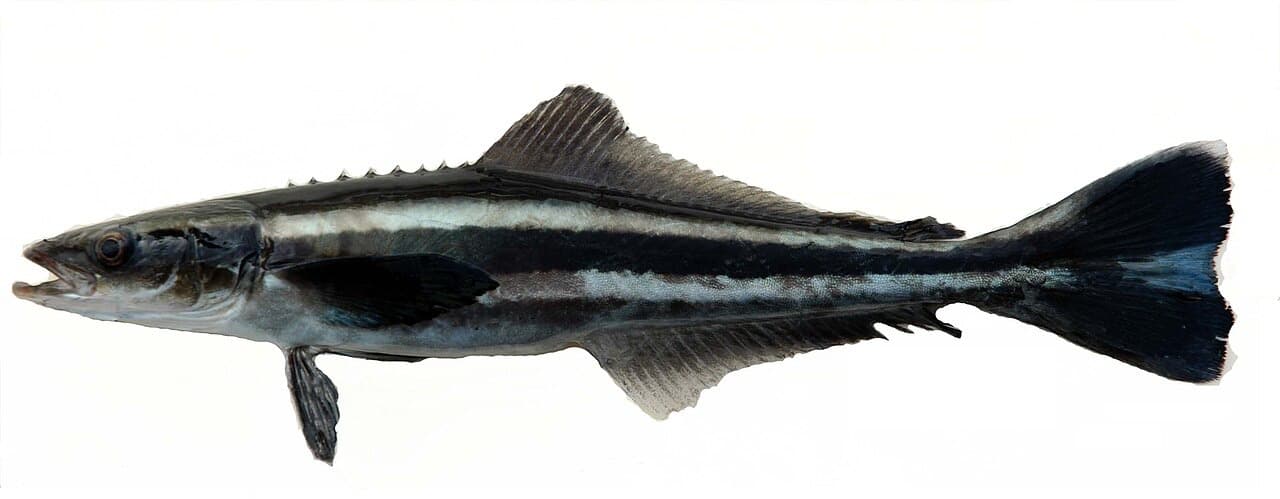
Cobia (Rachycentron canadum)
Photo: D Ross Robertson · Public domain

Cobia

LingLemonfish

Rachycentron canadum

Legal to spear
pelagic9-27 kg, up to ~45 kg
Edibility & ciguatera
Excellent eating; low ciguatera risk.
Where you'll see it
Follows rays and turtles near the surface, hangs on wrecks, buoys and nearshore structure; often shot as a surprise cruising target.
Legal status
Legal to spear year-round, 36 in fork minimum, 1/person (vessel cap applies) — verify the current vessel limit.
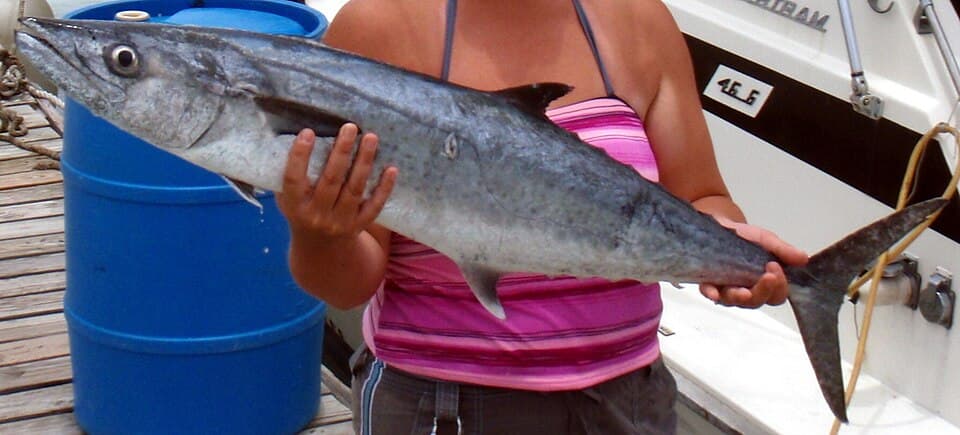
King Mackerel (Scomberomorus cavalla)
Photo: ScubaBear68 / CC BY 2.0

King Mackerel

KingfishSmoker

Scomberomorus cavalla

Restricted — verify
pelagic2-14 kg, up to ~23 kgCiguatera: moderate
Edibility & ciguatera
Good eating; minor ciguatera caution on very large Keys fish.
Where you'll see it
Wrecks, reefs and nearshore in the water column; fast — usually a bluewater or reef spear target.
Legal status
Legal to spear year-round, 24 in fork minimum; bag limits differ by coast (Gulf 2/day, Atlantic 3/day) — verify current limits.
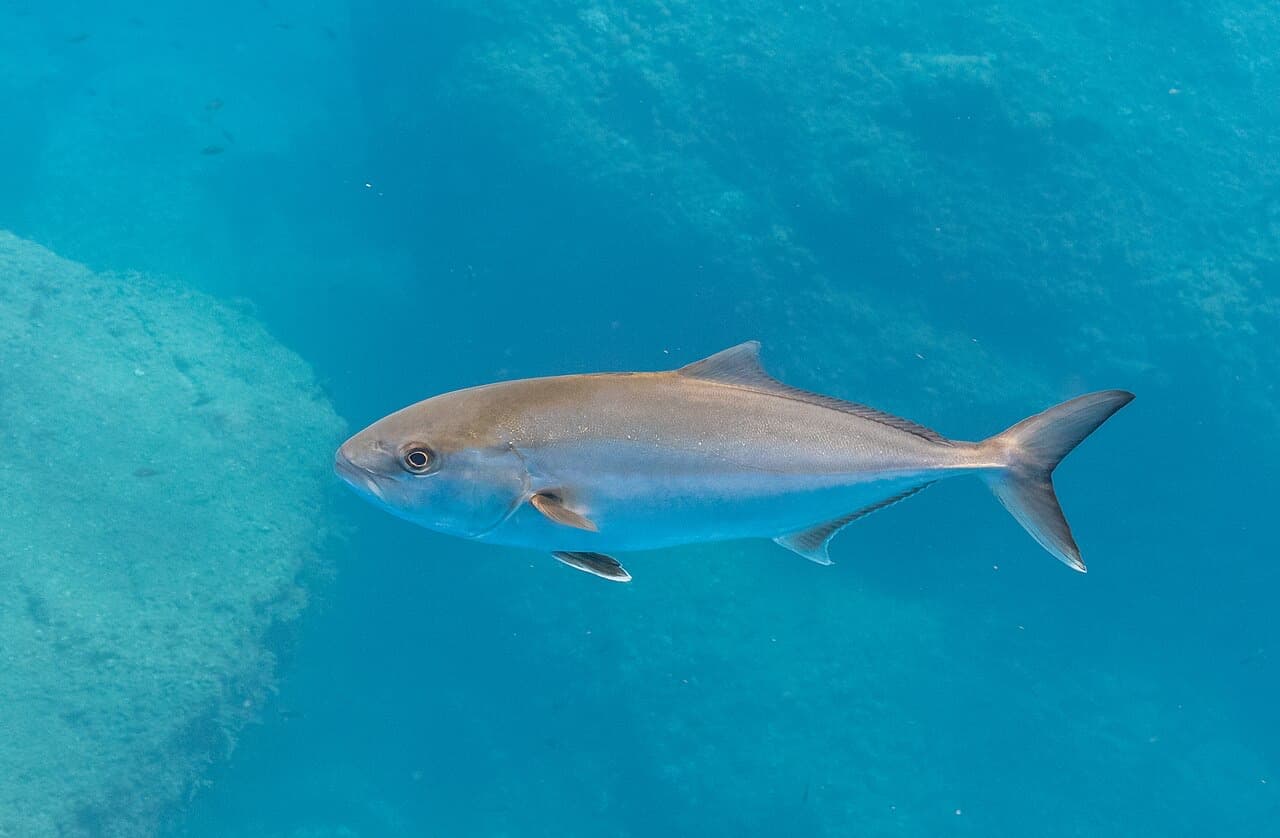
Greater Amberjack (Seriola dumerili)
Photo: Diego Delso / CC-BY-SA 4.0

Greater Amberjack

AJReef donkey

Seriola dumerili

Restricted — verify
reef9-27 kg, up to ~45 kg
Edibility & ciguatera
Good eating (watch for cosmetic flesh worms; minor ciguatera caution on very large fish).
Where you'll see it
Wrecks and deep reefs in aggressive schools — a bucket-list spearfishing brawl.
Legal status
Legal to spear only in season (Gulf 34 in fork, Atlantic 28 in fork, 1/day). Gulf state season is roughly Sept 1-Oct 31; Atlantic is closed in April. Stock is overfished — verify dates each year.
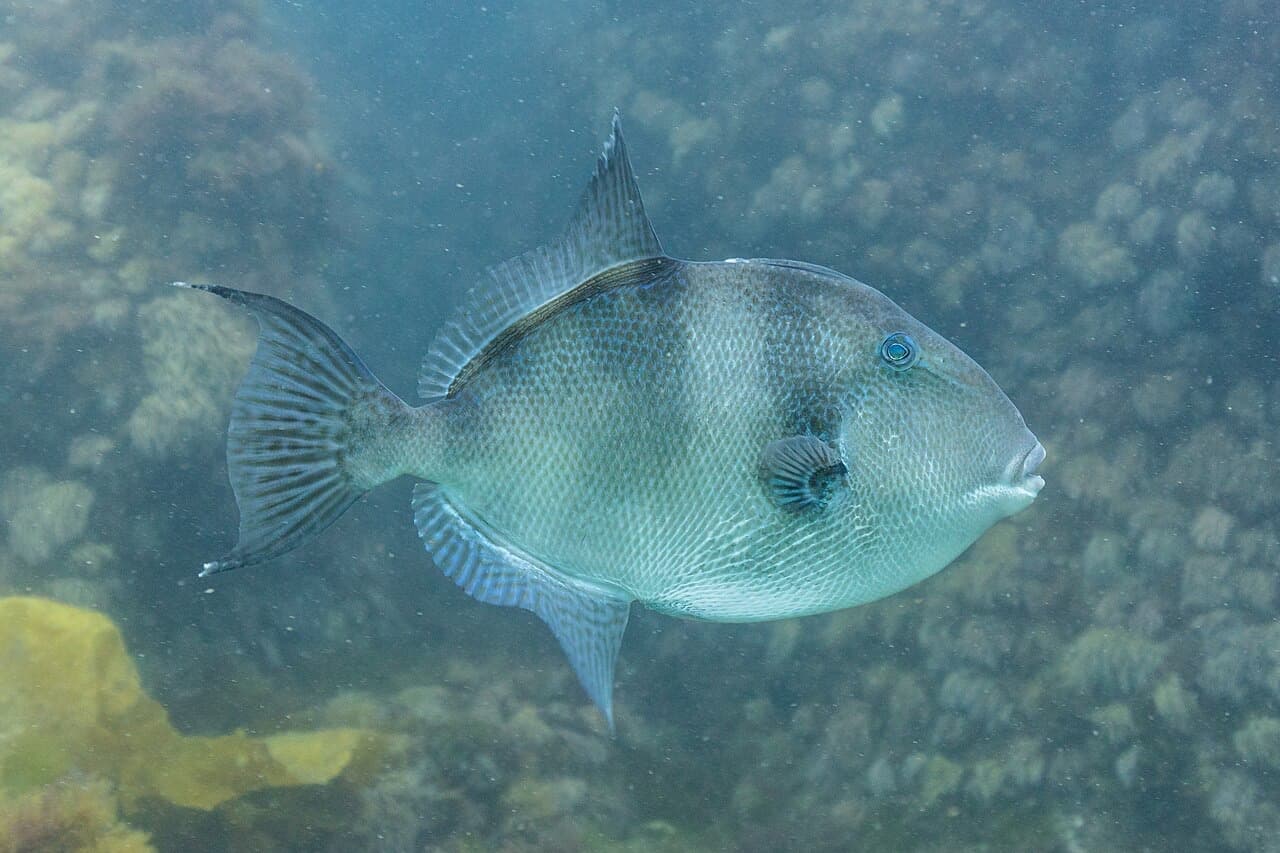
Gray Triggerfish (Balistes capriscus)
Photo: Diego Delso / CC-BY-SA 4.0

Gray Triggerfish

Trigger

Balistes capriscus

Restricted — verify
reef0.5-2 kg, up to ~33 cm
Edibility & ciguatera
Excellent — dense, sweet white meat; low ciguatera risk.
Where you'll see it
Reefs, wrecks and hard bottom. Only gray and ocean triggerfish may be speared — all other triggerfish are in the prohibited ornamental group.
Legal status
Legal to spear, but the Gulf has minimum sizes and a split season (roughly Mar-May and Aug-Dec); Atlantic 12 in fork, 10/day. Verify Gulf season dates.
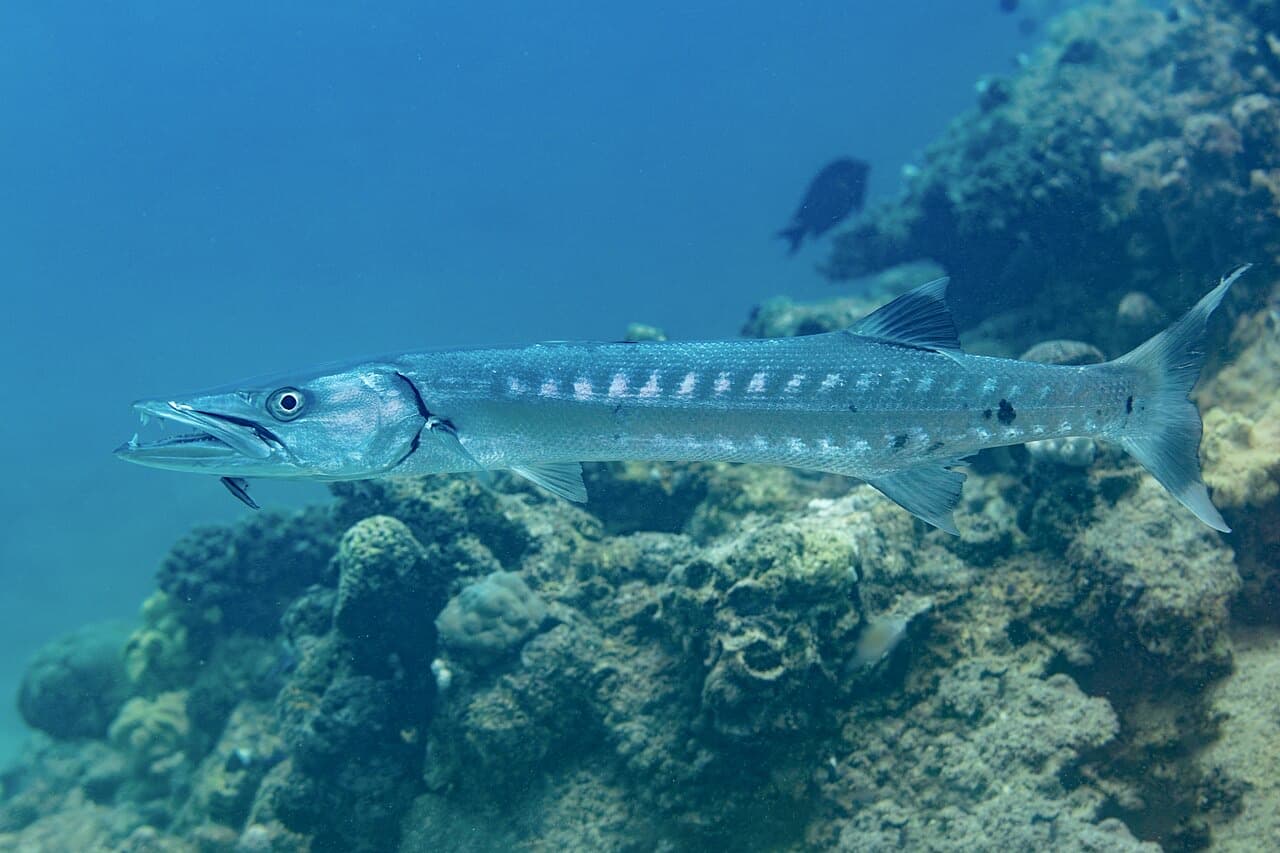
Great Barracuda (Sphyraena barracuda)
Photo: Diego Delso / CC-BY-SA 4.0

Great Barracuda

Cuda

Sphyraena barracuda

Restricted — verify
reef60-180 cm, up to ~1.8 mCiguatera: high
Edibility & ciguatera
HIGH ciguatera risk — do NOT eat large barracuda from south Florida or the Keys. Toxin is heat-stable, tasteless and not destroyed by cooking; Monroe County has among the highest ciguatera rates in the US.
Where you'll see it
Ubiquitous on reefs and wrecks; a photogenic reef encounter, but not a Keys food fish.
Legal status
Legal to spear (not on the prohibited-spear list), with a SE Florida regional bag limit (about 2/day, 1 over 36 in) — but the ciguatera risk means most divers do not eat it. Verify the current regional rule.
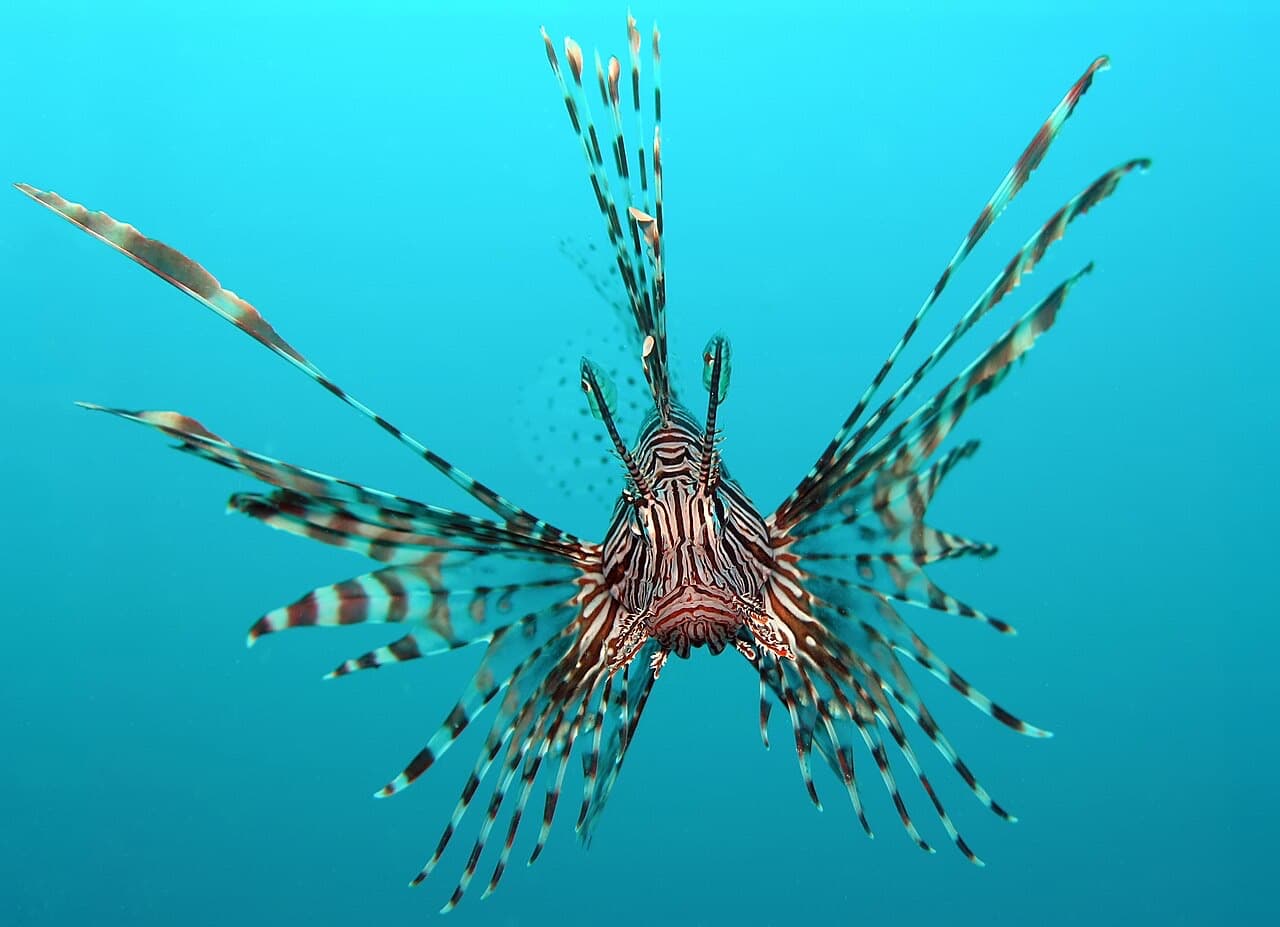
Lionfish (Pterois volitans)
Photo: Jens Petersen / CC-BY 2.5

Lionfish

ZebrafishDevil firefish

Pterois volitans

Legal to spear
reef15-45 cm
Edibility & ciguatera
Excellent, delicate white flesh. The spines are venomous but the flesh is not — handle with care.
Where you'll see it
Reefs, wrecks and ledges statewide — an invasive species FWC actively encourages removing.
Legal status
TAKE STRONGLY ENCOURAGED (invasive). No size limit, no bag limit, and no license required with designated spearing gear. Rebreathers are permitted specifically for lionfish (the sole rebreather exception).
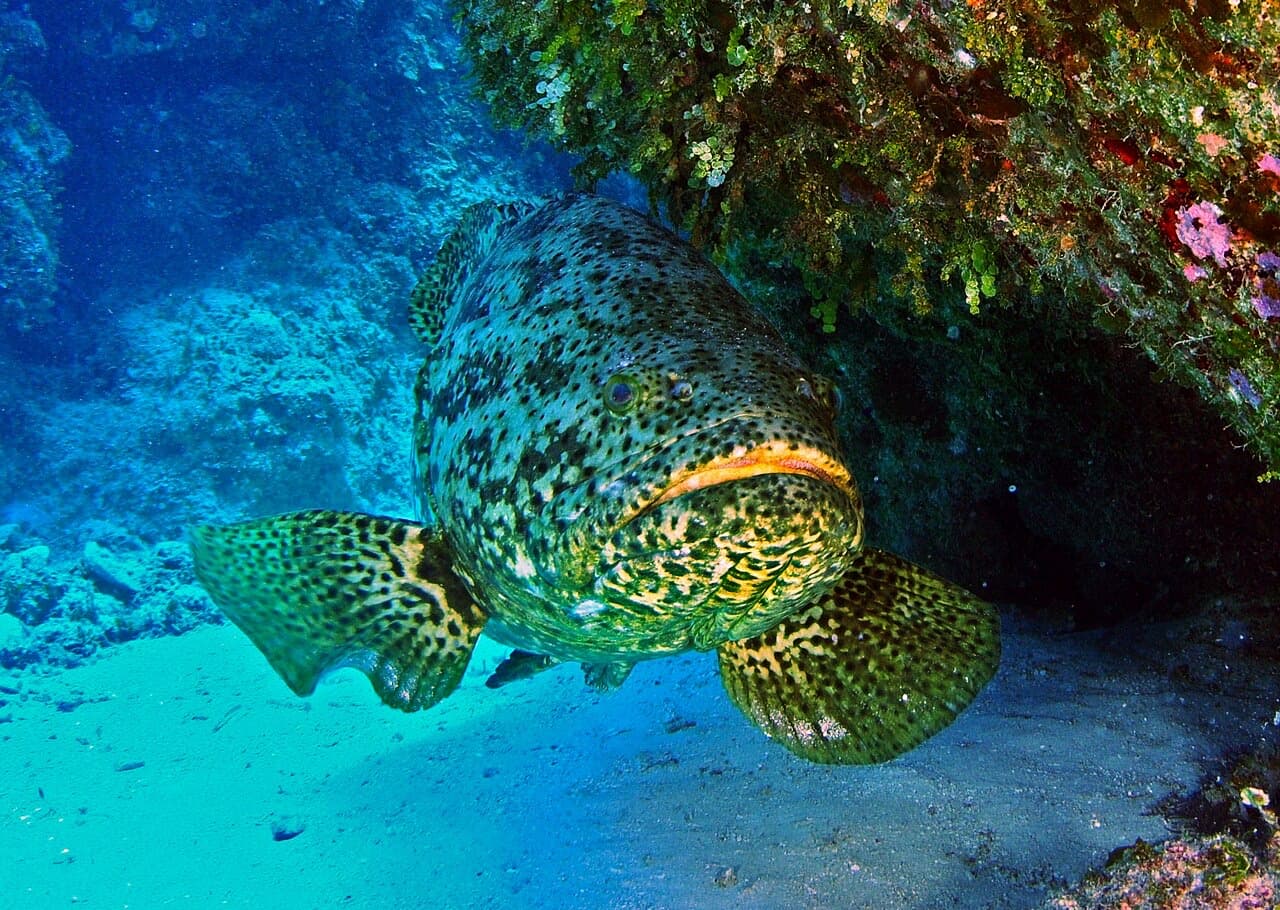
Goliath Grouper (Epinephelus itajara)
Photo: Albert kok / CC-BY-SA 3.0

Goliath Grouper

Jewfish

Epinephelus itajara

Protected — do not take
reefup to ~2.5 m / 360 kg
Edibility & ciguatera
Do not take by spear — protected.
Where you'll see it
Wrecks and large reef structure; a massive, curious fish that often shadows divers.
Legal status
PROHIBITED TO SPEAR. Fully protected from spearing; a very limited hook-and-line harvest-tag lottery exists, but spearing is never allowed. Must be released.
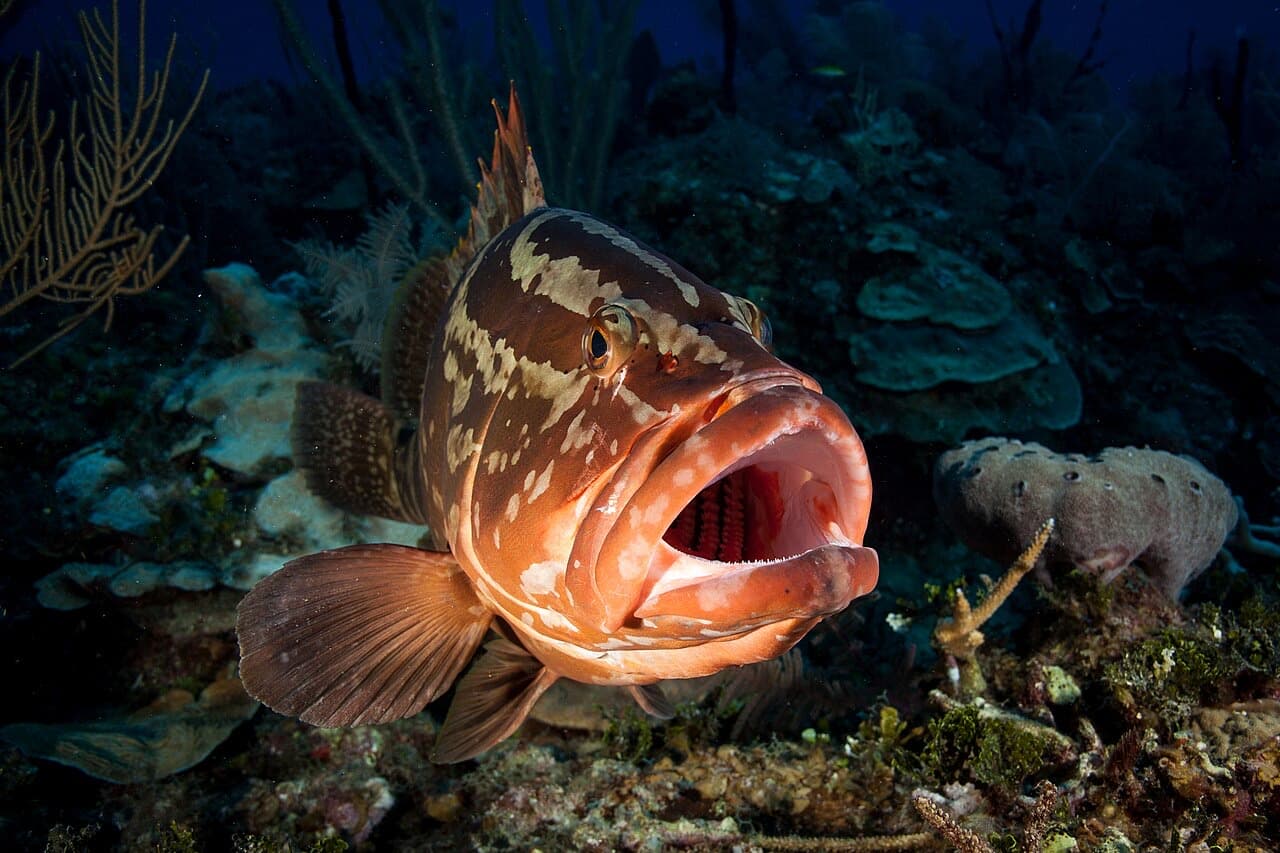
Nassau Grouper (Epinephelus striatus)
Photo: q phia / CC-BY 2.0

Nassau Grouper

Epinephelus striatus

Protected — do not take
reefup to ~1.2 m
Edibility & ciguatera
Do not take — protected.
Where you'll see it
Reefs and ledges; curious and easily approached.
Legal status
PROHIBITED — no harvest by any method, including spearing. Must be released.
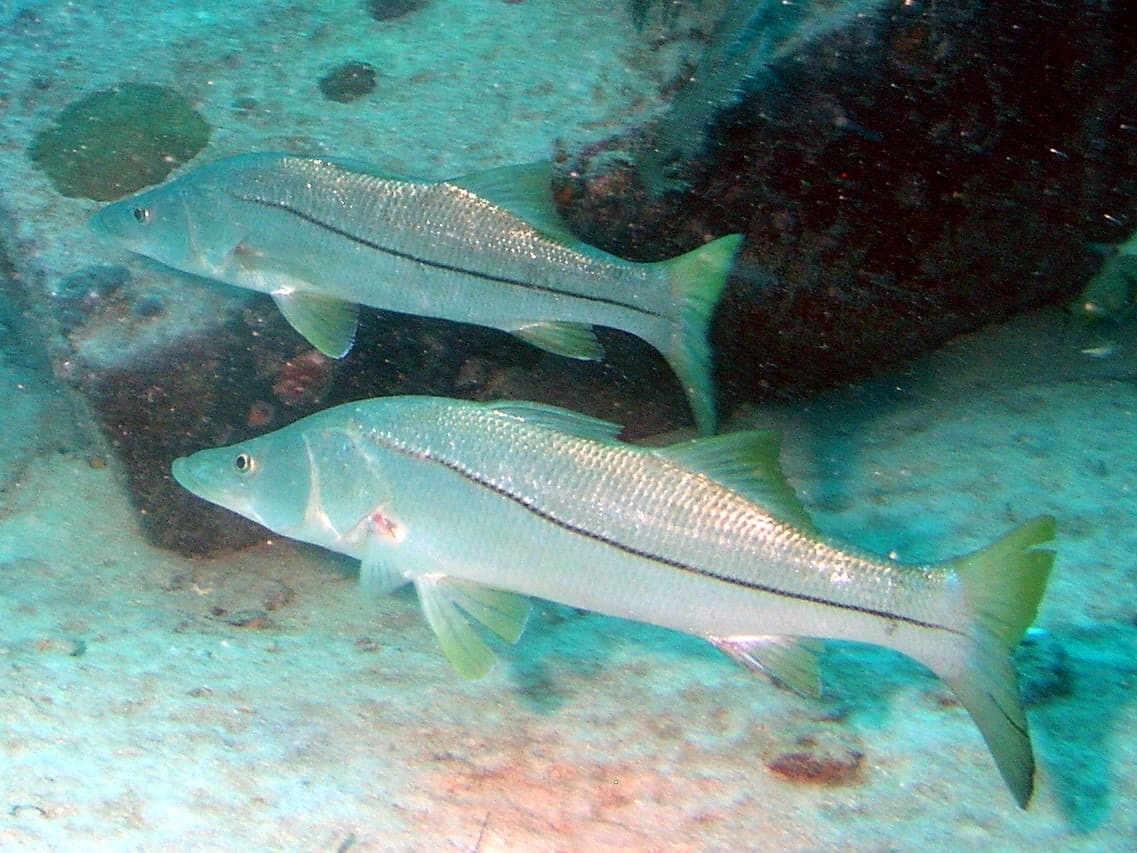
Common Snook (Centropomus undecimalis)
Photo: Matthew Hoelscher / CC-BY-SA 2.0

Common Snook

LinesiderRobalo

Centropomus undecimalis

Protected — do not take
inshore40-100 cm, up to ~1.4 m
Edibility & ciguatera
Good on hook-and-line in season, but do not spear.
Where you'll see it
Inlets, mangroves, docks and beaches — an iconic inshore gamefish you will see but cannot spear.
Legal status
PROHIBITED TO SPEAR. Snook is a hook-and-line-only gamefish (slot limit, seasonal, permit required). Illegal to take by spear.
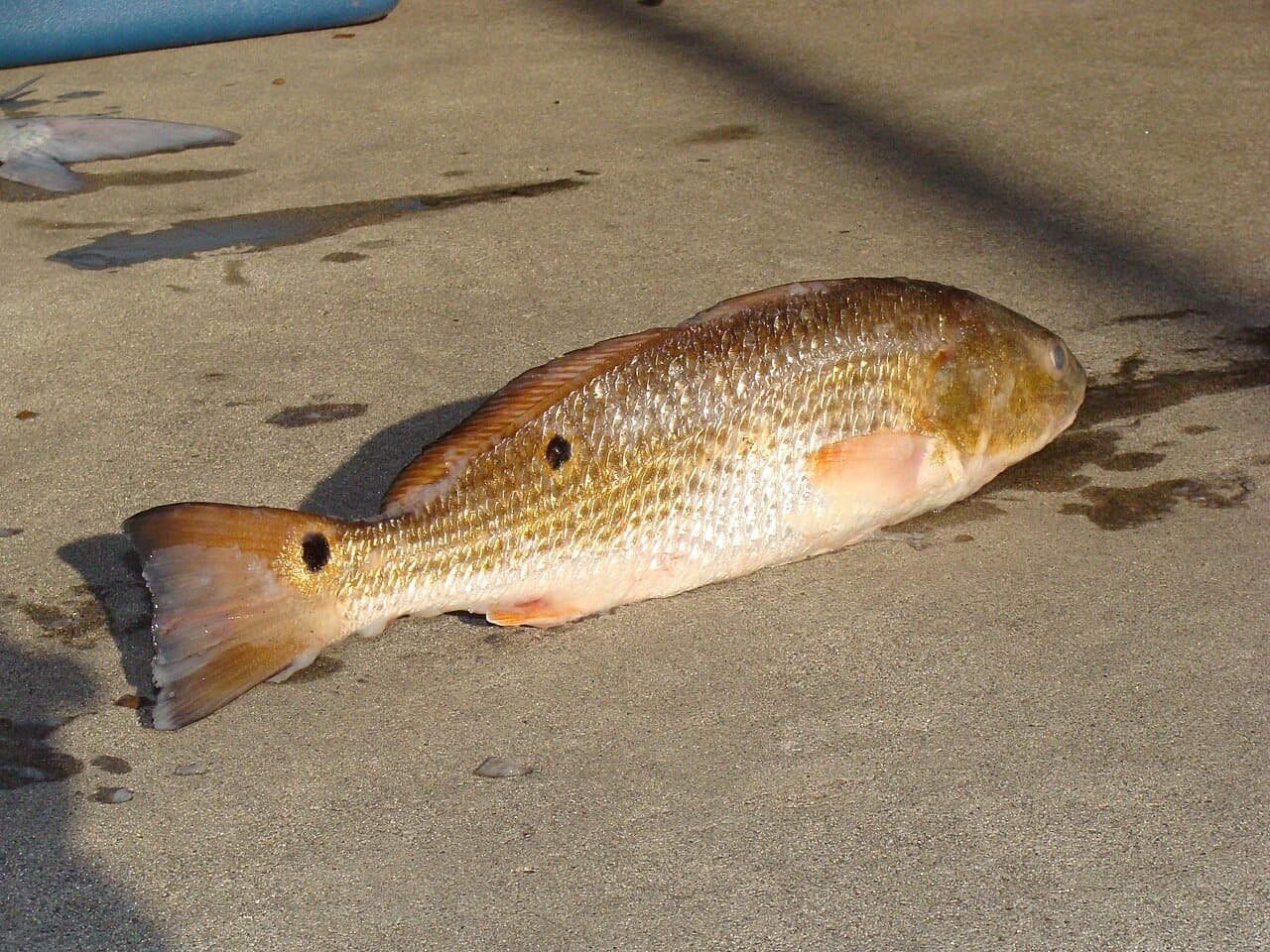
Red Drum (Redfish) (Sciaenops ocellatus)
Photo: Geeklikepi / CC-BY-SA 3.0

Red Drum (Redfish)

RedfishSpottail bass

Sciaenops ocellatus

Protected — do not take
inshoreslot 45-70 cm, adults to ~1.5 m
Edibility & ciguatera
Good in slot on hook-and-line, but do not spear.
Where you'll see it
Flats, grass, oyster bars and surf; a prized inshore gamefish you cannot spear.
Legal status
PROHIBITED TO SPEAR. Red drum is a hook-and-line-only gamefish. Illegal to take by spear.
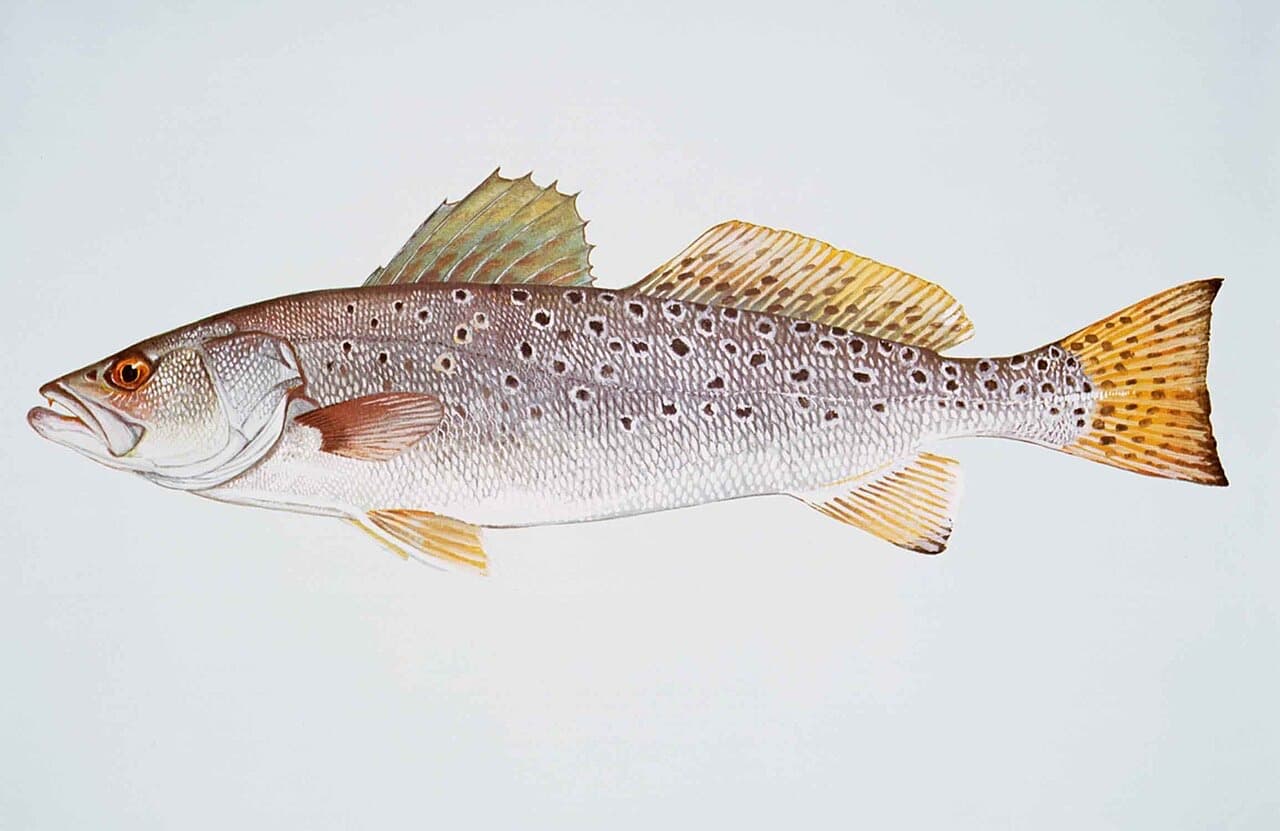
Spotted Seatrout (Cynoscion nebulosus)
Photo: USFWS

Spotted Seatrout

Speckled troutSpecks

Cynoscion nebulosus

Protected — do not take
inshore30-60 cm
Edibility & ciguatera
Good on hook-and-line, but do not spear.
Where you'll see it
Grass flats and channels; a very common inshore fish you cannot spear.
Legal status
PROHIBITED TO SPEAR. Spotted seatrout is a hook-and-line-only gamefish. Illegal to take by spear.
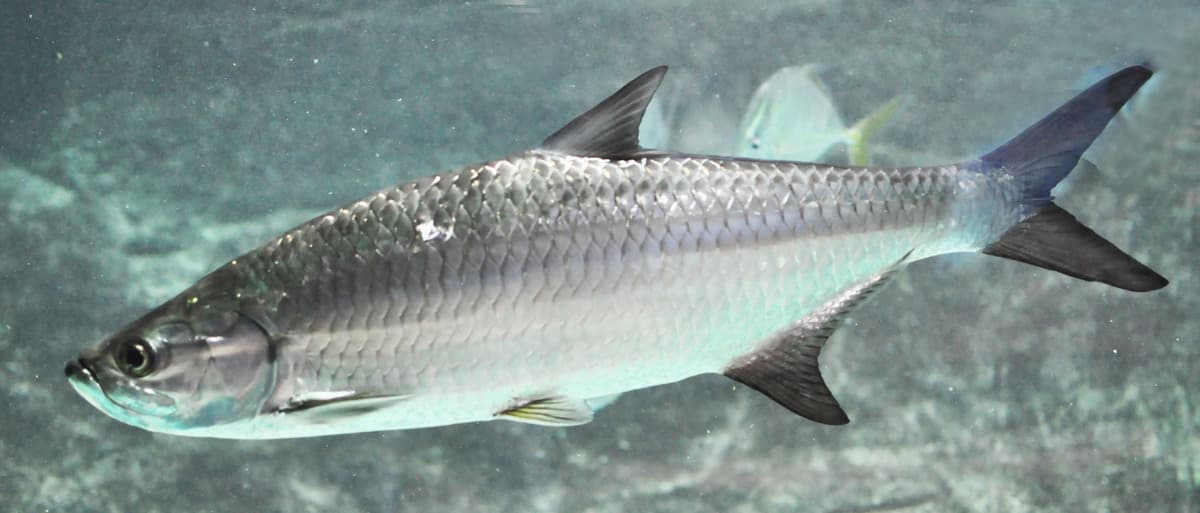
Tarpon (Megalops atlanticus)
Photo: Citron / CC-BY-SA 3.0

Tarpon

Silver king

Megalops atlanticus

Protected — do not take
inshoreup to ~2.4 m
Edibility & ciguatera
Not eaten; a catch-and-release gamefish.
Where you'll see it
Bays, passes, beaches and harbours; large, silver and unmistakable.
Legal status
PROHIBITED TO SPEAR. Tarpon is a catch-and-release gamefish (harvest tag only for a state/world record). Illegal to take by spear.
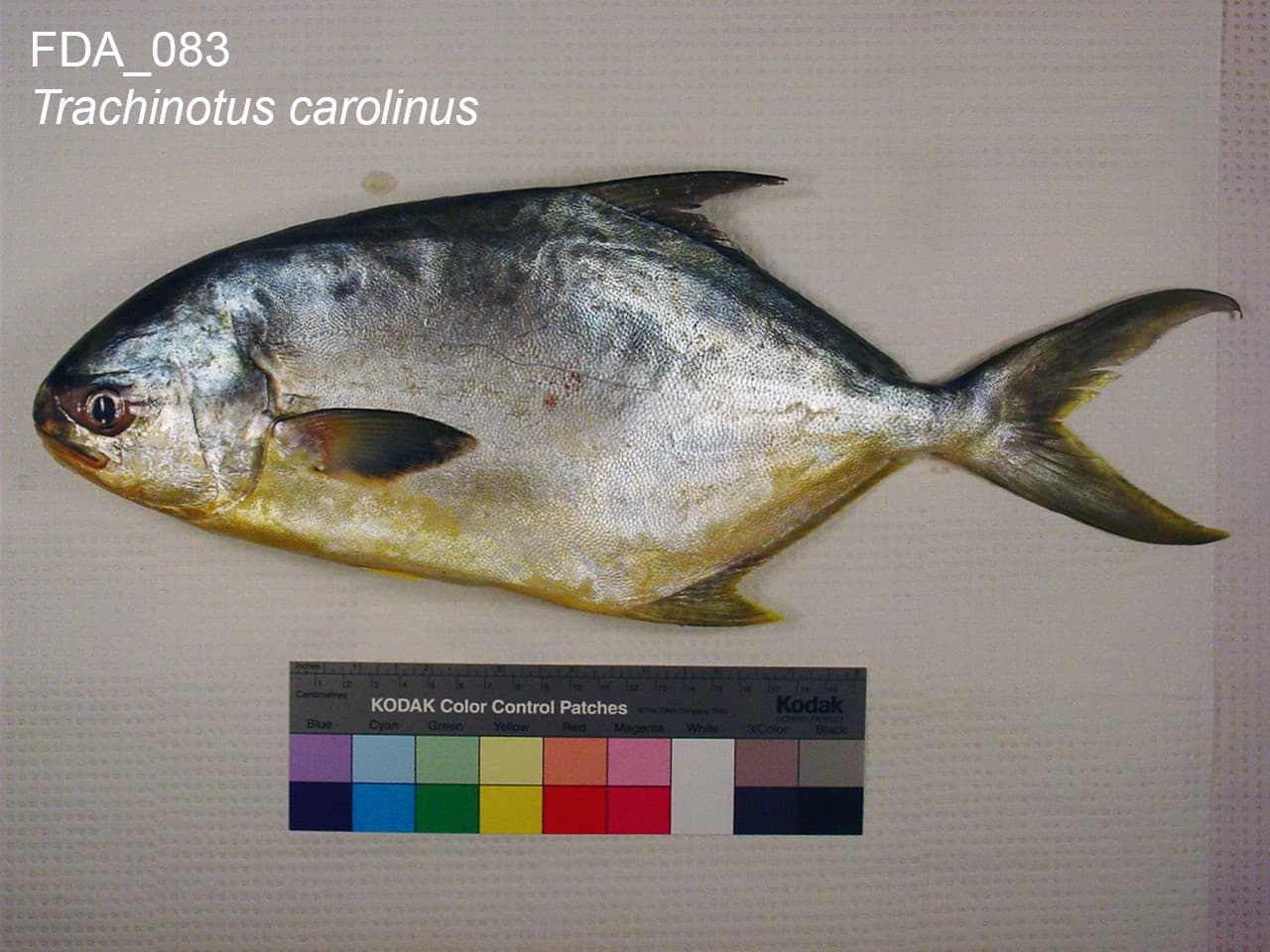
Florida Pompano (Trachinotus carolinus)
Photo: FDA

Florida Pompano

Pompano

Trachinotus carolinus

Protected — do not take
nearshore25-45 cm
Edibility & ciguatera
Excellent on hook-and-line, but do not spear.
Where you'll see it
Surf zone, beaches and inlets. A classic 'catch-but-cannot-spear' case — legal food fish on hook (11 in fork, 6/day) yet illegal to spear.
Legal status
PROHIBITED TO SPEAR despite being a legal hook-and-line food fish. Illegal to take by spear.

Local names & details still being verified

  • Florida seasons and size limits change frequently and differ between the Gulf and Atlantic coasts. Red snapper, gag/red/black grouper (Atlantic Jan 1-Apr 30 closure), greater amberjack (Gulf ~Sept-Oct only), gray triggerfish and flounder (Oct 15-Nov 30 closure) all have moving dates — confirm current FWC dates before targeting.
  • The prohibited-to-spear list is the key legal point: snook, redfish, spotted seatrout, tarpon, permit, Florida pompano and tripletail are legal on hook-and-line but ILLEGAL to spear. Verify the full current FWC prohibited-species list.
  • Area rules matter: no spearing within 100 yards of public beaches, piers or bridges, none in the Monroe County/Upper Keys no-spearfishing zone, and none in Florida Keys National Marine Sanctuary no-take zones. Powerheads and rebreathers are prohibited (rebreathers allowed only for lionfish).

A guide, not a ruling

Species identification and regional names are provided as a guide, not a substitute for local knowledge. In Florida, many species are legal on hook-and-line but illegal to spear — confirm the current FWC prohibited-species list, sizes and seasons before taking any fish, and be aware that large tropical reef fish (especially great barracuda) in south Florida and the Keys carry ciguatera risk that cooking does not remove.

Ready to get in the water

Local guides & charters in Florida

Spearfishing charters, guides, and freediving instructors operating in Florida — compiled from public info, free to browse. A new, unclaimed directory: verify and book direct.

Do not spear

Prohibited species

  • Billfish (all species)
  • Spotted eagle ray
  • Sturgeon
  • Manta ray
  • Sharks
  • Bonefish
  • Tarpon
  • Goliath grouper
  • Snook
  • Blue crab
  • Nassau grouper
  • Spotted seatrout
  • Red drum (redfish)
  • Weakfish
  • Stone crab
  • Pompano
  • African pompano
  • Permit
  • Tripletail
  • Lobster
  • Families of ornamental reef fish: surgeonfish, trumpetfish, angelfish, butterflyfish, porcupinefish, cornetfish, squirrelfish, trunkfish, damselfish, parrotfish, pipefish, seahorse, puffers, and triggerfish (except gray and ocean triggerfish)

Where you can't

Area restrictions

  • Prohibited within 100 yards of a public swimming beach, any commercial or public fishing pier, or any part of a bridge from which public fishing is allowed.
  • Prohibited within 100 feet of any part of a jetty that is above the surface of the sea — except for the last 500 yards of a jetty that extends more than 1,500 yards from the shoreline.
  • Prohibited in Monroe County (the Florida Keys) from Long Key north to the Miami-Dade (Dade) County line.
  • Volusia County: harvest by spearing is prohibited in Volusia County inland waters, with the exception of flounder and sheepshead, which may only be taken with a barbed spear having three or fewer prongs.
  • Prohibited in freshwater springs and freshwater areas for game fish (see freshwater section).
  • In any body of water within the jurisdiction of the Florida Department of Environmental Protection or the Division of Recreation and Parks (state parks), possession of spearfishing equipment is prohibited unless it is unloaded and properly stored.

Worth knowing

Notable rules, seasons & limits

  • Florida law separates 'spearing' (bow fishing, gigging, spearfishing, or any device that captures a fish by piercing its body) from 'spearfishing' (a hand- or mechanically-propelled spear or lance operated by a person swimming at or below the surface).
  • The prohibited-species list applies specifically to harvest by spearing; any other Commission-managed or unmanaged species not on the list may generally be taken by spearing (subject to that species' own size, bag, and season limits and any closures).
  • Invasive lionfish enjoy special treatment: per FWC's lionfish page 6, no recreational fishing license is required to harvest lionfish while using 'a pole spear, a Hawaiian Sling, a handheld net or any spearing device that is specifically designed and marketed exclusively for lionfish' (a license IS required for all other methods, including hook and line), and divers using rebreathers are permitted to spear and remove lionfish.
  • A saltwater fishing license is still required for spearfishing even though the spearing regulation page itself does not restate the license requirement.
  • The Florida Keys National Marine Sanctuary (NOAA, s7) contains 17 Sanctuary Preservation Areas, plus Ecological Reserves and the Key Largo and Looe Key Existing Management Areas, where fishing and collecting — including spearing — are prohibited beyond the statewide Monroe County rule; SPAs are marked by 30-inch round yellow buoys. Check sanctuary zone maps before diving in the Keys.

What divers here typically use

Gear up for Florida spearfishing

Most divers working Florida's coast start with a band speargun sized to the water and the fish they are after. Our honest guide to the Best Speargun for Beginners walks through what to look for — curated from published specs and community consensus, not paid placement.

If you break them

Penalties

Violations of Florida's saltwater fishing and spearing rules are enforced by FWC and are generally charged as misdemeanors, with fines, possible suspension or revocation of fishing privileges, and confiscation of illegally taken catch and gear; penalties escalate for certain protected or prohibited species. Exact penalty amounts were not confirmed on the specific pages reviewed and should be verified in Florida Statutes Chapter 379 and the relevant Florida Administrative Code rules.

Not yet independently confirmed — verify directly

  • Exact penalty/fine amounts and statutory citations for spearing violations were not confirmed from the FWC pages reviewed (the FWC pages do not state dollar amounts); the penalties summary is a general characterization and should be verified against Florida Statutes Ch. 379 and the Florida Administrative Code before publication.
  • Open-circuit SCUBA for general spearfishing: confirmed on 2026-07-04 that FWC imposes NO prohibition on it (only rebreathers are banned) and the FWC definition covers a person 'swimming at or below the surface,' but note there is still no affirmative 'SCUBA is allowed' sentence on the FWC spearing page — this rests on absence-of-prohibition rather than an explicit permission. Also note separate FWC rules restrict SCUBA for certain non-spearfishing fisheries (e.g., some lobster/stone-crab and area-specific rules).
  • 'Speargun' specifically is not named individually on any FWC page; its permissibility is inferred from the general statutory definition ('hand or mechanically propelled, single or multi-pronged spear or lance'). (Pole spear and Hawaiian Sling ARE now confirmed as FWC-named on the lionfish page, s6 — no longer inferred.)

Confirm these points directly with Florida Fish and Wildlife Conservation Commission (FWC) before you rely on them.

Primary sources

Sources

Every fact above is drawn from these official sources. Each was retrieved on the date shown; regulations can change after that date.

  1. Source 2: FWC — Methods of Taking Freshwater Fish (game vs nongame, spearing/gigging rules, mullet in fresh water)

    Retrieved July 4, 2026https://myfwc.com/fishing/freshwater/regulations/taking-fish/

  2. Source 3: FWC — Saltwater Recreational Licenses and Permits (resident and nonresident license costs)

    Retrieved July 4, 2026https://myfwc.com/license/recreational/saltwater-fishing/

  3. Source 4: FWC — Do I need a license or permit? (saltwater license exemptions)

    Retrieved July 4, 2026https://myfwc.com/license/recreational/do-i-need-one/

  4. Source 5: FWC — Saltwater Shoreline Fishing Information (no-cost shoreline license, exemptions)

    Retrieved July 4, 2026https://myfwc.com/license/recreational/saltwater-fishing/shoreline-faqs/

Quick answers

Frequently asked questions

Is spearfishing legal in Florida?
Yes — spearfishing is legal in Florida's saltwater, but it is not permitted in fresh water, subject to license, gear, species, and area rules. Spearfishing is legal in Florida saltwater with a recreational saltwater fishing license, subject to the prohibited-species list, gear restrictions, and area restrictions below.…
Do you need a license to spearfish in Florida?
Yes. Florida requires the Florida Recreational Saltwater Fishing License. Resident cost: $17.00 annual (or $79.00 for a five-year license). A no-cost Resident Saltwater Shoreline-Only license is available, but per FWC it is 'not valid when fishing from a vessel, or a shoreline reached by vessel' and 'not valid if taking or attempting to take by swimming or diving.' Because FWC defines spearfishing as taking by a person swimming at or below the surface, the shoreline-only license does NOT cover spearfishing — spearfishers need the full recreational saltwater fishing license. Non-resident cost: $17.00 for 3 days, $30.00 for 7 days, or $47.00 annual.
Can you spearfish on scuba in Florida?
Spearfishing while on SCUBA is not prohibited by FWC in Florida saltwater; the definition covers a person 'swimming at or below the surface of the water,' which includes divers. However, rebreathers are prohibited for spearfishing (except that divers may use rebreathers to spear…
What can't you spear in Florida?
Protected or no-take species you may not spear in Florida include: Billfish, Spotted eagle ray, Sturgeon, Manta ray, Sharks, Bonefish, Tarpon, Goliath grouper. Always check the full prohibited-species list and current seasons before diving, and confirm with Florida Fish and Wildlife Conservation Commission (FWC).
Stay current

Get an email when Florida's size & bag limits change

Regulations shift between seasons. We re-check Florida's rules against the primary source and send a short note when the limits, seasons, or licensing move — nothing else.

No spam. Regulations updates, gear data drops, and the launch of the guide.

Last verified July 4, 2026. Regulations change — always confirm the current rules with Florida Fish and Wildlife Conservation Commission (FWC) before you dive.